
Artificial Intelligence
Why Artificial Intelligence?

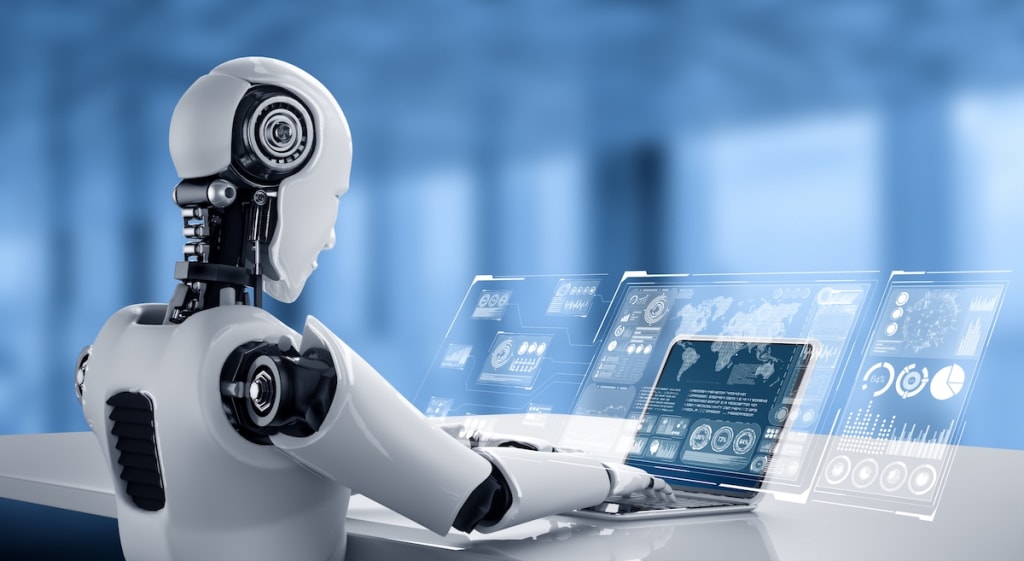
Artificial intelligence (AI) is likely to play an increasingly important role in shaping the future of many industries and aspects of our lives. Here are some potential ways that AI could impact the future:
- Increased automation: AI has the potential to automate many jobs and tasks that currently require human labor, which could lead to significant changes in the job market.
- Improved healthcare: AI could be used to develop new diagnostic tools and treatment methods, and to analyze large datasets to identify patterns and trends in health outcomes.
- Enhanced personalization: AI algorithms can help companies tailor products and services to individual consumers based on their preferences and behaviors.
- Smarter cities: AI can be used to optimize transportation systems, reduce energy consumption, and improve public safety in cities.
- Ethical considerations: As AI becomes more advanced and integrated into our lives, it will be important to consider the ethical implications of its use, such as ensuring fairness and preventing bias.
Why Artificial Intelligence?
Artificial intelligence (AI) is a complex and multifaceted field that encompasses many different technologies and techniques. It involves using computer algorithms to simulate human intelligence, including the ability to learn from data, make decisions, and solve problems.
To fully explain the concept of AI, it is necessary to cover a wide range of topics, including:
- The history and development of AI, from early research in the 1950s to the present day.
- The different types of AI, including rule-based systems, machine learning, and deep learning.
- The applications of AI in various industries, such as healthcare, finance, and transportation.
- The challenges and ethical considerations associated with AI, such as the potential for bias and the impact on jobs and society.
- The future of AI and its potential to revolutionize many aspects of our lives.
All of these topics require a detailed explanation in order to fully understand the field of AI and its impact on our world. This is why explaining AI can take more than 1000 words, and in fact, entire books and courses have been devoted to the topic.
AI involves using computer algorithms to simulate human intelligence, including the ability to learn from data, make decisions, and solve problems. There are different types of AI, including rule-based systems, machine learning, and deep learning, each with their own strengths and limitations.
Rule-based systems use a set of predefined rules to make decisions or take actions. For example, a system that decides whether to approve a loan application might use rules based on the applicant's credit score, income, and employment history.
Machine learning involves training an algorithm on a large dataset to make predictions or classifications based on new data. This approach is used in many applications, such as image and speech recognition, natural language processing, and predictive analytics.
Deep learning is a type of machine learning that involves training a neural network with many layers to recognize patterns in data. This approach has been particularly successful in applications like image and speech recognition.
AI has many applications in various industries, such as healthcare, finance, and transportation. In healthcare, AI can be used to analyze medical images, predict patient outcomes, and develop new treatments. In finance, AI can be used for fraud detection, risk assessment, and investment analysis. In transportation, AI can be used to optimize traffic flow, improve safety, and develop self-driving cars.
However, AI also poses some challenges and ethical considerations. For example, AI algorithms can be biased if they are trained on biased data, which can lead to unfair outcomes. AI also has the potential to automate many jobs, which could have significant impacts on the workforce and society as a whole.
Despite these challenges, AI has the potential to revolutionize many aspects of our lives and drive innovation in many industries.
About the Creator
Keep reading
More stories from Salman Ahmad and writers in Futurism and other communities.
Neural Networks
Neural networks are a subset of artificial intelligence and machine learning that are modeled after the structure and function of the human brain. They are composed of layers of interconnected nodes or neurons that process and transmit information. Neural networks are used in a wide range of applications, including image and speech recognition, natural language processing, and predictive analytics.
By Salman Ahmad3 years ago in Futurism
About Binding Prometheus
I want to start actively advocating on behalf of my own work, and the most valuable part of my canon is, without a doubt, Binding Prometheus, the play I have been working on since 2019 and only finished in 2023 as part of my MA. The play itself is an amalgamation of a million different inspirations. On one end, it evokes the Ancient Greek myth-play, deriving its own title from the earliest extant work of Western drama we have, Aeschylus’s Prometheus Bound. On the other end, it borrows significantly from the sci-fi bulwarks from over the years, namely Mary Shelley’s Frankenstein and Karel Capek’s Rossum’s Universal Robots. The play could be an episode of Black Mirror, I fear. I don’t know. I’ve only ever seen one episode of Black Mirror.
By Steven Christopher McKnight26 days ago in Futurism
How pollen seasons are being extended by artificial light
The end of pollen season may be postponed by artificial light from city lights, prolonging the time that pollen is in the air. For city dwellers, the longer season modifies the duration and timing of allergy exposure.
By Francis Dami32 minutes ago in Futurism



Comments
There are no comments for this story
Be the first to respond and start the conversation.