
Amazing scientific discoveries
Amazing scientific discoveries over the last decade

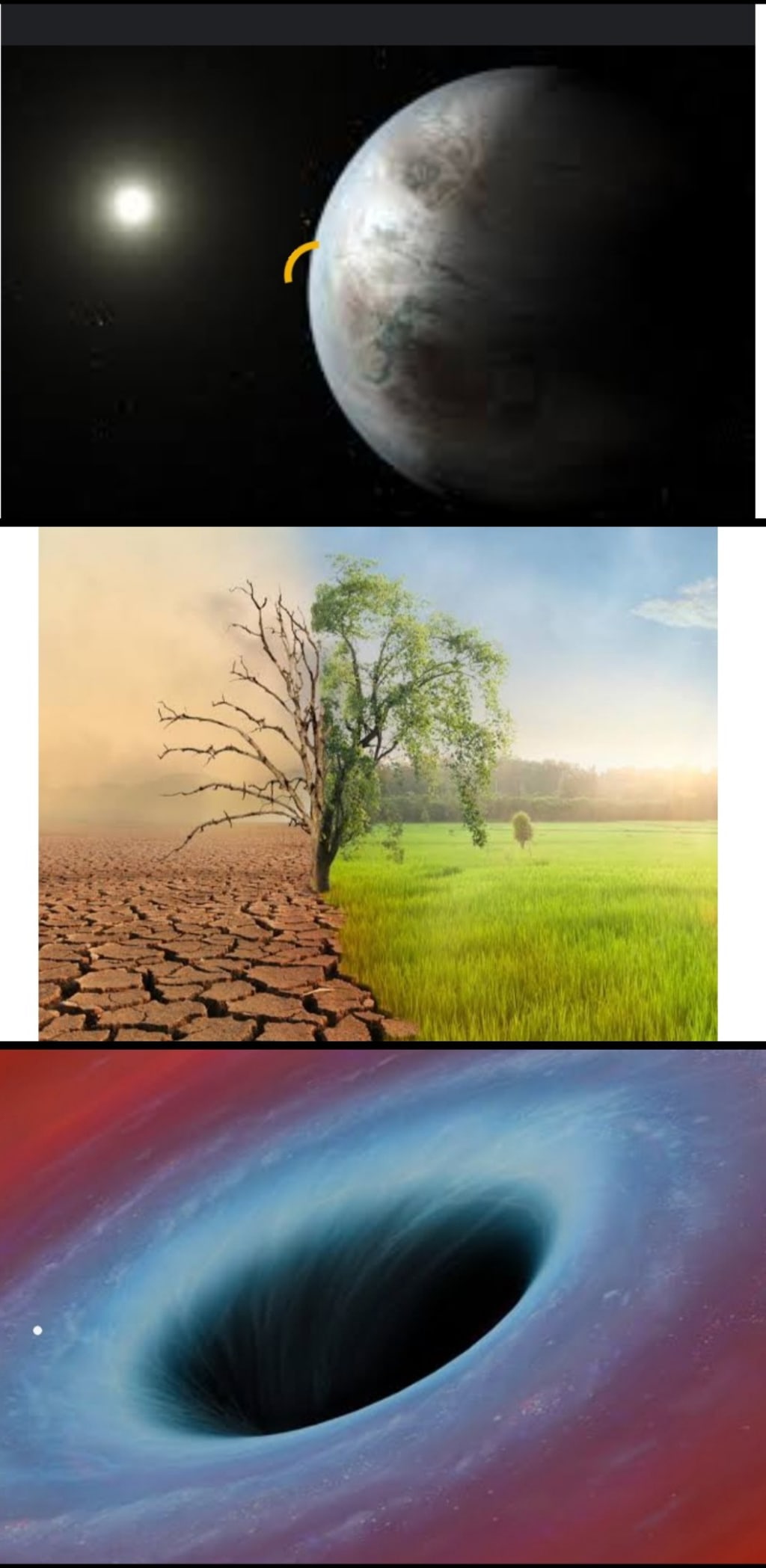
Absolutely, the last decade witnessed some remarkable scientific discoveries that expanded our understanding of the universe and our planet. These breakthroughs have paved the way for even more exciting developments in the years to come. Science continues to push the boundaries of our knowledge, and it's fascinating to see how these findings have shaped our perspective of our own world. Here are few recap of some discoveries:
1. Black Holes: The detection of gravitational waves from colliding black holes and the first image of a supermassive black hole were groundbreaking achievements. The detection of black holes by the laser interferometer gravitational wave observatory (LIGO) and virgo collaborations was a monumental achievement. These ripples in spacetime provided direct evidence of the existence of binary black hole systems and confirmed Einstein's theory of general relativity in extreme conditions. In 2019, the Event Horizon Telescope (EHT) collaboration unveiled the first-ever image of a supermassive black hole at the center of the galaxy M87. This image, a glowing ring surrounding a dark region, provided visual confirmation of these enigmatic cosmic objects.
2. Climate Change: Climate change refers to long-term alterations in temperature, precipitation, and other climate patterns on Earth. It is primarily driven by human activities, such as the burning of fossil fuels, deforestation, and industrial processes, which release greenhouse gases like carbon dioxide into the atmosphere. These gases trap heat, leading to global warming and various environmental impacts, with alarming data on ice loss, rising sea levels, and the endangerment of various species, more frequent and severe weather events, and shifts in ecosystems. Addressing climate change is a critical global challenge, and efforts are being made to reduce emissions, transition to renewable energy sources, and adapt to its effects.
3. Exoplanets: Kepler and other missions significantly expanded our understanding of exoplanets, with thousands of new discoveries, including potentially habitable ones, hinting at the possibility of extraterrestrial life.Some of these exoplanets are in the "habitable zone," where conditions might be suitable for life as we know it. This has fueled the search for extraterrestrial life and expanded our cosmic perspective.
4. Higgs Boson: Higgs boson, often referred to as the "God particle," is a subatomic particle that plays a crucial role in the Standard Model of particle physics. It was discovered in experiments at the Large Hadron Collider (LHC) in 2012. The Higgs boson is associated with the Higgs field, which is responsible for giving mass to other particles. Its discovery was a significant breakthrough in our understanding of the fundamental particles and forces that make up the universe. The discovery of the Higgs boson, helps us to better comprehend the fundamental particles and their interactions.
5. Pluto: Despite its reclassification as a dwarf planet, the New Horizons mission unveiled a dynamic and surprising Pluto with features like moving glaciers and frozen seas, reshaping our perception of this distant world. New Horizons revealed a diverse and geologically active surface on Pluto, with mountains, valleys, and vast plains. The most prominent feature was the heart-shaped region called "Tombaugh Regio." Pluto also has a thin atmosphere primarily composed of nitrogen, with traces of methane and carbon monoxide. The atmosphere is much thinner than Earth's and can freeze out onto the surface as frost. It also has five known moons. The largest, Charon, is substantial enough to cause a binary system with Pluto, as both bodies orbit a common center of mass. The other four moons are smaller: Styx, Nix, Kerberos, and Hydra.It's surface is a mix of water ice, nitrogen ice, and other exotic ices, along with some rocky material. It has a reddish color, possibly due to the presence of complex organic molecules called tholins. The presence of mountains and plains on Pluto suggests ongoing geological activity. This activity may be driven by heat from radioactive decay in Pluto's interior.
6. CRISPR Gene Editing: The development of CRISPR-CAS technology revolutionized genetic engineering, offering the potential to edit genes with unprecedented precision. This breakthrough holds promise for treating genetic diseases and has raised ethical questions about the extent of its use.
7. Artificial Intelligence and Machine Learning: AI and machine learning made significant strides, from achieving superhuman performance in games like Go and Chess to applications in healthcare, finance, and autonomous vehicles. These technologies are transforming various industries.
8. Space Exploration: Besides black holes, space exploration saw other milestones, like the successful landing of rovers on Mars (Curiosity and Perseverance) and the exploration of asteroids and comets, providing valuable insights into the history of our solar system.
9. Quantum Computing: Progress in quantum computing research has the potential to revolutionize computing power. Quantum computers could solve complex problems that are currently beyond the capabilities of classical computers.
10. Neuroscience: Advancements in brain research have deepened our understanding of the human brain, including the mapping of connectomes and advances in neuroimaging techniques, offering insights into neurological disorders and cognitive functions.
These discoveries and developments highlight the incredible pace of scientific progress and its profound impact on our understanding of the world and our ability to shape the future, offering insights into neurological disorders and cognitive functions.
About the Creator
Keep reading
More stories from writers in Futurism and other communities.
About Binding Prometheus
I want to start actively advocating on behalf of my own work, and the most valuable part of my canon is, without a doubt, Binding Prometheus, the play I have been working on since 2019 and only finished in 2023 as part of my MA. The play itself is an amalgamation of a million different inspirations. On one end, it evokes the Ancient Greek myth-play, deriving its own title from the earliest extant work of Western drama we have, Aeschylus’s Prometheus Bound. On the other end, it borrows significantly from the sci-fi bulwarks from over the years, namely Mary Shelley’s Frankenstein and Karel Capek’s Rossum’s Universal Robots. The play could be an episode of Black Mirror, I fear. I don’t know. I’ve only ever seen one episode of Black Mirror.
By Steven Christopher McKnight24 days ago in Futurism
3D Cell Culture Market: Tissue Engineering Demand, Cancer Research Focus & Market Forecast
Rising demand for physiologically relevant in-vitro models is accelerating adoption of 3D cell culture across drug discovery, toxicology, and regenerative medicine. According to IMARC Group's latest research publication, global 3D cell culture market size reached USD 2,643.1 Million in 2024. LAccording to IMARC Group's latest research publication, global 3D cell culture market size reached USD 2,643.1 Million in 2024. Looking forward, IMARC Group expects the market to reach USD 7,819.7 Million by 2033, exhibiting a growth rate (CAGR) of 12.69% during 2025-2033.
By sujeet. imarcgroup4 days ago in Futurism
Affection and Healing for Yourself
During the night of the last quarter moon, I gathered my ritual supplies. I carefully handled the chunk of black tourmaline that would protect me from your overall negative and narcissistic energy. I carefully walked the house with my stick of selenite in hand, asking the universe to cleanse our working space.
By Alisha Wilkins ✒️🦋🖋️5 days ago in Fiction


Comments
There are no comments for this story
Be the first to respond and start the conversation.