
AI’s Human Pulse
The People Driving Artificial Intelligence

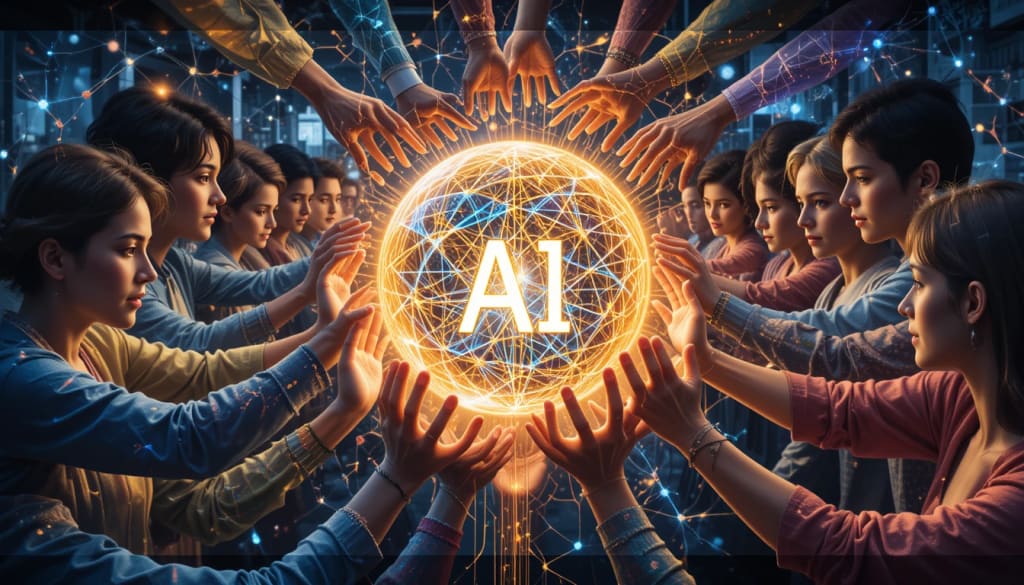
The Heartbeat of AI
Artificial Intelligence (AI) often seems like a force from the future, a technology that operates in a realm beyond human touch. Yet, at its core, AI is a deeply human creation, born from our curiosity, shaped by our creativity, and guided ដោយ our conscience. From the visionaries who first imagined thinking machines to the artists, engineers, and ethicists who refine them today, AI is a tapestry woven with human stories. This article explores the human pulse of AI—how it’s crafted, how it inspires, and how it challenges us to be better. Far from being a detached system, AI is a reflection of our dreams and responsibilities, a mirror of humanity itself.
The Visionaries: Igniting the Spark
The story of AI begins with humans who dared to dream beyond their time. In the 1940s, Alan Turing posed a question that still echoes: “Can machines think?” His 1950 paper laid the intellectual foundation for AI, imagining a world where computers could converse like humans. Around the same time, John von Neumann and others explored how machines could mimic the brain’s logic, planting seeds for neural networks. These early visionaries weren’t just mathematicians—they were philosophers, asking what it means to be intelligent.
With limited tools—clunky computers and handwritten equations—they laid the groundwork. In 1956, the Dartmouth Conference, organized by John McCarthy, gave AI its name and mission: to create machines that could reason, learn, and adapt. Early experiments, like the Logic Theorist proving mathematical theorems, were modest but groundbreaking. These pioneers weren’t chasing fame; they were driven by a human thirst for discovery.
Their legacy fuels today’s AI triumphs, from DeepMind’s AlphaFold solving protein structures in 2020 to generative models creating art and text. Each milestone reflects human persistence—researchers spending countless hours refining algorithms, testing ideas, and embracing failure as a step toward progress.
The Engineers: Building AI’s Foundation
AI is built by human hands, piece by meticulous piece. Engineers and data scientists transform raw data into systems that think and act. Training an AI model is a labor of love: humans curate datasets, clean errors, and label information. For example, when teaching an AI to detect skin cancer, dermatologists annotate thousands of images, deciding which moles are benign or malignant. Their expertise shapes the AI’s life-saving potential.
Programmers give AI its purpose, choosing whether it optimizes energy grids, translates languages, or predicts earthquakes. These choices reflect human priorities—solving problems that matter to us. For instance, AI systems in logistics, like those used by Amazon, streamline deliveries to save time, a goal rooted in human needs for efficiency.
But human engineers face challenges. Biases in data can lead to biased AI. In 2017, an AI tool used in hiring was found to penalize women because it was trained on male-dominated resumes. Correcting this requires human ingenuity—diverse teams auditing data and refining algorithms. Engineers aren’t just coding; they’re problem-solvers, navigating the messy realities of human imperfection to build fairer systems.
The Artists: AI as a Creative Ally
AI is often feared as a threat to creativity, but it’s proving to be a powerful ally. Artists, writers, and musicians are using AI to expand their craft. Tools like DALL·E 3 and Runway generate visuals from text prompts, allowing painters to explore surreal landscapes or designers to prototype fashion. A 2023 exhibition featured AI-generated art alongside human edits, creating pieces that blended machine precision with human emotion.
In writing, AI tools like Writesonic suggest ideas or polish drafts, but it’s the human writer who infuses the work with voice and meaning. A 2024 short story, Echoes of Tomorrow, won a literary prize with AI-assisted prose, but its emotional depth came from the author’s personal touch. In music, AI platforms like Soundful generate beats, but human producers layer them with soul. A chart-topping 2025 single, born from AI chords and human lyrics, showed how this partnership thrives.
AI also makes creativity accessible. Tools like Figma’s AI features help non-designers create stunning visuals, while Grammarly refines writing for anyone with a story to tell. These tools don’t replace artists—they empower them, letting human imagination shine through machine precision.
The Ethicists: Guiding AI’s Moral Compass
As AI grows more powerful, its ethical challenges demand human guidance. AI has no inherent sense of right or wrong; its impact depends on the people who steer it. For example, AI in criminal justice can predict recidivism, but flawed data can lead to unfair outcomes. In 2016, ProPublica exposed biases in such a system, prompting human-led reforms to rethink how AI is trained.
Privacy is another battleground. AI-powered surveillance, used in smart cities, can improve safety but risks eroding freedoms. In 2022, Canada banned certain facial recognition uses after public outcry, driven by activists and policymakers who prioritized human rights. These decisions show humans shaping AI’s moral path.
Equity is a pressing concern. AI’s benefits—like advanced medical diagnostics—are often limited to wealthy nations. Humans are working to change this. Initiatives like AI4Africa train local developers to use AI for challenges like drought prediction. These efforts reflect a human commitment to fairness, ensuring AI serves the global community.
The Connectors: AI and Human Bonds
AI is becoming a bridge to human connection, designed by people who understand our need for belonging. Chatbots like me are built to respond with empathy, drawing on insights from linguists and psychologists. Mental health apps like Wysa use AI to offer support, mimicking therapeutic techniques. A 2024 study found users felt less lonely after interacting with such apps, thanks to human-crafted algorithms that prioritize emotional resonance.
In entertainment, AI creates immersive worlds. Games like Starfield use AI to craft dynamic characters that react to player choices, making stories feel alive. These experiences come from writers and designers who weave human emotions—hope, fear, love—into code.
Education benefits, too. AI tools like Socratic adapt lessons to individual learners, acting like a patient tutor. These systems are built by educators who study how people learn, ensuring AI feels personal. Whether in therapy, gaming, or classrooms, AI’s ability to connect stems from human insight into what makes us feel seen.
The Dreamers: Shaping AI’s Future
The future of AI is as boundless as human ambition. Scientists are using AI to tackle global crises—modeling climate change, curing rare diseases, or exploring distant planets. For example, AI is optimizing fusion energy research, bringing us closer to clean power, while NASA uses it to analyze exoplanet data. These projects are driven by dreamers who see AI as a tool for humanity’s survival.
On a personal level, AI will become more intuitive—a virtual assistant that predicts your needs or a tutor that senses your frustration. These advancements will come from humans who blend technology with empathy, ensuring AI feels like a partner.
But the future demands care. As AI integrates into society, humans must ensure it’s transparent and inclusive. This means diversifying AI development to reflect global voices and creating laws to prevent harm. The dreamers shaping AI’s future are not just technologists but advocates and storytellers who see technology as a force for good.
Conclusion: A Human Legacy in AI
AI is not a force apart from us—it’s a creation of human minds, hearts, and hands. From the visionaries who sparked it to the engineers, artists, ethicists, connectors, and dreamers who shape it, AI reflects our drive to explore, create, and care. Its challenges are ours to solve, and its potential is ours to unleash. As we craft AI’s future, we’re not just building technology—we’re forging a legacy of human hope, ingenuity, and responsibility.
About the Creator
Shohel Rana
As a professional article writer for Vocal Media, I craft engaging, high-quality content tailored to diverse audiences. My expertise ensures well-researched, compelling articles that inform, inspire, and captivate readers effectively.
Keep reading
More stories from Shohel Rana and writers in Futurism and other communities.
AI’s Human Soul
The Human Essence of AI Artificial Intelligence (AI) often feels like a futuristic marvel, a technology that operates beyond human reach. Yet, at its heart, AI is a profoundly human creation, woven from the threads of our curiosity, creativity, and conscience. From the researchers who dream it to the artists who shape it and the ethicists who guide it, AI is a reflection of humanity’s aspirations and challenges. This article explores the human soul of AI—how it’s built, how it inspires, and how it demands our responsibility. Far from being a distant machine, AI is a canvas painted with human ingenuity, and its story is ours to tell.
By Shohel Rana10 months ago in Futurism
Agentic AI in Labor Market to hit USD 73.9 Billion By 2034
Global Agentic AI in Labor Market Report Description The Global Agentic AI in Labor Market is projected to expand significantly over the coming decade. The market is expected to reach approximately USD 73.9 Billion by 2034, increasing from USD 2.5 Billion in 2024, reflecting a strong CAGR of 40.30% during the forecast period from 2025 to 2034.
By Roberto Crum5 days ago in Futurism


Comments (1)
This article really makes you think about how AI is so intertwined with humanity. The visionaries in the 40s were so ahead of their time. It's amazing how they started with basic ideas and limited tech, yet laid the foundation for what we have today. Makes me wonder what other big leaps in AI we're gonna see in the future, building on all this great work. And the engineers, they're the ones who take those ideas and turn them into reality. It must be a challenge to keep refining algorithms. I'm curious how they stay motivated through all the testing and setbacks. It's a long journey from those early days to the advanced AI we have now.