
AI Rendering
The Future of Fast and Smart Image Creation

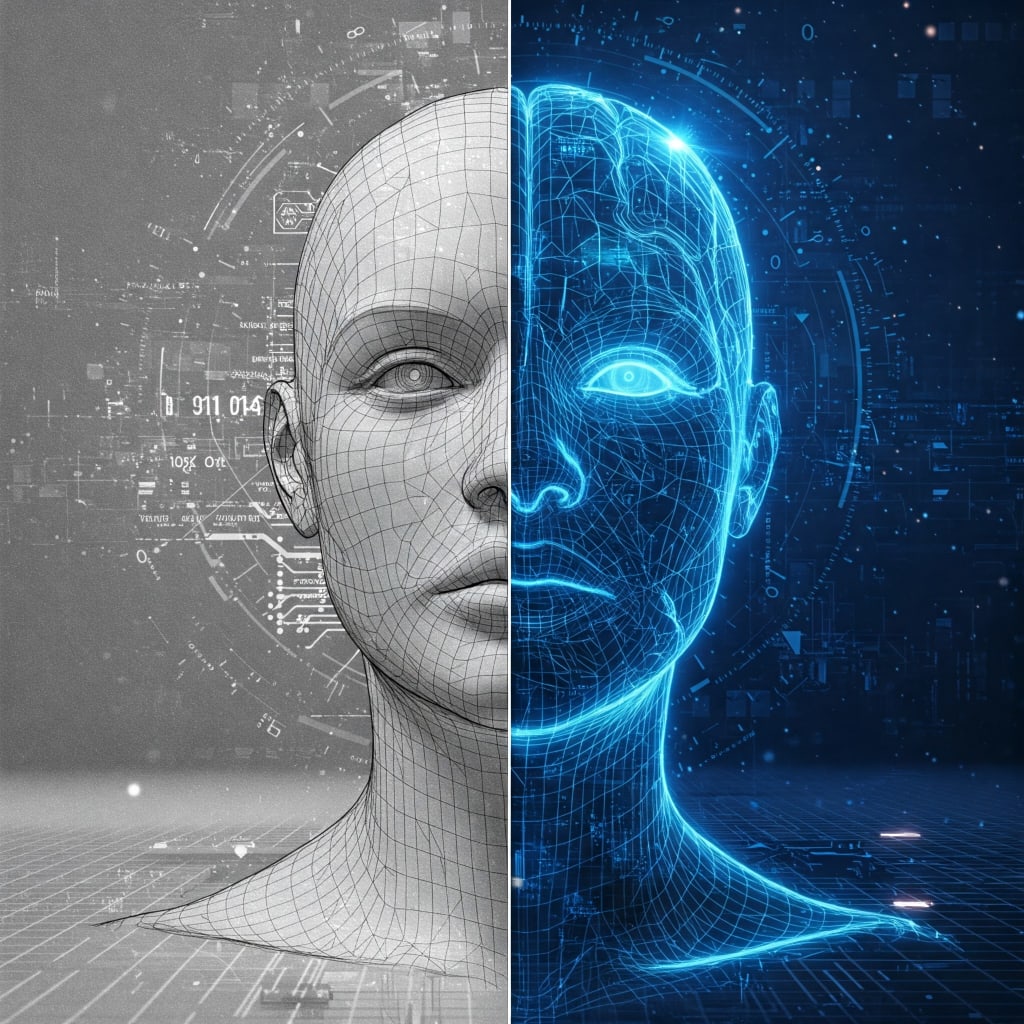
We live in a world where technology is growing very fast. One of the most exciting areas is Artificial Intelligence (AI). AI is changing many industries, including health, education, and entertainment. One area where AI is making a big difference is in rendering. But what exactly is AI rendering? And why is it important?
In this article, we will explain AI rendering in simple words, show how it works, and why it matters for the future of design, games, movies, and more.
What is Rendering?
Before we talk about AI rendering, let's understand what rendering means. Rendering is the process of creating a final image or video from a model or design. In simple terms, it turns a rough shape or scene into a beautiful, realistic picture.
For example:
When making a video game, designers use 3D models. Rendering makes those models look real.
In movies, special effects and animated characters are rendered to fit into real scenes.
In architecture, rendering shows what a building will look like before it's built.
Traditional rendering can take a long time, especially for complex scenes. This is where AI comes in to help.
What is AI Rendering?
AI rendering means using artificial intelligence to help or improve the rendering process. Instead of doing everything step-by-step like older software, AI uses smart learning to guess, predict, and create parts of the image much faster and more efficiently.
AI rendering uses special algorithms (a set of rules) that have been trained with thousands of images, videos, or 3D models. This training helps the AI understand how light, color, shadows, and shapes work together. Then, when it’s time to create a new image, the AI can fill in details, improve quality, or even generate a full picture from just a sketch.
How Does AI Rendering Work?
AI rendering works in several ways, depending on the task. Here are some examples:
1. Image Upscaling
If you have a small, blurry picture, AI can make it larger and clearer. This is called upscaling. The AI has learned what sharp, high-quality images look like and can improve the blurry ones to look better.
2. Real-Time Rendering
In video games, players want smooth, fast graphics. Traditional rendering can be slow. AI helps by quickly guessing how a frame should look, reducing the time it takes to show an image on the screen. This makes gameplay smoother.
3. Noise Reduction
In 3D design, early renderings can look grainy or noisy. AI can remove that noise and make the image look clean and sharp, even before the full rendering is complete.
4. Image Generation
AI can also create new images from ideas, words, or rough sketches. This is useful for artists, architects, and designers. For example, you can type “a modern house in the mountains” and AI can generate a realistic picture of it.
Why is AI Rendering Important?
AI rendering is important because it makes creative work faster, easier, and more affordable. Here’s why it matters:
1. Saves Time
Traditional rendering can take hours or even days for complex projects. AI speeds up the process. What used to take 10 hours might now take just 10 minutes.
2. Cost-Effective
Faster rendering means less time and fewer resources used. Companies save money on computer power and staff hours.
3. Better Quality
AI can add fine details and improve image quality in ways that even skilled artists would take a long time to do.
4. Helps Small Teams
Before AI, only big companies could afford top-level rendering tools. Now, small teams or solo creators can achieve high-quality results using AI.
5. Boosts Creativity
Artists and designers can experiment more. If something is not right, they can fix or change it quickly, without redoing the whole project.
Where is AI Rendering Used?
AI rendering is being used in many different fields:
1. Movies and Animation
Big film studios use AI to speed up special effects and animation. AI helps make characters and scenes look more real and lifelike.
2. Video Games
Game developers use AI to make better graphics without slowing down the game. This helps create rich, immersive worlds for players.
3. Architecture and Interior Design
Designers use AI to show how buildings and rooms will look before construction begins. This helps clients make decisions faster.
4. Product Design
Companies designing new products use AI rendering to test different looks and styles before making real models.
5. Fashion and Art
Artists and fashion designers use AI to generate new styles and patterns. It helps them explore ideas quickly.
Challenges of AI Rendering
While AI rendering is amazing, it's not perfect. Here are a few challenges:
Learning Time: AI needs a lot of training data. It takes time and computer power to train these systems.
Quality Control: Sometimes, AI might create images that look good but are not technically correct.
Loss of Human Touch: Some people worry that using too much AI might reduce the unique creativity of human artists.
Ethical Concerns: AI-generated images can be misused to create fake or misleading content if not handled responsibly.
The Future of AI Rendering
The future of AI rendering looks very bright. As AI becomes smarter, we can expect:
Even faster rendering times
More realistic images and videos
Easier tools for beginners to use
New ways to design, create, and imagine
AI rendering is not just a trend—it’s a powerful tool that is changing how we create visuals. Whether you are a gamer, designer, filmmaker, or student, AI rendering opens new doors for creativity and innovation.
About the Creator
Saim Bill
I’m a passionate article writer who loves sharing ideas, stories, and insights with the world.
About Binding Prometheus
I want to start actively advocating on behalf of my own work, and the most valuable part of my canon is, without a doubt, Binding Prometheus, the play I have been working on since 2019 and only finished in 2023 as part of my MA. The play itself is an amalgamation of a million different inspirations. On one end, it evokes the Ancient Greek myth-play, deriving its own title from the earliest extant work of Western drama we have, Aeschylus’s Prometheus Bound. On the other end, it borrows significantly from the sci-fi bulwarks from over the years, namely Mary Shelley’s Frankenstein and Karel Capek’s Rossum’s Universal Robots. The play could be an episode of Black Mirror, I fear. I don’t know. I’ve only ever seen one episode of Black Mirror.
By Steven Christopher McKnight18 days ago in Futurism
Japan LED Modular Display Market Size & Forecast 2025–2033
Japan LED Modular Display Market at a Glance The Japan LED Modular Display market is anticipated to grow to US$ 1,009.54 million by 2033, rising from US$ 380.54 million in 2024, registering a robust CAGR of 11.45% during 2025–2033. This growth is driven by the increasing demand for high-resolution digital signage across retail, transportation, entertainment, and public infrastructure, combined with the adoption of energy-efficient, customizable display systems for Japan’s expanding smart city initiatives.
By Aaina Oberoi3 days ago in Futurism
Miss Persephone's Manual to a Seemingly Ordinary Life
Miss Persephone was found at the dining table, her blue eyes swollen, her tears arriving and retreating like the tides of the ocean. Earlier that day, her family had visited her in the retirement home where she had lived for eight years. It was her eightieth birthday.
By Imola Tóth4 days ago in Fiction


Comments
There are no comments for this story
Be the first to respond and start the conversation.