
AI Is Coming for Your Job, But It Doesn’t Have To
Why the rise of AI poses one of the biggest threats to employment in decades.
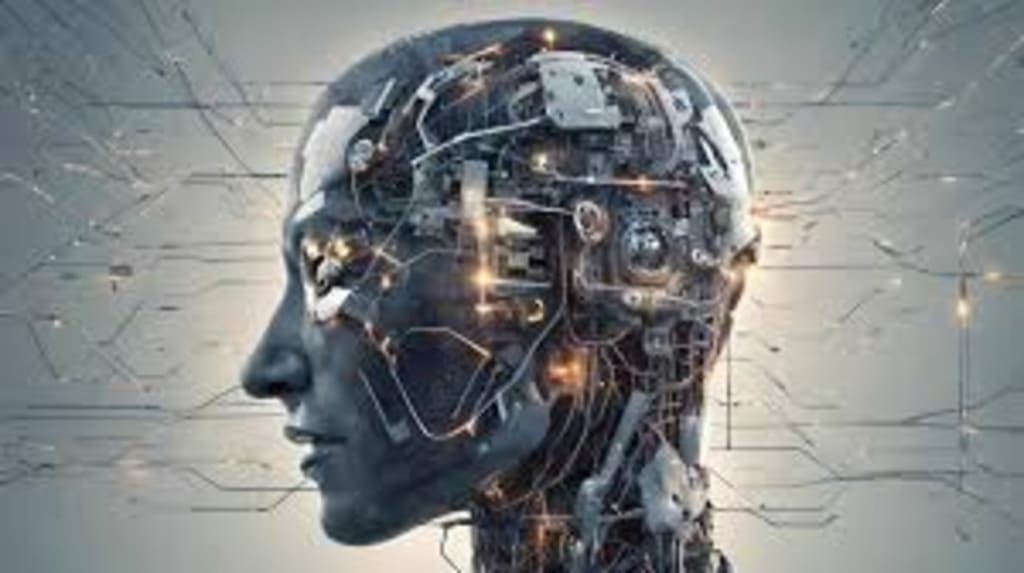
Artificial intelligence was once a futuristic idea reserved for science fiction. Today, it is part of the everyday fabric of life: unlocking your phone with facial recognition, recommending your next Netflix show, approving loan applications, even writing hundreds of lines of code. As AI becomes more capable, the question is no longer “Will it take our jobs?” but rather “What jobs won’t it take?”
With rapid progress comes inevitable anxiety. Workers across industries wonder whether machines will replace them. Companies restructure entire departments to integrate automation. Economists warn of upheaval comparable to the Industrial Revolution. But the truth is more complex than dramatic headlines suggest.
AI will replace some jobs. It will also create new ones. The determining factor is not the technology itself, but how society chooses to manage the transition.
Banking, the unexpected success story of automation
We have already seen the impact that automation can have on jobs, with one of the earliest and most instructive examples coming from banking. When ATMs appeared in the 1970s and 80s, many believed the bank teller’s days were numbered. Machines that could dispense cash, take deposits and show balances seemed like the very definition of job replacement. Yet the reality was far different.
ATMs took over simple, repetitive tasks such as withdrawals, deposits and balance checks. That freed tellers to focus on work requiring human judgement: guiding customers, spotting fraud, advising on loans and offering broader financial support. Because ATMs made branches cheaper to operate, banks opened more of them; in the United States, the number of bank tellers actually rose from around 300,000 in 1970 to roughly 600,000 by 2010. Automation didn’t kill the profession; it transformed it into something more skilled and customer-focused.
The lesson is significant. Automation does not automatically equate to job loss; it often reshapes roles rather than eliminates them. This pattern still appears today. In its 2025 Global AI Jobs Barometer, PwC found that wages in industries most exposed to AI are rising about twice as fast as wages in sectors with low exposure. When implemented thoughtfully, AI can elevate workers instead of discarding them.
This time is different
Despite these historical parallels, the current wave of AI represents a meaningful shift. Earlier rounds of automation mainly targeted physical, repetitive tasks. Today’s AI can perform complex cognitive work that was once the exclusive domain of humans.
One influential 2013 study by Oxford researchers Carl Benedikt Frey and Michael Osborne estimated that about 47% of U.S. jobs are at risk of “computerisation” over the coming decades. Later work by the OECD, using a more fine-grained task-based approach, suggested that around 9–14% of jobs in advanced economies are at high risk of automation, while roughly 32% are likely to be deeply changed by new technologies rather than eliminated outright. In England, the Office for National Statistics analysed the roles of 20 million workers in 2017 and found that 7.4% of jobs—about 1.5 million posts—were at high risk of automation.
Crucially, the impact is no longer limited to predictable, low-wage jobs. The tech industry, the birthplace of modern AI, has already undergone dramatic structural change. In October 2025, U.S.-based employers announced 153,074 job cuts—up 175% on the same month a year earlier and the highest October total in more than two decades—according to Challenger, Gray & Christmas. Companies explicitly cited both cost-cutting and AI adoption as key drivers.
Google’s parent company, Alphabet, laid off around 12,000 employees in early 2023 after a pandemic hiring spree, with its CEO stating the company needed to refocus resources on AI. These were not low-skilled jobs. They included engineers, analysts, human resources professionals and managers—proof that AI threatens white-collar employment just as readily as manual work.
Retail, transportation, customer service, logistics, marketing, legal research and even software development are all becoming increasingly vulnerable to AI systems capable of performing routine decision-making at scale.
Yes, AI will create jobs, but not for everyone
Like every major technological shift, AI will generate new forms of work. Roles involving AI safety, cybersecurity, robotics maintenance, algorithm auditing, data governance, digital infrastructure and AI ethics are already emerging. Entirely new professions, such as “prompt engineers” and AI governance specialists, have appeared almost overnight.
The question is not whether AI will create jobs. The question is whether displaced workers will realistically be able to transition into them.
Reskilling for highly technical roles requires time, money and opportunity, three things many workers do not have. Those in industries most vulnerable to automation often have the least access to retraining pathways. Without deliberate programmes to support them, millions could find themselves shut out of the new economy.
History shows that societies benefit from technological revolutions only when they invest in their workforce. When they fail to do so, inequality widens, frustration grows and whole regions can be economically hollowed out.
Regulation is no longer optional
AI itself is not a threat; unregulated deployment of AI is. Left entirely to market forces, companies have strong incentives to automate as aggressively as possible, prioritising efficiency and cost savings even when the human consequences are severe.
A recent report released by Senator Bernie Sanders’ office warned that AI and automation could destroy or disrupt nearly 100 million U.S. jobs over the next decade if left unchecked. Without safeguards, automation could dramatically widen existing inequalities, destabilise local economies and create a class of workers permanently excluded from the labour market.
Effective regulation does not mean freezing innovation. It means shaping its impact. Governments can require firms to assess job impacts before large-scale automation, invest in transition and training programmes, ensure ethical oversight to prevent biased or harmful AI use, and explore income supports such as wage supplements or universal basic income. The European Union has taken early steps with its AI Act, which entered into force in August 2024 and will be phased in over several years, with stricter rules for high-risk systems and general-purpose AI models. Globally, however, policy still lags far behind technological progress.
If AI is to enhance productivity rather than erode livelihoods, strong and proactive governance is essential.
A choice, not a destiny
AI is neither inherently benevolent nor inherently threatening. It is a tool—one of the most powerful tools humanity has ever created. Used wisely, it can eliminate dangerous and monotonous labour, free people to pursue creative and meaningful work, and raise living standards. Used irresponsibly, it can displace workers on a scale not seen in modern history, deepen inequality and concentrate power in the hands of a few companies.
The future of work is not predetermined. It will be shaped by the decisions governments make, the priorities companies choose and the protections societies demand.
AI will transform everything. But whether that transformation benefits the many or the few is still up to us. One thing is clear: if we fail to regulate AI responsibly, the cost may be far greater than we expect.
About the Creator
Keep reading
More stories from writers in Futurism and other communities.
About Binding Prometheus
I want to start actively advocating on behalf of my own work, and the most valuable part of my canon is, without a doubt, Binding Prometheus, the play I have been working on since 2019 and only finished in 2023 as part of my MA. The play itself is an amalgamation of a million different inspirations. On one end, it evokes the Ancient Greek myth-play, deriving its own title from the earliest extant work of Western drama we have, Aeschylus’s Prometheus Bound. On the other end, it borrows significantly from the sci-fi bulwarks from over the years, namely Mary Shelley’s Frankenstein and Karel Capek’s Rossum’s Universal Robots. The play could be an episode of Black Mirror, I fear. I don’t know. I’ve only ever seen one episode of Black Mirror.
By Steven Christopher McKnight11 days ago in Futurism
Where's the Glory?
In breaking news, rehabilitated Republican Senator Johnnie Johnson (Pronouns: HE, HIM, HIS) called a press conference from the Men’s room of the New Orleans Louis Armstrong International Airport, Concourse B, across from the Ignatius Reilly’s Lucky Dog stand. The Senator had just returned from a sexual reorientation rehabilitation program in Memphis, TN after being publically disgraced at a Buckee’s Truckstop restroom soliciting sex from an undercover cop three months ago. He is a founding member of the Reformed Christians for Christ, a conservative, pro-family and ex-gay advocacy group. In the spirit of being reborn, Senator Johnson invited reporters to marvel at his plans for a major remodeling of airport bathrooms.
By Cathy Schieffelin5 days ago in Humor
Center Stage with Gina C.
*** I'm keen to republish the interviews I did for my series with Vocal creators. It's been a few years and I thought it might be nice to revisit these wonderful conversations. I'll be releasing them one at a time for a few weeks/months.
By Heather Hubler5 days ago in Interview


Comments
There are no comments for this story
Be the first to respond and start the conversation.