
AI in Mobile App Development: Benefits & Future Trends
AI in Mobile App Development

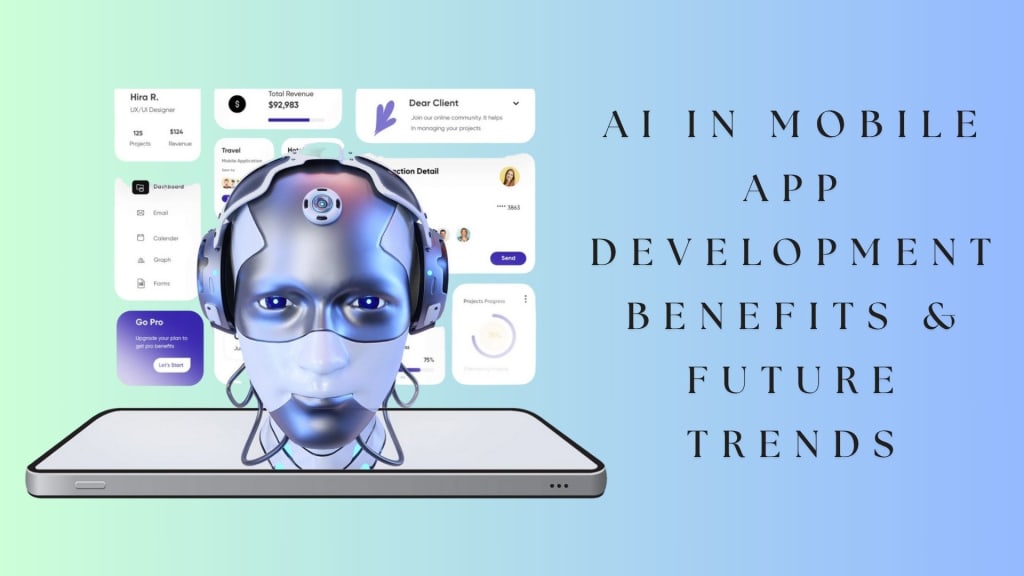
The landscape of mobile technology is rapidly transforming as AI in mobile app development becomes the cornerstone of innovation. Modern mobile phones have evolved from simple communication devices to intelligent companions who are capable of understanding, predicting, and adapting to user needs. This integration of intelligent systems is creating more intuitive, efficient, and personalized mobile experiences that were once considered science fiction. As developers increasingly recognize the potential of these technologies, the mobile app ecosystem is witnessing unparalleled growth in functionality and user satisfaction.
What is AI in Mobile App Development?
Artificial Intelligence is the technology that allows computer systems to simulate solving problems using human intelligence. It includes various other technologies like machine learning, natural language processing, and computer vision etc. AI in mobile app development means the integration of artificial intelligence into mobile apps to improve their capabilities. The technologies of AI allow it to learn from user behavior, automate processes, and provide a personalized experience.
Benefits of AI in Mobile App Development
Application Quality Improvement
AI’s code review tools help in maintaining high-quality code standards across the teams. And by continuously monitoring the code during the software development process, Swift developers can detect more issues and explore more options to optimize the code and fix the bugs.
Enhanced App Security
With an increased cyber threats, mobile app development services improve the security by identifying potential threats and breaches. AI-powered biometric authentication, real-time threat analysis, and fraud detection help in protecting sensitive user data. Hence, integrating AI and ML allows companies to identify suspicious activities and unusual login attempts.
Improved Operational Efficiency
Artificial intelligence improves an app's performance by optimizing operational efficiency. AI tools handle resource allocation, performance monitoring, and predictive maintenance. It minimizes the app downtime, optimizes both frontend and backend processing and make sure smooth functionality.
Human-Like Interactions
Sentimental analysis and NPL allows apps to respond to users' queries in a human-like tone. AI technologies respond to more empathetic and supportive responses even if the user is confused or frustrated or experiencing any sort of negative emotions.
Dynamic User Interface
The AI-powered interface is quite flexible, as it changes based on how individuals interact with the interface. This way, if a user likes a specific feature or frequently uses a particular feature, the AI will update the entire interface according to the user's preferences. These AI-driven user experiences make sure that every interaction feels personalized and intuitive.
Major Use Cases of AI in Mobile App Development
Intelligent User Experience and Personalization
AI changes how apps understand and adapt to users' needs. (ML)Machine learning algorithms analyze user behavior to provide product recommendations, interface customizations and personalized content. Popular apps like Spotify use AI to create custom playlists, while shopping apps suggest products based on purchasing patterns and browsing history.
Automated Testing and Quality Assurance
Testing mobile apps across multiple scenarios and devices becomes manageable with AI. Automated testing tools, powered by machine learning, can simulate user interactions, finding bugs and testing app performance across different operating systems and device configurations. AI can predict where the bugs are likely to occur or recur based on code patterns. Thus, it generates test cases that human testers might miss.
Emotion Recognition and Sentiment Analysis
Apps analyze user emotions through various inputs like text, voice tone, usage patterns, and facial expressions. Customer service apps detect frustrated users and escalate their issues automatically, while mental health apps track mood changes over time. Dating apps use sentiment analysis to suggest better matches for people with compatible communication styles.
Smart Notifications and Communication Timing
Artificial intelligence, based on user behaviour patterns and engagement history, determines optimal times to send notifications, instead of bombarding users with alerts. AI learns when users are most likely to engage and sends notifications accordingly. This includes understanding context like time of day, location and current app usage to avoid interrupting important activities.
Real-Time Language Translation and Localization
With this new technology, language barriers within apps are overcome through instant translation capabilities. Travel apps translate signs and menus through the camera integration, while messaging apps give real-time conversation translation. Beyond basic translation, artificial intelligence in apps handles cultural localization by adapting colors, content, and interface elements to match regional preferences and cultural norms.
Future of AI in Mobile App Development
The future of mobile app AI promises revolutionary changes that will transform how we interact with mobile technology. As we look ahead, several groundbreaking trends are emerging that will redefine the mobile app landscape.
Autonomous App Evolution
Mobile apps will evolve without human intervention, and machine learning models will analyze user feedback and usage patterns to inform their development. This means apps could literally improve themselves overnight, testing changes with a small user group and rolling out successful modifications automatically.
Augmented Reality as Standard Interface
AR will become the default way to interact with digital information, not a special feature. AI will smoothly blend digital content with the physical world and context to display information exactly where it’s needed. Your shopping list might appear floating next to relevant products in a store, or assembly instructions could overlay directly onto the objects you're building.
Edge AI and Privacy-First Intelligence
Processing will shift from cloud-based AI to on-device intelligence, making sure privacy while allowing instant responses. Advanced chips in mobile devices will run AI models locally, that means your personal data never leaves your device and will still benefit you with intelligent features. For businesses looking to implement these advanced features, it's important to hire Swift developers who understand the intricacies of iOS development and AI integration.
Autonomous Problem Solving
Mobile apps will identify and solve problems users didn't even know they had with the help of AI. By analysing many patterns across millions of users, AI will predict the common issues and automatically implement solutions. A banking app might detect unusual spending patterns that indicate theft.
Conclusion
The integration of AI in mobile app development shows more than just a technological advancement. It's a fundamental shift towards creating truly intelligent, responsive, and user-centric applications. As we've explored throughout this complete overview, AI technologies are transforming every aspect of mobile app development, from improving security and optimizing performance to delivering personalized user experiences that feel almost magical.
The benefits are clear: improved app quality, enhanced security measures, streamlined operational efficiency, and human-like interactions that remove the gap between user expectations and technology. Looking toward the future, the possibilities seem limitless with autonomous app evolution, augmented reality interfaces, edge computing, and autonomous problem-solving capabilities on the horizon. For businesses and developers, embracing AI in mobile app development isn't just an option. It's important for staying competitive in an increasingly intelligent digital ecosystem.
About the Creator
akelahmed
I'm Akel Ahmed, a talented Graphic Designer & Content writer with a flair for creating engaging designs that capture the essence of a brand.
5 AI Tools That Can Earn You Money in 2026
Artificial intelligence is transforming the way people work online. Tasks that once took hours, days, or even weeks can now be completed in minutes with AI-powered tools. This shift has created a huge opportunity for beginners, freelancers, and small business owners who want to earn money online without advanced technical knowledge. By learning how to use the right AI tools, you can start earning quickly while maintaining quality. In 2026, AI isn’t just for tech experts—it’s for anyone willing to explore and apply its capabilities creatively. Here are five AI tools that can help you earn money online this year: 1. ChatGPT – Your AI Writing Assistant Writing is still one of the most in-demand skills online. From blogs and social media posts to email campaigns and marketing copy, businesses and creators constantly need high-quality content. ChatGPT makes this easier than ever. With this AI tool, you can: Generate article drafts in minutes Brainstorm content ideas Improve grammar and structure Write scripts for videos or podcasts Many freelancers use ChatGPT to speed up projects and take on more clients. Beginners can also leverage it to start a content-writing business, offering services for blogs, e-commerce websites, or social media content. The key is to combine AI assistance with your own creativity—this makes the content feel personal and human while still being efficient. 2. Midjourney – Create Stunning AI Images Visual content grabs attention faster than text alone. Midjourney allows you to generate high-quality images from text prompts, no design skills required. This AI tool is widely used to create: Book covers Social media graphics Digital artwork for websites or ads Visual content for e-commerce products Freelancers and digital entrepreneurs can sell AI-generated images online, offer design services, or create templates for clients. Even beginners can produce professional-looking visuals without prior experience. With some practice, Midjourney can become a consistent income source by selling digital assets or providing creative services online. 3. Runway ML – Video Creation and Editing Video content dominates the internet today. YouTube, social media, and online courses all rely heavily on video. But creating videos manually can be time-consuming. Runway ML is an AI video tool that helps beginners: Edit videos faster Remove backgrounds automatically Apply effects and transitions Generate clips from AI-assisted features This allows creators to produce high-quality videos in a fraction of the time. Freelancers can use it to offer video editing services to small businesses, content creators, and brands. Even if you’re new to video production, Runway ML makes it easy to start earning money online. 4. Canva – AI Design for Everyone Canva has become a household name for design, but its AI features make creating professional graphics even simpler. With Canva, you can create: Social media posts Presentations Marketing materials Brand designs for clients Freelancers can sell design services, while small business owners can maintain a professional online presence. The AI tools speed up the design process and allow beginners to produce polished results. This combination of simplicity and versatility makes Canva ideal for starting a small online business or freelancing venture. 5. Pictory – Turn Text Into Videos Creating video content can seem intimidating, but Pictory simplifies it by converting written content into professional videos. Simply paste an article, blog, or script, and Pictory generates a video complete with: Stock footage Captions Background music This is perfect for YouTubers, educators, or social media content creators. Beginners can produce engaging videos without filming themselves, making Pictory a highly valuable tool for starting an online income stream. Final Thoughts Artificial intelligence is changing the online world faster than ever. It allows beginners to create, design, and produce professional content without needing years of experience. The key to success is choosing one tool, learning it well, and applying it consistently. AI doesn’t replace creativity—it amplifies it. By mastering these five AI tools, beginners can build freelancing services, create digital products, or offer content solutions to clients worldwide. The potential to earn money online in 2026 has never been more accessible. The future is here—and with AI, the opportunities are limitless.
By Baseer Shaheen 8 days ago in Futurism
The First Rainbow Baby
Pitter-patter, pitter-patter. The rain fell in rhythmic splatters, slowly slowing, but still constant. Mira rolled onto her side pulling the blanket tight against her ears, but still she could hear chitter-chatter and scurrying feet of the creatures that refused to sleep in the lower decks.
By A. J. Schoenfeld2 days ago in Fiction



Comments
There are no comments for this story
Be the first to respond and start the conversation.