
AI in Cybersecurity: AI is being used to detect and prevent cyber threats, making it a hot topic in the field of cybersecurity.
AI in Cybersecurity: A New Vanguard Against Cyber Threats
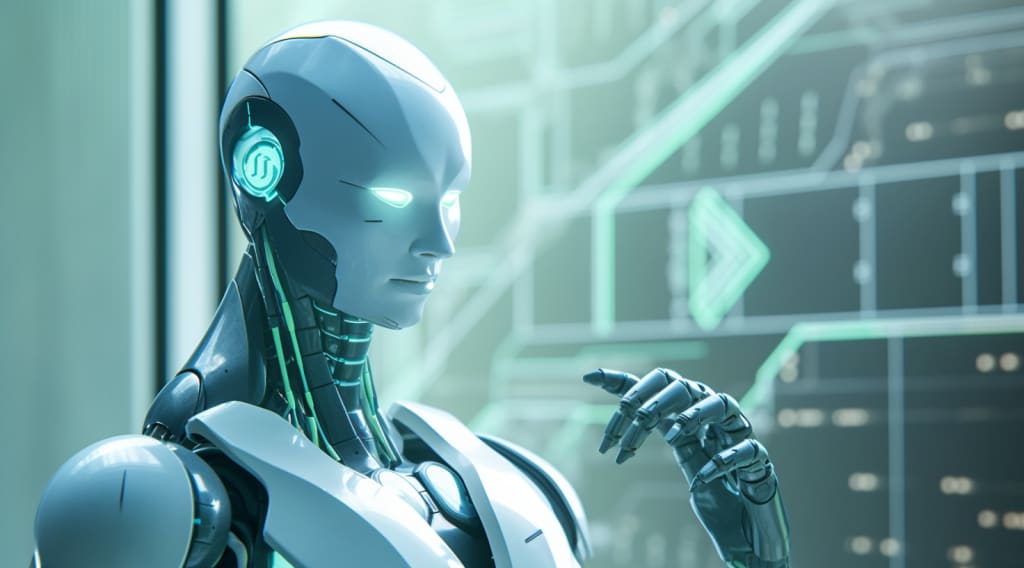
In the digital age, where our lives are increasingly intertwined with the internet, cybersecurity has become a paramount concern. From protecting personal data to securing national infrastructure, the stakes are high. Enter Artificial Intelligence (AI), a technology that is revolutionizing many fields, including cybersecurity. AI is being used to detect and prevent cyber threats, making it a hot topic in the field of cybersecurity. But what exactly is AI, and how does it help in cybersecurity? Let's dive in.
Understanding AI
Artificial Intelligence, or AI, is a branch of computer science that aims to create machines that mimic human intelligence. This doesn't mean creating robots that think and feel like humans, but rather, developing systems capable of learning and making decisions that would normally require human intelligence. These systems can analyze vast amounts of data, identify patterns, and make predictions or decisions based on that analysis.
AI and Cybersecurity
In cybersecurity, AI is like a tireless sentinel, always on the lookout for potential threats. Traditional cybersecurity measures often rely on known threat signatures or specific patterns of behavior to identify potential attacks. However, cyber threats are evolving at an alarming rate, and it's becoming increasingly difficult for traditional methods to keep up. This is where AI comes in.
AI can analyze vast amounts of data in real-time, looking for anomalies or suspicious behavior that might indicate a cyber threat. This could be anything from a sudden surge in network traffic to an unusual email attachment. AI can also learn from past incidents, improving its ability to detect similar threats in the future. This is known as machine learning, a subset of AI.
AI in Action: Detecting and Preventing Cyber Threats
AI's ability to analyze and learn from data makes it incredibly valuable in detecting and preventing cyber threats. For instance, AI can be used to monitor network traffic, looking for unusual patterns that might indicate a cyber attack. If a threat is detected, AI can take immediate action, such as isolating the affected system or blocking the source of the attack.
AI can also be used to protect against phishing attacks, one of the most common types of cyber threats. Phishing attacks often involve sending deceptive emails that trick recipients into revealing sensitive information, such as passwords or credit card numbers. AI can analyze emails, looking for signs of phishing, such as suspicious links or unusual language.
AI isn't just reactive; it's also proactive. AI systems can simulate cyber attacks on a network to identify vulnerabilities before they're exploited by malicious actors. This is known as penetration testing or "ethical hacking." By identifying these vulnerabilities, organizations can take steps to strengthen their security before an actual attack occurs.
The Future of AI in Cybersecurity
As AI continues to evolve, so too will its role in cybersecurity. Advances in machine learning and other AI technologies will enable even more sophisticated threat detection and prevention. For instance, AI could be used to develop personalized security measures based on an individual's behavior patterns, providing an extra layer of protection.
However, it's important to note that while AI offers many benefits in cybersecurity, it's not a silver bullet. AI is a tool, and like any tool, it's only as good as the person using it. Cybersecurity requires a multi-faceted approach, combining AI with other security measures and a well-trained human team.
Moreover, as AI becomes more prevalent in cybersecurity, there's also the risk that malicious actors could use AI to carry out more sophisticated attacks. This underscores the need for ongoing research and development in AI and cybersecurity, to stay one step ahead of potential threats.
Conclusion
In the ongoing battle against cyber threats, AI is proving to be a powerful ally. Its ability to analyze vast amounts of data in real-time, identify patterns
, and learn from past incidents makes it an invaluable tool in detecting and preventing cyber threats. However, the use of AI in cybersecurity also brings new challenges and risks, highlighting the need for ongoing research and development in this field.
AI is not just a buzzword or a futuristic concept; it's a technology that's here to stay and will continue to shape our digital landscape. As we continue to rely more on digital systems, the importance of cybersecurity will only increase. And as we face this reality, AI will undoubtedly play a crucial role in ensuring our digital world is a safe one.
In the end, the marriage of AI and cybersecurity represents a significant stride towards a safer digital future. It's a testament to human ingenuity, harnessing the power of technology to protect our digital lives. As we move forward, we can expect AI to continue to be a hot topic in cybersecurity, pushing the boundaries of what's possible in the fight against cyber threats.
So, the next time you log into your email or make an online purchase, remember that there's a good chance AI is working behind the scenes, helping to keep your information safe. It's a silent guardian, a tireless protector, and an essential part of our digital world.
About the Creator
About Binding Prometheus
I want to start actively advocating on behalf of my own work, and the most valuable part of my canon is, without a doubt, Binding Prometheus, the play I have been working on since 2019 and only finished in 2023 as part of my MA. The play itself is an amalgamation of a million different inspirations. On one end, it evokes the Ancient Greek myth-play, deriving its own title from the earliest extant work of Western drama we have, Aeschylus’s Prometheus Bound. On the other end, it borrows significantly from the sci-fi bulwarks from over the years, namely Mary Shelley’s Frankenstein and Karel Capek’s Rossum’s Universal Robots. The play could be an episode of Black Mirror, I fear. I don’t know. I’ve only ever seen one episode of Black Mirror.
By Steven Christopher McKnight26 days ago in Futurism
Global Tilt Sensor Market Size and Forecast 2025–2033
Global Tilt Sensor Market Overview The Global Tilt Sensor Market accounted for USD 255 million in 2024 and is anticipated to grow at a CAGR of 12.25% from 2025 to 2033, driven by the expanding application of tilt sensors across automotive, construction, aerospace, electronics, and industrial automation sectors. Rapid advancements in sensor technology and the integration of tilt sensors into IoT-based systems are further accelerating market growth during the forecast period.
By Renub Research3 days ago in Futurism




Comments
There are no comments for this story
Be the first to respond and start the conversation.