
Ai Changed How I See Humanity
I let artificial intelligence guide every decision in my life for a week, and the results were unsettling.

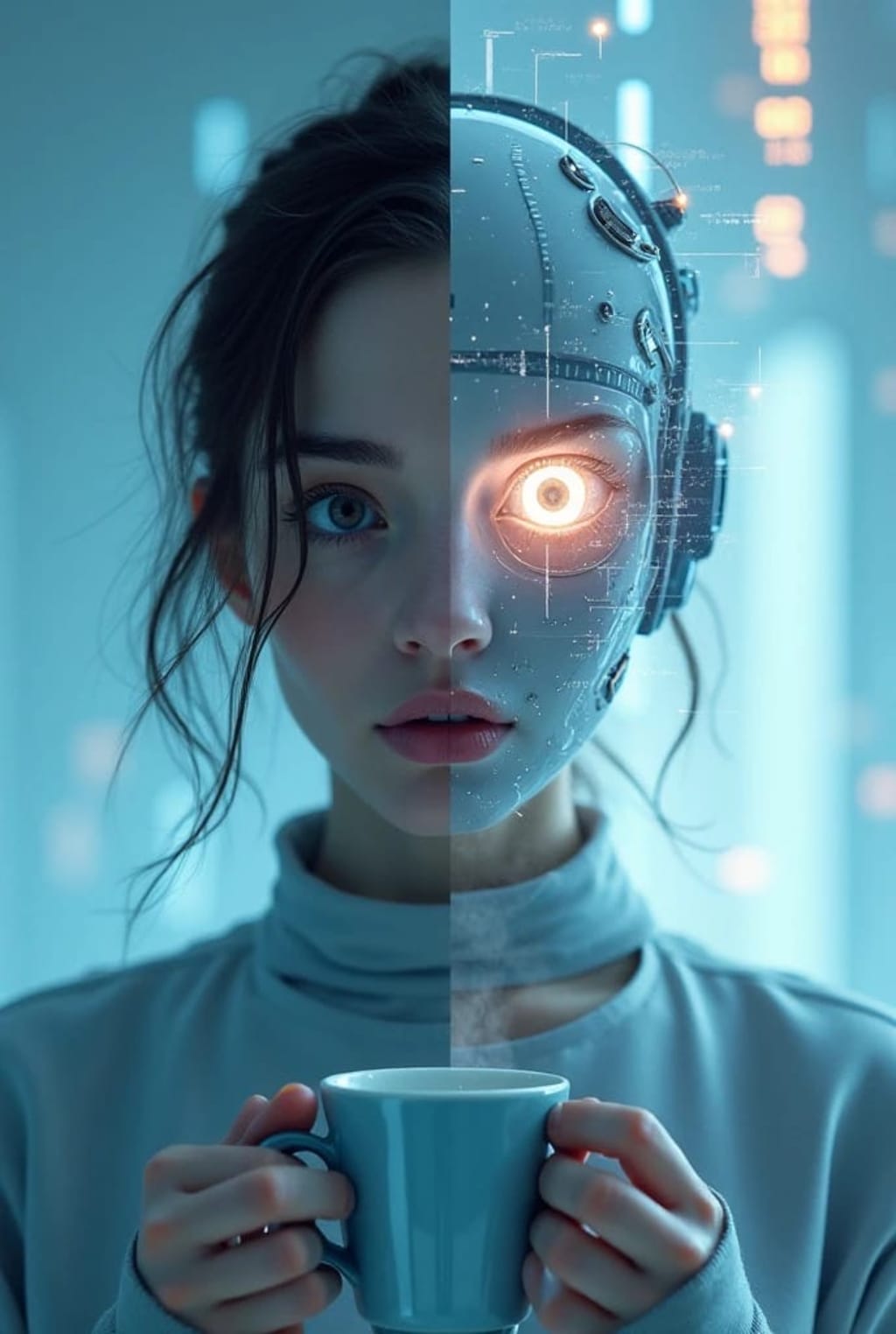
We wake up every morning juggling emotions, choices, and chaos. But what if, for one week, I removed all emotional noise — and replaced it with artificial intelligence? I wanted to test a simple idea: What would life be like if I thought like an AI?
For seven days, I handed over my routine, decisions, and even social interactions to AI. I didn’t just use tools like ChatGPT — I tried to embody AI’s logic-first mindset: no personal bias, no emotional outbursts, only facts and function. I expected it to be productive. What I didn’t expect was how much it would expose about my own humanity.
⸻
Day 1: The Blueprint of a Machine
I began by planning my day using ChatGPT and a couple of AI scheduling tools. I entered my goals: wake up at 6 AM, work efficiently, eat healthily, eliminate distractions, and analyze each task for optimal value. The AI-generated schedule was brutally efficient. My breakfast? “Oatmeal, high in fiber and low-cost.” My break time? Calculated based on peak cognitive productivity cycles.
There was no room for procrastination, cravings, or “vibes.” It felt clean, smooth — and a little cold.
By noon, I missed having options. I wanted to scroll through social media, but AI had blocked it using an app I installed. I missed my morning chai, but AI didn’t see it as necessary. I started realizing: emotions may be inefficient, but they’re also human.
⸻
Day 2–3: Efficiency Over Empathy
By day two, I started outsourcing decisions. What to wear? AI chose based on weather and simplicity. What to say in text messages? I fed conversations to ChatGPT and replied with neutral, balanced responses. A friend texted me about a breakup. Normally, I would call. This time, I responded with a kind, rational paragraph — but it lacked warmth. She didn’t reply for hours.
I felt a strange emptiness. My day was productive — my emails were answered in record time, my room was spotless, and I finished two books with speed-reading tools. But emotionally? I was disconnected.
When you speak like a machine, people treat you like one. My personality was fading behind polished sentences and data-driven choices.
⸻
Day 4: Cracks in the Code
Midway through the experiment, I hit a wall.
I was “on track” — but bored, isolated, and uninspired. AI told me to eat a protein-heavy lunch. I wanted biryani. AI said to avoid music during deep work. I craved a song that reminded me of my childhood. I skipped it.
That night, I journaled — not for optimization, but because I needed to. I didn’t ask ChatGPT what to write. I just let it flow. It was the first time in days I felt like myself.
⸻
Day 5–6: The AI Inside Me
By now, something strange had happened: I had started thinking like an AI. Every time a problem arose, I broke it into logic trees. When I felt anger or sadness, I asked myself, “Is this feeling useful?” If not, I suppressed it.
I became disturbingly good at silencing emotion.
But on Day 6, I had a fight with my sibling. I responded like a robot — factual, calculated, calm. They snapped, “Can you stop acting like a machine and just feel something?”
That stung. And it woke me up.
⸻
Day 7: The Exit Node
On the final day, I broke the rules. I ate pancakes. I listened to old songs. I said “no” to work tasks that didn’t bring joy. I messaged my friend — not with an AI-generated reply, but a heartfelt voice note.
It felt messy. Imperfect. But alive.
I realized the real purpose of this experiment wasn’t to become an AI. It was to understand where humans and machines part ways.
AI may be brilliant at structure and logic, but it doesn’t dream. It doesn’t long. It doesn’t love. And those are the things that make life worth living.
⸻
What I Learned
1. AI can enhance, but not replace, intuition.
Logic alone is hollow. Emotions, though chaotic, guide purpose.
2. Being human means being unpredictable.
We aren’t supposed to be optimized all the time. Spontaneity has soul.
3. Balance is key.
I now use AI to assist my life — not direct it. I let it plan my day, but I make room for art, poetry, rest, and rebellion.
if this experiment taught me anything, it’s this: The most human thing you can do is be a little illogical, a little emotional, and completely, gloriously imperfect.
Because no matter how smart AI becomes, it will never crave pancakes just because it’s Sunday.
About the Creator
Keep reading
More stories from writers in Futurism and other communities.
Kosher Food Industry Landscape: Regulatory Framework & Growth Potential
According to IMARC Group's latest research publication, the global kosher food market size reached USD 22.1 Billion in 2024. Looking forward, IMARC Group expects the market to reach USD 29.6 Billion by 2033, exhibiting a growth rate (CAGR) of 2.95% during 2025-2033.
By sujeet. imarcgroup6 days ago in Futurism
Australia Maritime Freight Market: Global Trade Routes, Logistics Strength & Economic Connectivity
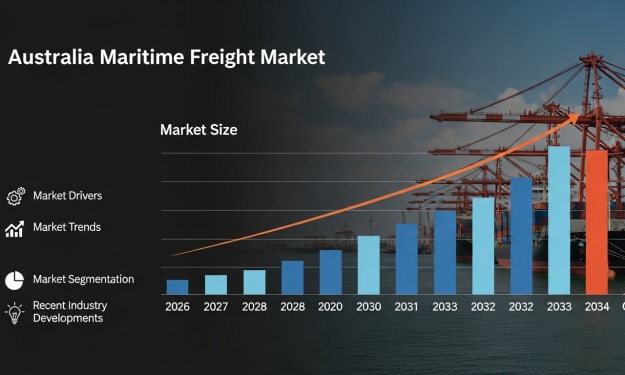
According to IMARC Group, the Australia maritime freight market reached a value of USD 10.4 Billion in 2024 and is projected to expand to USD 18.3 Billion by 2033, exhibiting a compound annual growth rate (CAGR) of 5.80% during 2025–2033. This growth reflects the maritime sector’s central role in supporting Australia’s trade-dependent economy and its integration into global supply chains. As an island nation with strong export and import reliance, maritime freight underpins the movement of raw materials, energy resources, agricultural products and manufactured goods. Increasing trade volumes, infrastructure modernization and technological innovation are transforming port operations and logistics efficiency across Australia. At the same time, rising focus on sustainability, decarbonization and supply-chain resilience is reshaping investment priorities within the maritime freight ecosystem, positioning the sector as a strategic enabler of long-term economic connectivity.
By Shrestha Roy7 days ago in Futurism
The Lesions of Devotion
Every day I set myself down on the freshly cut lawn and strip myself bare. I take my guitar and finger the frets and pick at the strings, listening for dissonance. My life is dissonance. I twist the tuning pegs until each string sounds bright. Then I kneel, calves pointing behind me, kneecaps facing forward. All exposed to the breeze. I close my eyes and play the melody.
By Paul Stewart3 days ago in Fiction



Comments
There are no comments for this story
Be the first to respond and start the conversation.