
AI and Robotics: The Next Frontier in Automation
By Jay Phoenix
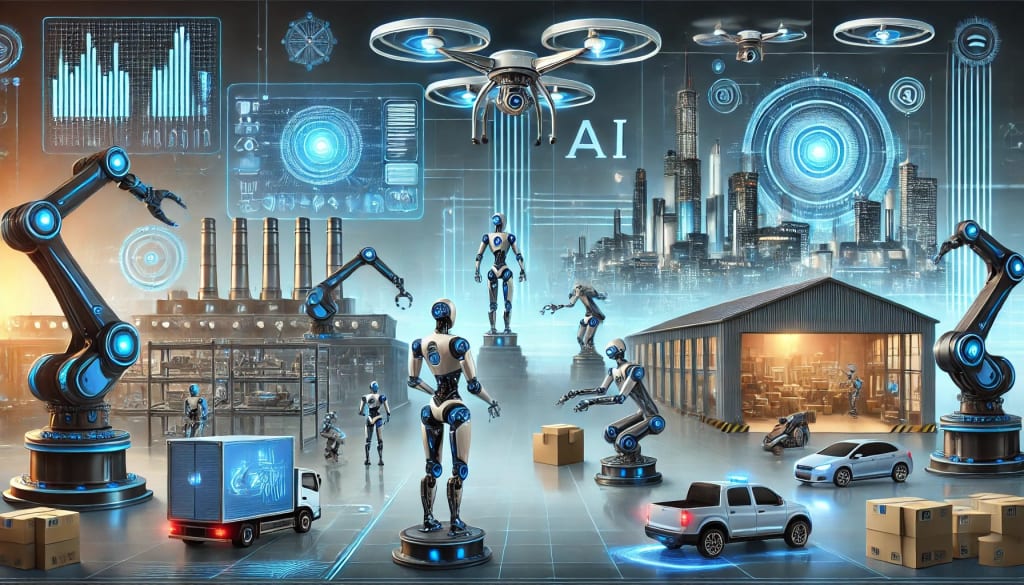
Artificial intelligence and robotics are no longer confined to science fiction. They are transforming the way we work, live, and interact with the world. Automation is no longer just about speeding up repetitive tasks—it’s about revolutionizing industries, enhancing efficiency, and even redefining the concept of human labor. The next wave of AI-powered robotics is poised to reshape entire economies, and the changes are happening faster than most people realize.
The Rise of Autonomous Robots
Robots are becoming smarter, more adaptable, and more independent. Thanks to advancements in AI, today’s machines can process real-time data, make split-second decisions, and operate without human intervention. Autonomous robots are being deployed in warehouses, hospitals, and even on roads. They navigate complex environments, optimize logistics, and perform tasks that were once deemed impossible for machines.
From self-driving delivery robots to AI-powered drones, automation is entering spaces that once relied solely on human input. These robots are not only increasing efficiency but also reducing costs for businesses and consumers alike.
How AI is Enhancing Industrial Automation
Factories have used robotics for decades, but AI is taking automation to new heights. Traditional assembly-line robots followed pre-programmed instructions, but AI-powered machines can now learn, adapt, and improve over time. Machine learning algorithms allow robots to recognize defects in real time, adjust their movements for precision, and work alongside human employees more safely than ever before.
AI-driven predictive maintenance is also revolutionizing industrial automation. Instead of waiting for a machine to break down, AI systems can analyze data patterns to predict failures before they happen. This minimizes downtime, increases productivity, and saves millions in repair costs.
AI and Robotics in Healthcare
The medical field is experiencing a robotics revolution. AI-assisted robotic surgeons can perform complex procedures with extreme precision, reducing the risk of human error. These robots are not replacing doctors but rather enhancing their abilities, making surgeries safer and more efficient.
Outside the operating room, AI-powered robots are assisting with patient care, disinfecting hospital rooms, and even providing companionship for elderly patients. In an era where healthcare professionals are often overburdened, automation is proving to be a vital support system.
Retail and Customer Service: A Robotic Transformation
The retail industry is embracing AI-driven automation at an unprecedented pace. From cashier-less stores to AI-powered chatbots handling customer inquiries, businesses are leveraging robotics to streamline operations. Inventory management robots are now common in warehouses, ensuring shelves are always stocked with minimal human intervention.
In the hospitality sector, AI-powered robotic concierges are greeting guests, handling room service requests, and even assisting with luggage. The efficiency gains are undeniable, and businesses that adapt to these changes will have a competitive edge in the coming years.
AI and Robotics in Agriculture
Farming is another industry where AI and robotics are making a significant impact. With global food demand on the rise, automation is helping farmers produce more with fewer resources. AI-driven drones monitor crops, detect diseases, and optimize irrigation schedules, ensuring higher yields and less waste.
Autonomous farming equipment is also changing the game. Self-driving tractors, robotic harvesters, and AI-powered sorting machines are revolutionizing the way food is grown and distributed. These innovations not only improve efficiency but also reduce the environmental footprint of agriculture.
The Ethical and Economic Implications of AI Automation
With all the benefits of AI-driven automation, there are also important ethical and economic considerations. One of the biggest concerns is job displacement. As machines become more capable, certain tasks traditionally performed by humans are being automated. While this can lead to greater efficiency and lower costs, it also raises questions about employment and economic stability.
However, automation doesn’t necessarily mean the elimination of jobs—it means the evolution of work. As AI and robotics handle repetitive tasks, humans will be freed up to focus on more complex, creative, and meaningful roles. New industries and job categories will emerge, requiring a workforce with skills in AI, robotics maintenance, and data analysis.
Governments and businesses must work together to ensure a smooth transition, providing retraining programs and opportunities for workers to adapt to this rapidly changing landscape.
What the Future Holds for AI and Robotics
The next decade will see even greater advancements in AI-driven robotics. Machines will become more intuitive, collaborative, and capable of performing highly sophisticated tasks. The integration of AI with edge computing, 5G, and the Internet of Things will enable robots to function more efficiently and make decisions in real time.
AI-powered humanoid robots, once a futuristic dream, are inching closer to reality. From assisting in elderly care to performing hazardous jobs in disaster zones, these robots will continue to redefine what is possible.
While there are challenges ahead, the potential benefits of AI and robotics are too significant to ignore. The future of automation is not just about replacing human effort—it’s about enhancing human potential. The companies and industries that embrace this transformation will be the ones leading the way into the next era of technological progress.
About the Creator
Keep reading
More stories from Jay Phoenix and writers in Futurism and other communities.
The Role of AI in Climate Change Solutions: A 2025 Perspective
Climate change is one of the most pressing challenges of our time. The effects are everywhere—rising global temperatures, extreme weather events, and biodiversity loss. Scientists, policymakers, and activists are fighting to slow its impact, but now, artificial intelligence is stepping in as a powerful ally.
By Jay Phoenix12 months ago in Futurism
About Binding Prometheus
I want to start actively advocating on behalf of my own work, and the most valuable part of my canon is, without a doubt, Binding Prometheus, the play I have been working on since 2019 and only finished in 2023 as part of my MA. The play itself is an amalgamation of a million different inspirations. On one end, it evokes the Ancient Greek myth-play, deriving its own title from the earliest extant work of Western drama we have, Aeschylus’s Prometheus Bound. On the other end, it borrows significantly from the sci-fi bulwarks from over the years, namely Mary Shelley’s Frankenstein and Karel Capek’s Rossum’s Universal Robots. The play could be an episode of Black Mirror, I fear. I don’t know. I’ve only ever seen one episode of Black Mirror.
By Steven Christopher McKnight27 days ago in Futurism



Comments (1)
Hello, just wanna let you know that if we use AI, then we have to choose the AI-Generated tag before publishing 😊