
The Role of AI in Climate Change Solutions: A 2025 Perspective
By Jay Phoenix
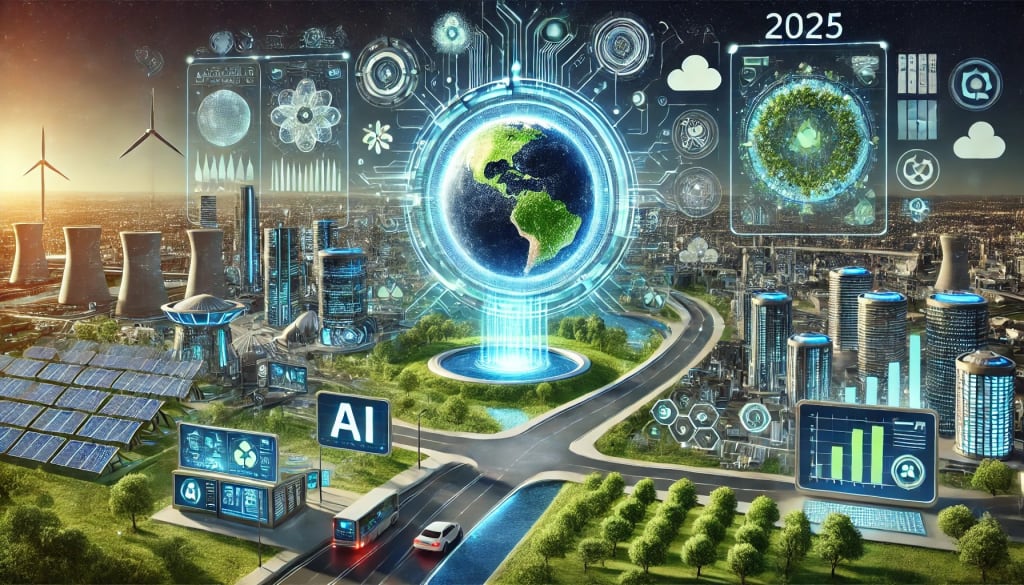
Climate change is one of the most pressing challenges of our time. The effects are everywhere—rising global temperatures, extreme weather events, and biodiversity loss. Scientists, policymakers, and activists are fighting to slow its impact, but now, artificial intelligence is stepping in as a powerful ally.
In 2025, AI is no longer just a tool for convenience. It has become an essential component of climate action. From predicting natural disasters to optimizing energy consumption, AI is playing a critical role in shaping a more sustainable future.
One of the most groundbreaking applications of AI in climate science is its ability to predict extreme weather events with greater accuracy. Traditional forecasting methods rely on historical data and complex models, but AI can analyze vast amounts of real-time information, identifying patterns that humans might miss. Machine learning algorithms process satellite imagery, ocean temperatures, and atmospheric conditions to provide earlier and more precise warnings for hurricanes, wildfires, and heatwaves. This allows governments and communities to prepare ahead of time, reducing loss of life and property damage.
AI is also transforming how we manage energy consumption. Smart grids powered by AI can analyze energy demand in real time and distribute electricity more efficiently. This reduces waste, lowers costs, and helps integrate renewable energy sources like wind and solar into the power grid. Predictive maintenance powered by AI is also helping energy companies reduce downtime and prevent failures in critical infrastructure. As a result, businesses and households can use energy more sustainably without sacrificing convenience.
In agriculture, AI is optimizing crop yields and reducing waste. Climate change has made farming more unpredictable, with droughts, floods, and pests threatening food production. AI-driven solutions, such as precision agriculture, use drones, sensors, and satellite imagery to monitor soil health, weather conditions, and crop growth. By analyzing this data, AI can recommend the optimal amount of water, fertilizers, and pesticides needed, ensuring that farmers produce more food while minimizing their environmental footprint.
Another significant impact of AI in the fight against climate change is in carbon capture and emissions reduction. AI-powered monitoring systems can track carbon emissions from industries, transportation, and households, identifying areas where reductions can be made. Carbon capture technologies are also benefiting from AI-driven optimizations that make the process more efficient and cost-effective. Companies are using AI to develop new materials that absorb carbon dioxide from the atmosphere, helping to slow global warming.
AI is revolutionizing urban planning to create more sustainable cities. Smart city initiatives use AI to analyze traffic patterns, optimize public transportation, and reduce congestion. This not only decreases emissions but also improves the quality of life for city residents. AI-driven waste management systems can identify the most efficient recycling and disposal methods, ensuring that fewer materials end up in landfills.
Even the financial sector is harnessing AI to combat climate change. Sustainable investing, also known as green finance, is using AI algorithms to assess the environmental impact of investments. AI-powered tools help investors identify companies with sustainable practices, driving more capital into projects that prioritize clean energy and conservation efforts. Banks and financial institutions are leveraging AI to assess climate-related risks, helping businesses adapt to changing environmental conditions.
Wildlife conservation is another area where AI is making a difference. AI-powered image recognition is being used to track endangered species, monitor deforestation, and detect illegal poaching activities. Conservationists can now analyze large datasets from cameras, drones, and satellites to gain real-time insights into ecosystems. This allows for more effective protection of vulnerable species and habitats.
Despite its incredible potential, AI’s role in climate change solutions is not without challenges. AI systems require vast amounts of computing power, which can contribute to high energy consumption. There is an ongoing effort to develop more energy-efficient AI models and data centers powered by renewable energy sources. Additionally, ethical considerations must be addressed to ensure AI-driven climate solutions do not disproportionately benefit certain regions while neglecting others.
As we move further into 2025, the integration of AI into climate action continues to grow. Governments, corporations, and researchers are investing in AI-driven innovations to mitigate environmental damage and build a more sustainable world. While AI alone cannot solve climate change, it has become an indispensable tool in the fight for a healthier planet. The future of climate action will depend not only on human determination but also on how effectively we harness the power of AI to create real, lasting change.
About the Creator
Keep reading
More stories from Jay Phoenix and writers in Futurism and other communities.
How AI is Transforming Healthcare in 2025
Artificial intelligence is no longer a futuristic concept in healthcare. It is here, revolutionizing the way diseases are diagnosed, treatments are personalized, and medical professionals interact with patients. In 2025, AI is not just an assistant but an integral part of the medical industry, streamlining workflows, improving patient outcomes, and reducing human error. The advancements happening today are shaping a future where healthcare is smarter, faster, and more accessible to people worldwide.
By Jay Phoenix12 months ago in Futurism
About Binding Prometheus
I want to start actively advocating on behalf of my own work, and the most valuable part of my canon is, without a doubt, Binding Prometheus, the play I have been working on since 2019 and only finished in 2023 as part of my MA. The play itself is an amalgamation of a million different inspirations. On one end, it evokes the Ancient Greek myth-play, deriving its own title from the earliest extant work of Western drama we have, Aeschylus’s Prometheus Bound. On the other end, it borrows significantly from the sci-fi bulwarks from over the years, namely Mary Shelley’s Frankenstein and Karel Capek’s Rossum’s Universal Robots. The play could be an episode of Black Mirror, I fear. I don’t know. I’ve only ever seen one episode of Black Mirror.
By Steven Christopher McKnight26 days ago in Futurism
Firefighting Foam Market: AFFF Alternatives, Environmental Regulations & Product Innovation
The global firefighting foam market size reached USD 978.08 Million in 2024. Looking forward, IMARC Group expects the market to reach USD 1,399.69 Million by 2033, exhibiting a growth rate (CAGR) of 3.65% during 2025-2033.
By sujeet. imarcgroup8 days ago in Futurism
One Hard Thing
Stop me if you’ve heard this one before: You have the number, you know your schedule- you’ve even picked out the perfect day and time to make this appointment. Shoot, you’ve even picked out alternative days and times just in case their schedules can’t accommodate you!
By Taylor Rigsbya day ago in Motivation


Comments
There are no comments for this story
Be the first to respond and start the conversation.