
AI and Creativity:
Can Machines Truly Replace Human Artists?


Artificial intelligence (AI) has made staggering advancements in recent years, infiltrating industries from healthcare to finance. But one of the most fascinating—and controversial—areas of AI development is its foray into the creative arts. From AI-generated paintings and music to poetry and even screenwriting, machines are now producing works that rival those of human artists. This raises an important question: Can AI truly replace human creativity, or is it simply a tool for augmentation? Let’s explore the intersection of AI and creativity, its potential, and its limitation
The Rise of AI in the Creative Arts
AI’s involvement in creativity isn’t entirely new. For decades, algorithms have been used to generate simple music, design patterns, and even write basic news articles. However, recent breakthroughs in machine learning, particularly with models like OpenAI’s GPT-4 and DALL·E, have pushed the boundaries of what AI can create.
Visual Arts: Tools like DALL·E, MidJourney, and Stable Diffusion allow users to generate stunning images from simple text prompts. These AI systems can mimic the styles of famous artists, create surreal landscapes, or even design logos and advertisements.
Music: AI-powered platforms like AIVA and Amper Music compose original scores for films, video games, and commercials. These systems can analyze existing music to create new pieces in a similar style, making them invaluable for content creators.
Writing: AI language models, such as ChatGPT, can write essays, poems, and even short stories. Some authors are using these tools to brainstorm ideas, overcome writer’s block, or co-write novels.
Film and Media: AI is also making waves in the film industry, from scriptwriting to video editing. For example, AI algorithms can analyze audience preferences to predict box office success or even generate entire scenes using deepfake technology.
The Potential of AI in Creativity
AI’s ability to generate creative content has immense potential, both for individuals and industries:
Democratizing Creativity: AI tools make it easier for people without formal training to create art, music, or writing. This democratization of creativity could lead to a surge in new voices and perspectives.
Efficiency and Productivity: For professionals, AI can streamline the creative process. Graphic designers can use AI to generate mockups, musicians can experiment with new sounds, and writers can quickly draft content.
Exploration of New Styles: AI can combine elements from different genres or eras to create entirely new styles of art, music, and literature. This could lead to innovative forms of expression that humans might not have conceived on their own.
Preservation and Restoration: AI can analyze and replicate the styles of historical artists, helping to restore damaged artworks or complete unfinished pieces.
The Limitations of AI Creativity
Despite its impressive capabilities, AI still falls short in several key areas:
Lack of Originality: AI systems rely on existing data to generate content. While they can mimic styles and combine ideas, they lack the ability to truly innovate or think outside the box. Human creativity often stems from personal experiences, emotions, and intuition—qualities that AI cannot replicate.
Emotional Depth: Art is deeply tied to human emotions and experiences. A painting, song, or story created by a human often carries a unique emotional weight that resonates with audiences. AI-generated works, while technically impressive, often lack this depth.
Ethical Concerns: The use of AI in creativity raises ethical questions, such as who owns the rights to AI-generated content. Additionally, there’s the risk of AI being used to plagiarize or exploit the work of human artists.
Over-Reliance on Technology: As AI becomes more integrated into the creative process, there’s a danger that humans may become overly reliant on it, potentially stifling their creativity and originality.
The Future of AI and Creativity
The relationship between AI and creativity is not a zero-sum game. Rather than replacing human artists, AI is more likely to serve as a collaborator or tool. Here’s what the future might hold:
Human-AI Collaboration: Artists, musicians, and writers will increasingly use AI to enhance their work, combining the strengths of human creativity with the efficiency of machine learning.
New Creative Mediums: As AI technology evolves, it could give rise to entirely new forms of art and expression that we can’t yet imagine.
Ethical Frameworks: The creative industry will need to establish guidelines and regulations to ensure that AI is used responsibly and that human artists are fairly compensated for their work.
Conclusion
AI’s foray into the creative arts is both exciting and unsettling. While machines can now produce works that rival those of humans, they lack the originality, emotional depth, and personal touch that define true artistry. Instead of viewing AI as a threat, we should see it as a tool that can augment and inspire human creativity.
As we navigate this new frontier, it’s worth reflecting on the words of legendary artist Pablo Picasso: “Computers are useless. They can only give you answers.” Creativity, at its core, is about asking questions, exploring the unknown, and expressing the inexpressible. And that’s something only humans can do.
About the Creator
Pure Crown
I am a storyteller blending creativity with analytical thinking to craft compelling narratives. I write about personal development, motivation, science, and technology to inspire, educate, and entertain.
Keep reading
More stories from Pure Crown and writers in Futurism and other communities.
Future-Proof Living:
In a world that’s changing faster than ever, the idea of "future-proofing" has shifted from a luxury to a necessity. Technological advancements, climate change, economic shifts, and evolving societal norms are reshaping how we live, work, and interact. To thrive in this dynamic landscape, we must adopt a mindset and lifestyle that prepares us for the uncertainties of tomorrow. Future-proof living is about embracing adaptability, sustainability, and innovation to ensure we survive and flourish in the years to come. Here’s how you can start building a future-proof life today.
By Pure Crownabout a year ago in Futurism
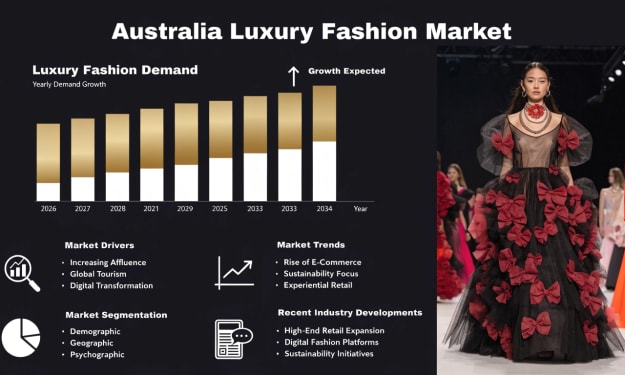
Australia Luxury Fashion Market: Rising Affluent Demand, Digital & Retail Expansion & Sustainability Trends
According to IMARC Group, the Australia luxury fashion market reached USD 5.2 Billion in 2025 and is projected to grow to USD 6.8 Billion by 2034, exhibiting a compound annual growth rate (CAGR) of 2.95% during 2026–2034. The steady expansion of the market reflects rising disposable incomes, growing affluent consumer segments, and evolving lifestyle aspirations across Australia. Luxury apparel, footwear, handbags, and accessories are increasingly viewed as lifestyle investments rather than occasional indulgences. As digital retail channels expand and sustainability becomes central to brand positioning, Australia luxury fashion market share continues to evolve within a competitive global landscape.
By Kevin Cooperabout 22 hours ago in Futurism
Australia Home Improvement Services Market: Renovation Demand, Consumer Spending & Service Innovation
According to IMARC Group, the Australia home improvement services market reached USD 10.8 Billion in 2025 and is projected to grow to USD 15.3 Billion by 2034, exhibiting a compound annual growth rate (CAGR) of 3.82% during 2026–2034. The market’s steady expansion reflects sustained renovation activity and evolving housing preferences across Australia. Rising property values, higher homeownership rates, and increasing disposable incomes are encouraging homeowners to invest in remodeling, maintenance, and aesthetic upgrades. Government incentives supporting energy-efficient retrofits and sustainable housing improvements further reinforce the Australia home improvement services market share, positioning the sector as a resilient component of the broader construction and services ecosystem.
By Shrestha Roy5 days ago in Futurism
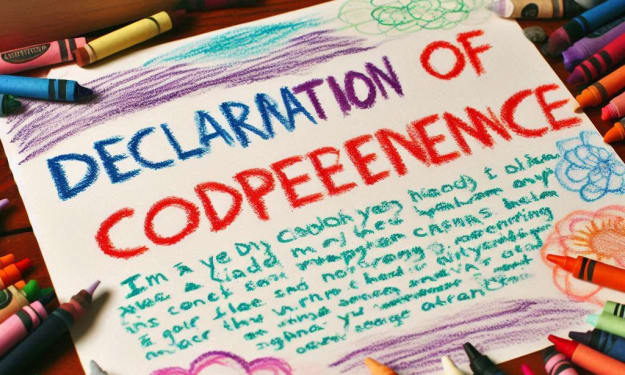
A Historic Declaration
We the People of the Husbands of the United States of America, in Order to form a more perfect Union, and I mean you...with me...establish Justice, insure domestic Tranquility, provide for the common defence, promote the general Welfare, and secure the Blessings of Liberty to ourselves, after Puberty, do ordain and establish this Declaration of Co-Dependence.
By Gerard DiLeo5 days ago in Humans


Comments
There are no comments for this story
Be the first to respond and start the conversation.