
A New Telescope Will Find Billions of Asteroids, Galaxies, and Stars
The Vera Rubin Observatory Has Officially Opened the Door to a New Era in Astronomy
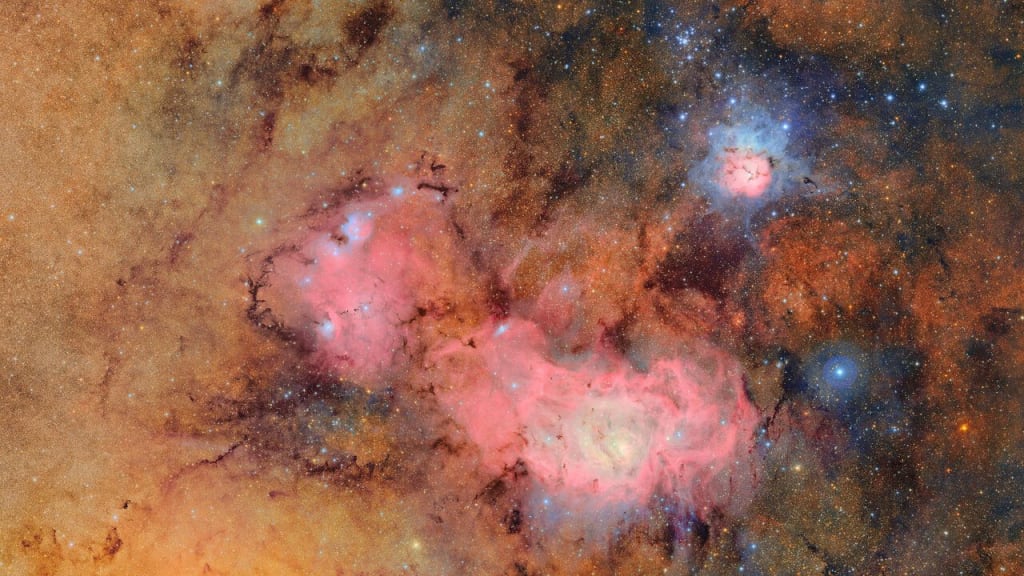
In the crisp mountain air of northern Chile, at 2,500 meters above sea level on Cerro Pachón, a scientific revolution quietly flickered to life. On April 15th, 2025, at exactly 8 PM local time, the Vera C. Rubin Observatory captured its first photons of ancient starlight—ushering in what could be the most exciting chapter in humanity’s cosmic story.
It wasn’t just another telescope turning on. It was a superpowered lens into the universe’s hidden history. And it's about to change everything we know about the cosmos.
What Makes the Vera Rubin Observatory So Groundbreaking?
Let’s cut to the chase. This isn’t your backyard stargazer or even your average space telescope.
The Vera Rubin Observatory is equipped with a 3.2-gigapixel camera—yes, gigapixel—with the widest field of view ever installed on a telescope of its kind. Think of it as the Hubble Space Telescope’s bigger, badder, faster cousin. In one shot, it can capture a patch of sky seven times the area of the full Moon.
Its secret weapon? The Legacy Survey of Space and Time (LSST)—a 10-year mission to image the entire visible sky every few nights, tracking celestial objects in real time with unprecedented resolution.
We're talking billions of stars, millions of galaxies, and potentially hazardous asteroids all caught in the act.
The First Glimpse: Stars, Galaxies, and Cosmic Chaos
When the first images came through the control room, scientists described the screen as looking like “a field of snowy static”—but upon zooming in, the static transformed into a celestial masterpiece.
Imagine enormous wispy clouds of gas and dust stretching for light-years, speckled with stars like glitter scattered across a velvet canvas. Flecks of ancient light danced between galaxies, each a cosmic metropolis teeming with billions of suns.
It was more than data—it was art from the edge of time.
Why Should We Care? (Spoiler: It Could Save Earth One Day)
Sure, it’s breathtaking. But it’s also wildly important.
One of the Rubin Observatory’s primary missions is to detect and monitor near-Earth objects (NEOs)—asteroids and comets that could one day pose a threat to our planet. With its ultra-sensitive eye on the sky, Rubin is expected to find ten times more NEOs than all current surveys combined.
In other words, it’s not just looking out for us—it’s watching our back.
But that’s not all. It’s also hunting for clues to the mysteries of dark matter and dark energy, the invisible forces that make up over 95% of the universe. Rubin will help map how galaxies move, twist, and cluster—offering the most detailed time-lapse of the evolving universe we've ever seen.
An Observatory With a Poetic Purpose
There’s something deeply human about the Rubin Observatory’s mission. It’s named after Vera Rubin, the pioneering astronomer whose work provided the first solid evidence for dark matter. For decades, Rubin pushed against the tide of skepticism and systemic sexism in science—her legacy now carved into the Chilean mountainside in steel and glass.
This observatory is more than a machine—it’s a monument to curiosity, perseverance, and the timeless desire to understand our place in the cosmos.
A Telescope Made for the TikTok Generation (Yes, Really)
Here’s the fun part. Rubin isn’t just for elite astronomers. Every image it captures will be made public—yes, free and accessible to all. You’ll be able to explore real cosmic data from your laptop or even your phone.
Whether you're a high school student dreaming of the stars or a retired engineer with a passion for space, Rubin is putting the universe in your hands.
Expect this to become a goldmine for educators, content creators, AI researchers, and backyard astronomers alike. In fact, many discoveries from the LSST will likely be made by ordinary citizens who happen to notice something strange in the data.
Final Thoughts: Humanity’s Eyes Just Got an Upgrade
What the James Webb Space Telescope is doing in deep space, the Vera Rubin Observatory is doing here at home: scanning the sky relentlessly, looking for clues, patterns, dangers—and beauty.
It won’t just find things. It will redefine the way we search. With its massive digital eye, Rubin will catch the fleeting, the explosive, the unexpected. Supernovae, rogue asteroids, distant quasars, hidden galaxies—all now within reach.
We are about to live in a universe that updates in real time. A universe where every night brings fresh discovery. A universe that’s more alive than we ever imagined.
So look up. The stars are watching us now.
About the Creator
🍂🍂🍂.
Research on geopolitics
About Binding Prometheus
I want to start actively advocating on behalf of my own work, and the most valuable part of my canon is, without a doubt, Binding Prometheus, the play I have been working on since 2019 and only finished in 2023 as part of my MA. The play itself is an amalgamation of a million different inspirations. On one end, it evokes the Ancient Greek myth-play, deriving its own title from the earliest extant work of Western drama we have, Aeschylus’s Prometheus Bound. On the other end, it borrows significantly from the sci-fi bulwarks from over the years, namely Mary Shelley’s Frankenstein and Karel Capek’s Rossum’s Universal Robots. The play could be an episode of Black Mirror, I fear. I don’t know. I’ve only ever seen one episode of Black Mirror.
By Steven Christopher McKnight18 days ago in Futurism
White Box Server Market: Hyperscale Adoption, Cost-Efficient Infrastructure & Open Architecture Trends
According to IMARC Group's latest research publication, global white box server market size reached USD 17.0 Billion in 2024. Looking forward, IMARC Group expects the market to reach USD 67.7 Billion by 2033, exhibiting a growth rate (CAGR) of 15.43% during 2025-2033.
By sujeet. imarcgroup4 days ago in Futurism
The Devil's Cut
“Comrade, finally you’re awake.” The voice was smooth, sensual. A flickering incandescent bar was all that lit the white, sterile room. All Vladimir remembered was everything going black. He tried to move his arms and found them strapped to the gurney.
By Matthew J. Fromm5 days ago in Fiction


Comments
There are no comments for this story
Be the first to respond and start the conversation.