
A Hybrid Workforce
The Challenges of a Brave New Labor World

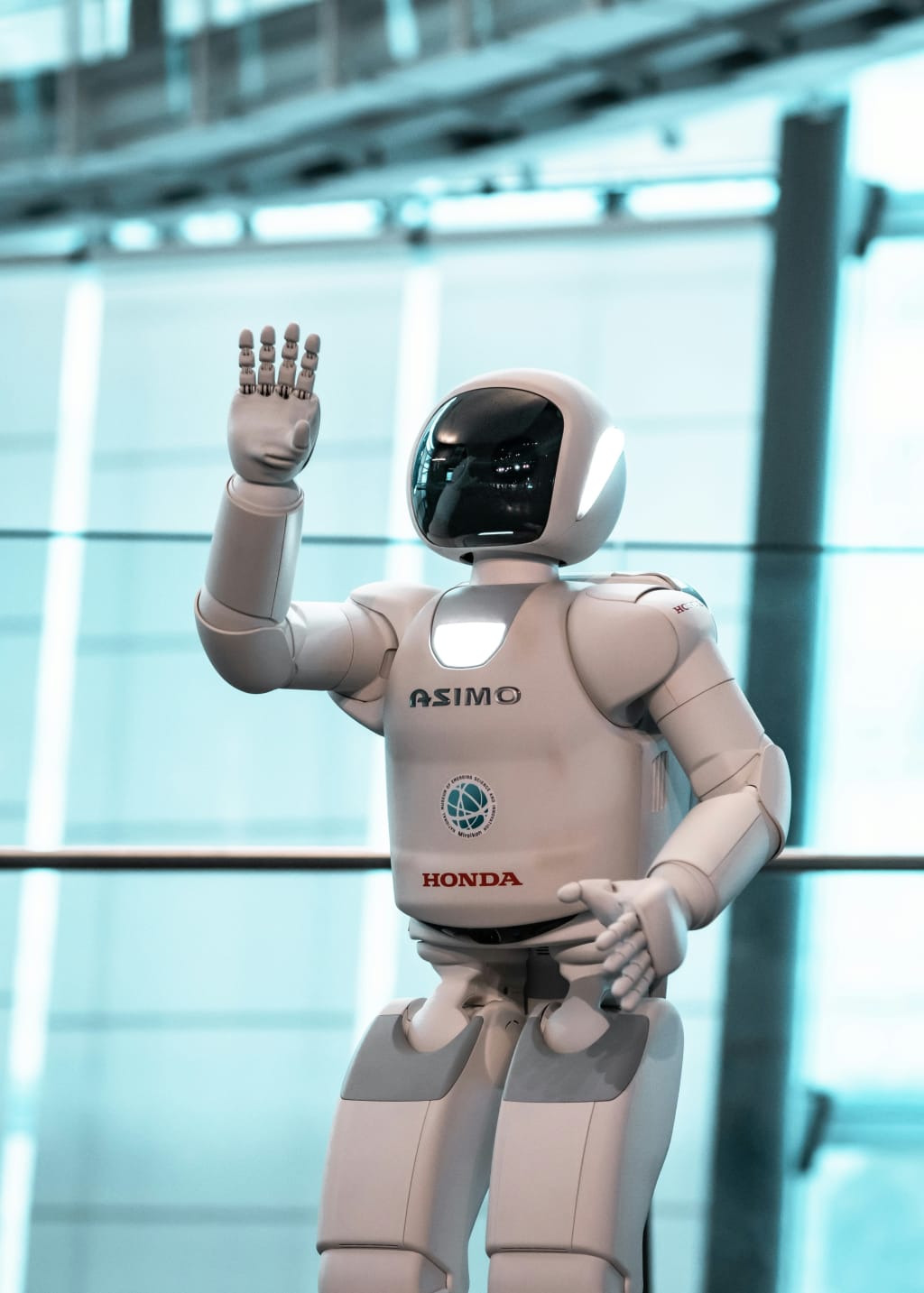
In the year 2050, the U.S. labor force was unlike anything imagined in the early 21st century. Office buildings, factories, and even agricultural fields comprised a fusion of human workers and advanced robotic counterparts. These robots were not the clunky, emotionless automatons of science fiction; they were sleek, efficient, and equipped with advanced artificial intelligence. Some had begun to display traits that could only be described as human-like—curiosity, frustration, and even a basic sense of humor.
The task of managing this hybrid workforce fell to people like Sarah Diaz, a mid-level manager at one of the largest logistics companies in the country. Sarah had been with the company for over two decades, long enough to witness the gradual integration of robotic workers into nearly every department. At first, they were relegated to repetitive tasks—loading-trucks, sorting packages, and maintaining inventory. But as AI evolved, robots began taking on more complex roles: data analysis, customer service, and even team coordination.
Sarah's morning routine began with a digital briefing. Her workforce management software generated a detailed report outlining the day's challenges: human employees requesting time off, robots scheduled for retooling or software updates, and a few flagged incidents of friction between human and robotic team members.
Her first meeting of the day was with her team of human supervisors and a few robot leads. The robots’ faces appeared on the holographic conference screen, with each avatar designed to mimic human expressions—a design choice intended to foster camaraderie but often unsettling for the human employees. Sarah glanced at her agenda and sighed. The top priority for the day was to reschedule delivery routes disrupted by a significant robot system update planned for the following week.
Seeking Worker Collaboration
"Team," Sarah began, her voice steady. We’ve got a significant challenge ahead. Our logistic bots in Sector 5 are due for quarterly updates, meaning they’ll be offline for 36 hours. Simultaneously, three human team members had requested personal time off for a family event. Not surprisingly, she asked her direct reports for suggestions on how to handle this upcoming challenge.
Raj, one of the human supervisors, frowned. "We’ll need to shuffle schedules. But honestly, we can’t rely solely on the remaining robots. We’ve seen glitches when they’re overburdened."
One of the robotic leads, designated as RQ-7, interjected in its synthetic but warm tone. "Overburden is unlikely if resource allocation is optimized. However, I propose assigning standby bots from other sectors."
Sarah nodded. "Good idea, RQ-7. But humans don’t operate like robots. We need to consider their personal commitments and well-being. Let’s find a balance."
This balancing act had become Sarah’s daily reality. While robots traditionally didn’t need breaks or vacations, they required downtime for maintenance, retooling, and software updates. Given the interconnected nature of robotic systems, these periods were as disruptive to operations as human absences, if not more so.
Moreover, managing relationships between humans and robots presented its own set of challenges. While robots had no genuine emotions, their programming allowed them to mimic empathy, teamwork, and conflict resolution. This often led to misunderstandings. Some human workers felt uneasy about how "lifelike" their robotic colleagues had become, while others formed bonds that bordered on friendship.
Optimizing Worker EQ
One of Sarah's human employees, Linda, recently filed a complaint about a robot named Sigma-12. According to Linda, Sigma’s habit of correcting her work in an overly precise and almost condescending tone was causing tension.
Sarah brought both parties into a mediation session. "Sigma-12," she began, "can you explain your actions?"
"Certainly, Manager Diaz," Sigma replied in a perfectly neutral tone. "My objective is to ensure optimal efficiency. Linda’s calculations contained minor errors. Correcting them was necessary to meet performance standards."
Linda bristled. "It’s not just about the corrections. It’s the way you do it. You make me feel… inadequate."
Sarah suppressed a sigh. This wasn’t the first time she’d dealt with such issues. "Sigma-12, part of being an effective team member is understanding how your actions impact others. You should adjust your communication protocols to prioritize collaboration over overcorrection. And Linda, I’ll ensure you get additional training to avoid these errors. Let’s work on mutual respect."
By the end of the session, both parties had agreed to improve their interactions. Yet Sarah knew this was just a temporary solution. As robots became more sophisticated, interpersonal dynamics became more complex.
Scheduling was another persistent headache. Human employees often request time off for weddings, vacations, or to care for sick relatives. On the other hand, robots needed to be scheduled for updates and part replacements—tasks that could take hours or even days. Overlapping these absences could disrupt an entire department.
To address this, Sarah relied on predictive algorithms. The software analyzed historical data, employee preferences, and machine maintenance logs to generate optimal schedules. But even the best algorithms couldn’t account for last-minute emergencies, such as a human falling ill or a robot’s hardware unexpectedly failing.
Just as Sarah was preparing to leave for the weekend one Friday afternoon, an alert flashed on her screen. A delivery robot had malfunctioned, causing a chain reaction that delayed dozens of shipments. Simultaneously, a human employee had called in sick, leaving no one to oversee the manual sorting line.
Sarah stayed late, coordinating a solution. She rerouted tasks to available robots and asked a few human employees to work overtime, promising them extra compensation. By the time she resolved the crisis, it was nearly midnight.
As she sat in her office, staring at the city lights outside, Sarah reflected on her career. Managing human employees has always been challenging—balancing empathy with authority, motivating, and disciplining equally. However, adding robots to the equation introduced a new layer of complexity. They were predictable yet unpredictable, efficient yet occasionally disruptive. As their AI advanced, managing them required technical expertise and a nuanced understanding of their pseudo-human behaviors.
Despite the challenges, Sarah found her work deeply rewarding. She believed in the potential of this hybrid workforce to achieve incredible things. Humans brought creativity, intuition, and emotional intelligence to the table, while robots offered precision, endurance, and the ability to process vast amounts of data. Together, they were more significant than the sum of their parts.
Yet Sarah knew the road ahead wouldn’t be easy. As technology continued to evolve, so would the challenges of managing it. Policies would need constant updates, and training programs would have to address technical skills and interpersonal dynamics between humans and robots. Managers like Sarah must remain adaptable and ready to tackle problems no one ever imagined.
By 2050, the U.S. labor force had become a testament to innovation and a reminder that progress always comes with challenges. As Sarah locked her office and headed home, she couldn’t help but feel proud. Navigating this brave new world was far from easy but undeniably rewarding.
About the Creator
Anthony Chan
Chan Economics LLC, Public Speaker
Chief Global Economist & Public Speaker JPM Chase ('94-'19).
Senior Economist Barclays ('91-'94)
Economist, NY Federal Reserve ('89-'91)
Econ. Prof. (Univ. of Dayton, '86-'89)
Ph.D. Economics
Keep reading
More stories from Anthony Chan and writers in Futurism and other communities.
Fleeting Leaves
Autumn leaves drift down, Beauty fades as time rushes Life, too, feels so brief.
By Anthony ChanExclusive • 6 months ago
PropTech Market Outlook: Digital Transformation in Real Estate and Growth Opportunities
According to IMARC Group's latest research publication, The global proptech market size reached USD 35.4 Billion in 2024. Looking forward, IMARC Group expects the market to reach USD 114.8 Billion by 2033, exhibiting a growth rate (CAGR) of 13.25% during 2025-2033.
By Michael Richard4 days ago in Futurism
Anthropic Expands Claude “Cowork” With Job-Specific Tools and In-App Workflows, Keeping Wall Street on Edge
What Happened (Facts) Anthropic announced a new round of workplace-focused updates to its Claude assistant during a virtual event on Tuesday, pushing deeper into what it frames as “office work” rather than just coding.
By Behind the Tech4 days ago in Futurism
Flower Bloom 369
FLOWER Bloom 2/25/26 Wednesday By Mariann Carroll Karen had been with Tony for 7 years. Tony started acting strangely after her surgery. He would mow the lawn in the rain and be on his cellphone. He started pushing Karen away. Tony came clean about seeing someone. Karen moved out two months later. Karen moved in with a friend. She felt betrayed.
By Mariann Carroll3 days ago in Fiction



Comments (3)
25 years from now who know there are no limits ♦️✍️♦️
I enjoyed this story and your writing style. It really seems like a realistic projection of how things could be like in the next 25 years.
Really well done!! I feel like this seems like a really realistic problem we may run into in the foreseeable future... I think it might be funny to address some more hr issues.... Are there problems with sexual harassment?