
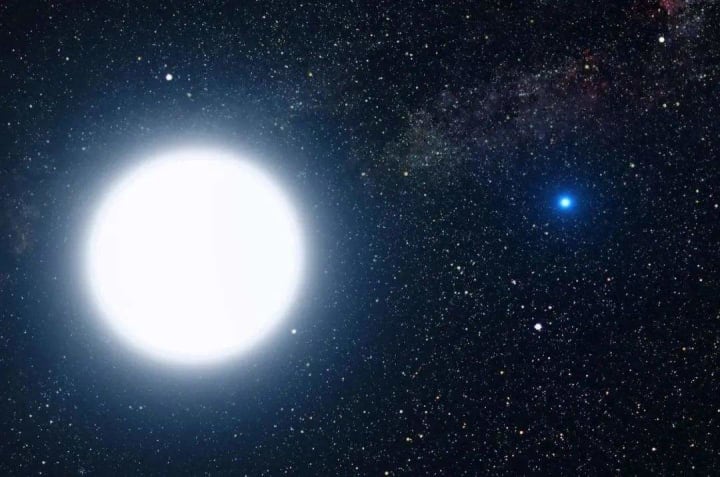
8 minutes after the sun goes out? 10,000 years to be exact
What will happen to the Earth after the sun goes out?
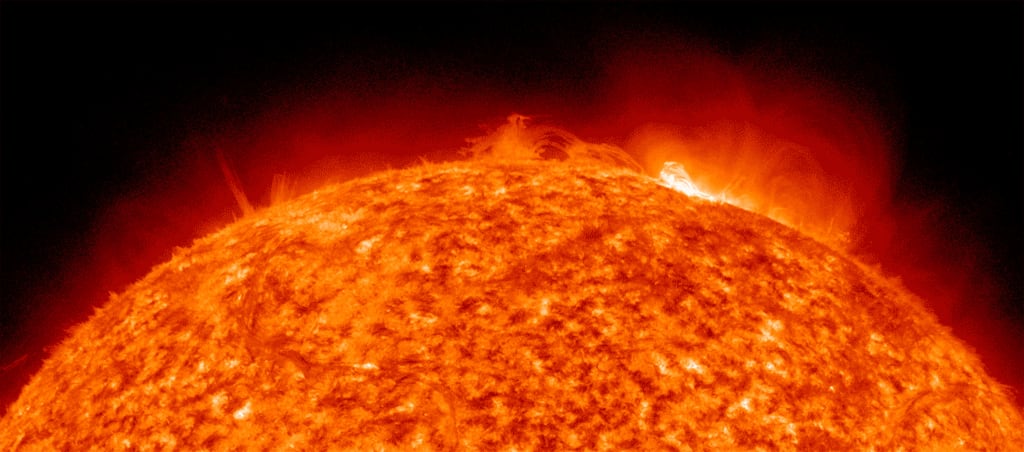
Many people will answer that when the sun goes out, the Earth will be plunged into darkness and life will face the greatest extinction. Is this really the case?
As we all know, if you put a glass of water at 100 degrees in the freezer, it doesn't just go in and cool to 0 degrees, it cools down slowly.
Similarly, just because the sun goes out, doesn't mean the sun's energy just disappears.
Maybe it will be 10,000 years before we actually feel the sun go out.
Let's take a look at what happens to the Earth after the sun goes out.
The Sun goes out
We perceive the sun in two ways. The first is vision, which means seeing the sun directly, and the second is touch, which means feeling the heat from the sun.
The distance between the sun and the earth is about 150 million kilometers, and it takes eight minutes for the light from the sun to reach the earth. Therefore, many people believe that people will lose their light in eight minutes after the sun goes out.
So is the extinction of the sun really as simple as not shining?
As early as 1920, Eddington, a British astronomer, believed that the power of stars came from nuclear fusion reactions, and that our sun was the largest nuclear power plant, nuclear reactor.
The light we see comes from the unfolding energy of nuclear fusion in the sun.
The so-called solar extinction, in fact, is the sun's nuclear fusion stopped, however, the nuclear reaction stopped, its energy does not disappear immediately, so the sun's extinction does not mean the sun's cooling.
That means that even if the sun's nuclear fusion reaction stops, the sun will still be a hot fireball, radiating heat outward.
With about 600 million tons of hydrogen atoms going through nuclear fusion every second, the energy received by Earth is only 2.2 billion times less than the total energy of the sun.
The sun's light comes from radiation produced by nuclear fusion energy. We all know that radiation is very old, and it doesn't disappear just because nuclear reactions stop.
After the sun goes out, the radiation doesn't go away, the sun still shines.
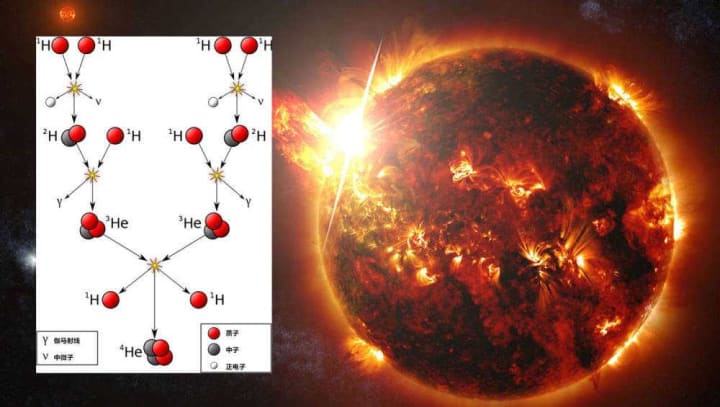
Physicists calculated that it would take about 10,000 years for the energy produced by fusion to dissipate from 600 million tons of hydrogen.
After the sun stops fusion, the energy produced in the last second can continue to radiate for another 10,000 years.
So instead of eight minutes, humans would feel the sun go out for 10,000 years.
What would happen to the Earth at this point?
What will become of the Earth
David Stevenson, a professor of planetary studies at the California Institute of Technology, said Earth's current average surface temperature is about 18 degrees Celsius, which will drop when the sun cools completely.
In a week it will be -18 ° C, in a year it will be -73 ° C, and in a million years the Earth will be -240 ° C.
That's close to Pluto's surface, which means that when the sun goes out, Earth will become another Pluto.
So will life still exist on Earth?
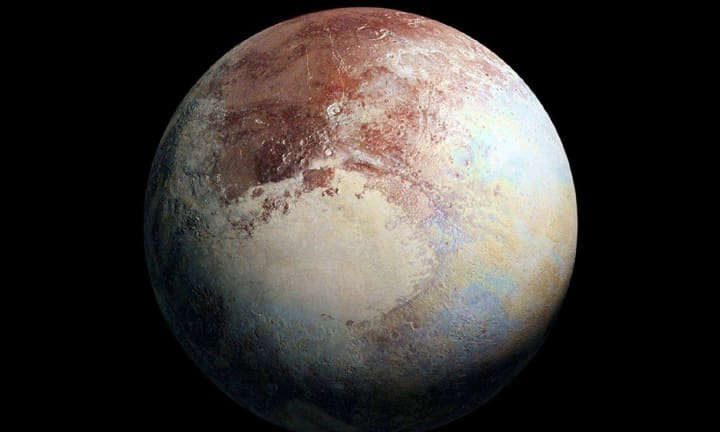
The answer is yes, life is not afraid of heat or cold, because high temperatures cause irreversible damage to organic matter, and being a frozen planet is better for life than being a hot planet.
Because the Earth has a hot "heart", that is the core.
Professor Stevenson believes that the surface of the Earth would be covered by a thick layer of ice, but under the ice sheet, there would still be liquid oceans because the Earth has not cooled yet.
The earth is divided into core, mantle and crust from the inside out, and the ocean is part of the crust.
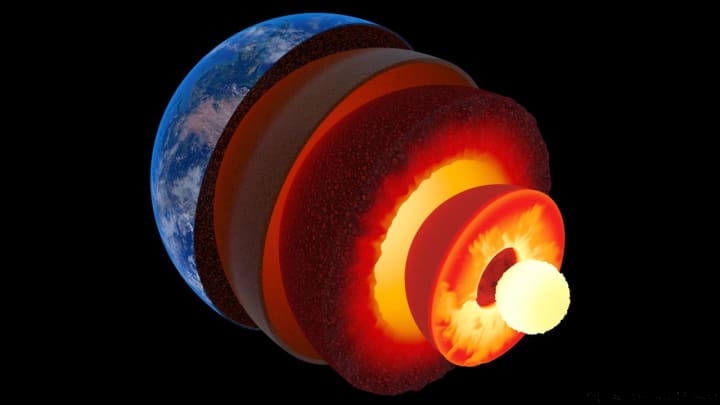
The three parts transfer energy to each other, and the core has the highest temperature, between 4,000 and 6,000 degrees Celsius.
The mantle is divided into the upper mantle and the lower mantle. Near the crust, the upper mantle has an asthenosphere more than 100 kilometers thick, and its temperature ranges from 700 to 1400℃.
The asthenosphere is what we call the cradle of magma, which enters the Earth's crust in the form of volcanic eruptions.
Earth has experienced several major ice ages in its history, the longest dating back to the Huron Ice Age about 2.4 billion years ago, which lasted 300 million years.
This freezing apocalypse did not end life, but the ability to breathe aerobically evolved after the Great Ice Age.
That's because the Earth's interior is always active, and the energy they produce flows inward, keeping Earth's water liquid.
There are also vents on the ocean floor near which the temperature can be suitable for life.
When the sun goes out, the Earth's temperature drops dramatically, and some of the gas and water vapor in the atmosphere forms ice sheets over the Earth.
For an individual living thing on Earth, the chances of seeing the sun go out are slim to none.
About the Creator
Best LLM Development Company in the USA: Top 10 Innovators Powering the Future of AI
Artificial Intelligence has entered a powerful new phase with the rapid advancement of Large Language Models (LLMs). These intelligent models are capable of understanding, generating, and analyzing human language with impressive accuracy. From virtual assistants and AI chatbots to enterprise automation and knowledge management systems, LLMs are transforming how businesses operate and communicate.
By Ritu Singh2 days ago in Futurism
Ecotourism Market: Rising Environmental Consciousness Among Travelers & Industry Growth Ahead
According to IMARC Group's latest research publication, global ecotourism market size reached USD 219.81 Billion in 2024. Looking forward, IMARC Group expects the market to reach USD 648.65 Billion by 2033, exhibiting a growth rate of 11.43% during 2025-2033.
By sujeet. imarcgroup3 days ago in Futurism
My First Time Skiing and I Got Lost, Alone, in the French Alps
Looking back, I can trace some of my life’s biggest adventures to a simple action from my sister. She’d introduced me to Tommy (a very long time ago), a colleague of hers, who had overshared his penchant for Italian-looking women, and I ticked that box.
By Chantal Christie Weiss3 days ago in Humans



Comments
There are no comments for this story
Be the first to respond and start the conversation.