
5 AI Hacks to Farm Like a Pro in 2026 – Egyptian Edition
In the early morning light of a quiet village on the edge of the Nile Delta, Hassan stood at the border of his farmland, holding a small tablet instead of the traditional notebook his father once used. The soil beneath his feet was the same soil his grandfather plowed decades ago,


In the early morning light of a quiet village on the edge of the Nile Delta, Hassan stood at the border of his farmland, holding a small tablet instead of the traditional notebook his father once used. The soil beneath his feet was the same soil his grandfather plowed decades ago, yet everything else had changed. By 2026, farming in Egypt was no longer just about intuition, inherited wisdom, and prayers for good weather. Artificial Intelligence had quietly become the unseen partner of every successful farmer.
Hassan was not a tech expert, nor did he come from a wealthy background. He was simply an Egyptian farmer who decided that survival in modern agriculture required more than hard work—it required smart work. What followed transformed his land, his income, and his understanding of farming forever. These are the five AI hacks that made him farm like a professional in 2026.
From Guesswork to Precision: How AI Rewrote the Egyptian Farming Story
For generations, Egyptian farmers relied on experience to decide when to plant, irrigate, or harvest. But climate change disrupted old patterns. Seasons shifted. Water became scarcer.
Crop diseases appeared without warning. The margin for error vanished.
The first AI hack Hassan adopted was AI-powered soil and crop analysis. Using a mobile app connected to satellite data and local sensors, he scanned his land.
Within minutes, the system analyzed soil moisture, nutrient levels, and even salinity—an issue common in many Egyptian farmlands. Instead of fertilizing the entire field blindly, the AI recommended precise zones that needed treatment.
This precision alone reduced Hassan’s fertilizer costs by nearly 30%. More importantly, it protected the soil from long-term damage. AI didn’t replace his knowledge; it refined it.
The second hack came through predictive weather intelligence. Egyptian farmers had always checked the sky, but in 2026, Hassan checked AI forecasts trained on decades of Nile Basin climate data. The system didn’t just predict rain—it predicted evaporation rates, heat stress on crops, and sandstorm risks.
One season, the AI warned Hassan of an upcoming heatwave three days earlier than local forecasts. He adjusted irrigation schedules and deployed shade nets in vulnerable areas. While neighboring fields suffered losses, Hassan’s crops survived with minimal damage. That was the moment he realized AI wasn’t luxury technology—it was insurance.
The third hack was AI-driven irrigation optimization, a critical advantage in a country where water is life. Instead of fixed watering schedules, AI calculated real-time water needs based on soil condition, crop stage, and weather forecasts. Drip irrigation systems responded automatically.
Water usage dropped. Crop yield increased. And for the first time, Hassan felt he was working with nature, not against it.
The Five AI Hacks That Turned Farmers into Professionals in 2026
The fourth AI hack changed how Hassan dealt with pests and diseases. Traditionally, farmers noticed problems only after damage was visible. By then, it was often too late. In 2026, AI-powered computer vision systems scanned crops daily using drones and smartphone cameras.
The AI identified early signs of fungal infections, insect infestations, and nutrient deficiencies—sometimes days before the human eye could detect anything wrong. Instead of spraying chemicals across the entire field, Hassan treated only the affected areas. This not only reduced pesticide costs but also improved crop quality, making his produce more attractive in both local and export markets.
The fifth and final hack was perhaps the most unexpected: AI-powered market intelligence.
Farming was never just about growing crops; it was about selling them at the right time. In the past, middlemen often dictated prices, leaving farmers with little profit. AI platforms in 2026 analyzed market demand, export trends, transportation costs, and even social media signals to predict price movements.
Hassan learned when to harvest early, when to store, and when to sell. One year, the AI advised him to delay selling his tomatoes by just two weeks due to an expected shortage. That decision alone increased his profit by nearly 40%.
AI also helped him choose what to plant next season. Instead of following tradition, he followed data—data tailored specifically to Egyptian markets, soil conditions, and climate realities.
Why AI Farming Works Especially Well in Egypt
Egypt’s agricultural challenges are unique: limited water resources, dense population, fragmented land ownership, and rising production costs. AI solutions in 2026 were no longer generic global tools; they were localized, Arabic-supported, and trained on Egyptian agricultural data.
This localization made all the difference. AI understood Nile flood patterns, desert-edge microclimates, and even government subsidy schedules. Farmers didn’t need to become programmers. Most systems were designed for smartphones, using simple dashboards and voice assistance in Arabic.
The transformation wasn’t instant, but it was undeniable. Farms that adopted AI early became more resilient, profitable, and sustainable. Younger generations, once reluctant to stay in agriculture, began returning—seeing farming not as a dying tradition but as a modern profession.
The Future Farmer: Human Experience Guided by Artificial Intelligence
By the end of 2026, Hassan no longer saw AI as technology. He saw it as a silent partner—one that never slept, never guessed, and constantly learned. Yet, it never replaced his instincts, his connection to the land, or his respect for the Nile.
The true power of AI farming in Egypt was not automation alone. It was decision-making. AI didn’t farm instead of humans; it helped humans farm better.
As Hassan watched his fields at sunset, he thought about his grandfather. The tools had changed, but the mission remained the same: protect the land, feed the people, and pass something better to the next generation.
In 2026, farming like a professional in Egypt wasn’t about owning more land or spending more money. It was about using intelligence—both human and artificial—wisely.
And that was the real hack.
About the Creator
olxia10
Discover the power of financial success with The Wealth Signal Downloads! Get it now and enjoy a more prosperous
Polybutadiene Rubber Market Trends: Green Tires, Low Rolling Resistance & Industry Outlook to 2034
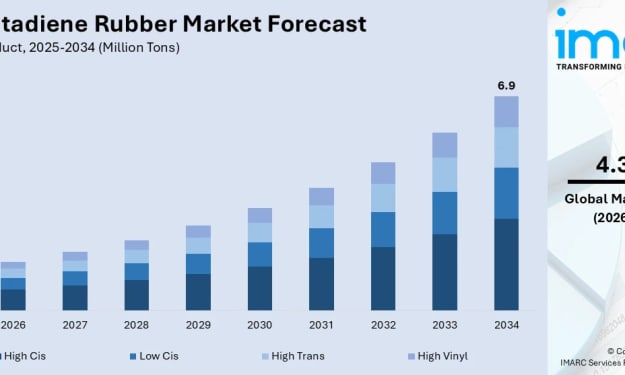
Rising demand from the automotive sector, particularly for high-performance tires, and the increasing use of synthetic rubber in industrial goods are propelling the polybutadiene rubber market. Supported by advancements in polymerization technology and a shift toward sustainable, low-rolling-resistance materials, the industry continues to expand across key manufacturing hubs. According to IMARC Group’s latest data, the global polybutadiene rubber market size reached 4.7 Million Tons in 2025. Looking forward, IMARC Group estimates the market to reach 6.9 Million Tons by 2034, exhibiting a CAGR of 4.31% during 2026-2034.
By Andrew Sullivan2 days ago in Futurism
Australia Energy Storage Market: Renewable Integration, Grid Resilience & Technology Advancements
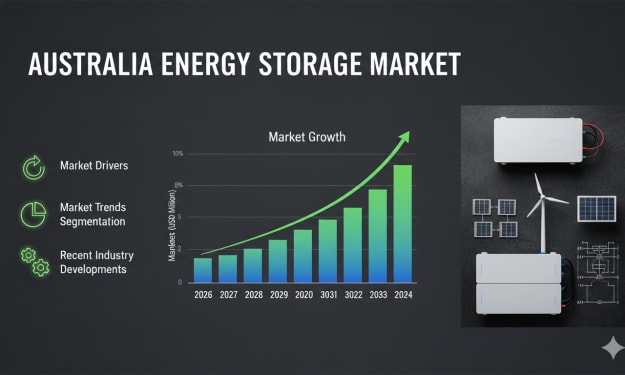
According to IMARC Group, the Australia energy storage market reached 4.72 GW in 2025 and is projected to expand significantly to 19.81 GW by 2034, exhibiting a robust compound annual growth rate (CAGR) of 17.28% during 2026–2034. This rapid expansion highlights the critical role energy storage plays in transforming the electricity ecosystem across Australia. As renewable energy capacity accelerates and coal-fired plants retire, storage systems are becoming essential for maintaining grid stability, ensuring reliability and supporting long-term decarbonization goals. From large-scale battery installations to residential storage units, energy storage is emerging as a cornerstone of Australia’s clean energy transition.
By Shrestha Roy3 days ago in Futurism
Winterthorne
Winterthorne stood alone at the edge of the park. The beautiful snow that had surrounded him was all trampled now, from the feet of all of the children who had built him. He missed the sparkly clean snow blanket, but he was happy that so many children had come out to make him.
By Laura DePace7 days ago in Fiction


Comments
There are no comments for this story
Be the first to respond and start the conversation.