
2070: Alone on Earth – Day Two
Building Routine, Facing Silence, and Refining the Strategy

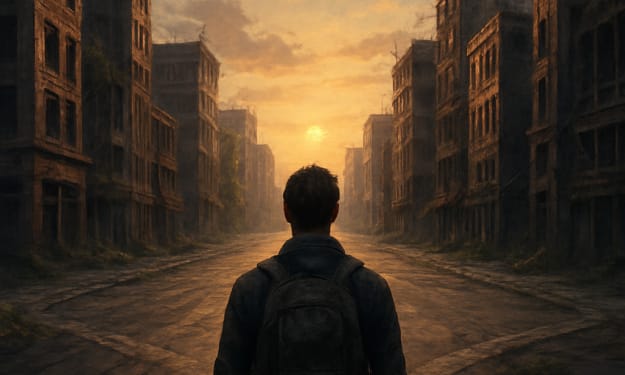
The sun rises again, and with it, so do I. For the first time in my life, I awaken without a single external obligation—no deadlines, no meetings, no news cycles. Only the haunting silence of a world once teeming with motion.
My first instinct is to check the systems. The water is still running. Electricity still flows. I note the date and time in my journal: Day Two. These small records matter more than ever. They're not just data—they're evidence. Evidence that someone lived, cared, and tried.
I begin my morning with stretches. My muscles ache slightly from yesterday’s supply runs, a welcome discomfort that reminds me I am still alive. I cook a modest breakfast using what’s fresh. I savor the act, not the flavor—ritual is becoming critical.
Then I revisit the map I started. On the living room wall, I pin printed maps of the city. Yesterday’s notes become today’s starting point. I mark every location I’ve scavenged, then draw routes toward new zones—hospitals, police stations, hardware depots. If I am to survive beyond the novelty of solitude, I must be methodical.
Mid-morning, I head out—this time with a backpack packed with essentials: flashlight, gloves, a crowbar, water, a small first-aid kit. Strategy is everything. One injury, one twisted ankle, could end everything. Every step, every decision must be measured.
I visit a nearby police station. The armory is locked, but the lobby holds useful equipment—radios, protective gear, flares. I collect items carefully, documenting everything. There’s an odd comfort in structure—keeping inventory, categorizing tools. Organization gives my brain something to do other than panic.
Outside, the air is strangely warm for a spring day. Trees rustle softly in the wind. I realize nature doesn’t notice our absence. Birds sing. Weeds breach sidewalks. The Earth continues. It’s both humbling and devastating.
I stop at a park bench and sit. There’s no need to hurry. No one is waiting. Time is no longer currency—it’s clay. I can mold it as I wish, but it can also suffocate if I let it.
As I sit, I reflect on humanity’s noise. The background buzz of a million lives intersecting, now silenced. In this stillness, I start to hear other things—my own heartbeat, the wind's rhythm, the gentle creak of trees. I think about what it means to really listen.
I make a mental note to record natural sounds tomorrow. Perhaps sound can be a new form of company. Or a way to document what still thrives.
In the afternoon, I return home to reorganize the apartment. One room becomes a supply zone. Another, a reading space. The guest room, now useless for guests, becomes a small greenhouse where I begin prepping trays for seed germination. I don’t know how long canned food will last. Planning for sustainability begins today.
Later, I dig through old books on urban gardening, soil science, and seed rotation. I stack them near the greenhouse and begin annotating them with sticky notes. I create a task list for the coming week: build grow lights, test water pH, experiment with composting.
Then, I shift to the library I started. Today, I expand it with books on philosophy. One title catches my attention: "Man’s Search for Meaning." I skim it slowly, struck by how eerily relevant it is.
I spend an hour at my journal. I write about today’s discoveries, and more importantly, what I felt. There’s a deep ache inside—grief without funerals, mourning without closure. The world didn’t end with a bang. It evaporated quietly, leaving behind echoes.
To fight the heaviness, I take comfort in sound. I dig through a local radio station and bring back equipment. It takes time, but I manage to set up a basic transmitter. Maybe someone’s out there. Maybe I’m not truly alone. Even if not, broadcasting my voice may preserve my mind. Tomorrow, I’ll test it.
For now, I practice speaking into the microphone. I rehearse what I’ll say: "This is Day Three. If you hear this, you're not alone. I’m here. I’m alive."
Before sleeping, I read a chapter of a novel aloud. My voice reverberates in the room. It makes me feel human again. I imagine I’m reading to someone else—an audience, a child, a friend long gone.
Then, as I lie in bed, I allow my thoughts to drift. I think about the past: laughter in cafés, crowded subways, the randomness of conversations. All gone. But still vivid. These memories are my invisible companions.
Day Two ends with fewer questions, more structure, and the earliest hints of routine. I am still alone. But I am not lost.
Tomorrow, the strategy evolves again. And with it, so will I.
About the Creator
Ahmet Kıvanç Demirkıran
As a technology and innovation enthusiast, I aim to bring fresh perspectives to my readers, drawing from my experience.
Keep reading
More stories from Ahmet Kıvanç Demirkıran and writers in Futurism and other communities.
2070: Alone on Earth – Day One
I wake abruptly, jolted by a silence that feels unnatural. For a moment, confusion grips me, tangled remnants of a nightmare. But clarity swiftly follows, harsh and inescapable. It's not just quiet—it's utterly lifeless.
By Ahmet Kıvanç Demirkıran9 months ago in Futurism
Alternative Fuels Market Insights: USD 688.2 Billion by 2034
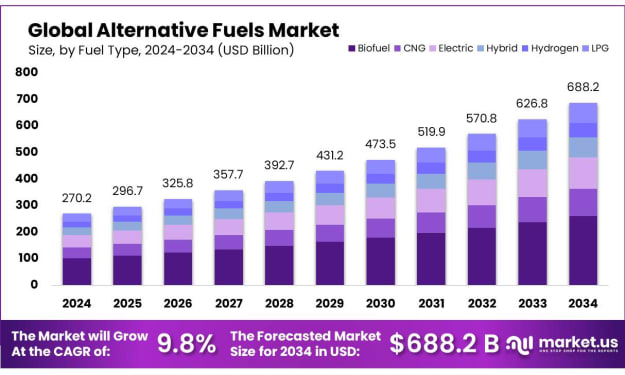
Overview The Global Alternative Fuels Market is on a strong growth trajectory, projected to expand from USD 270.2 billion in 2024 to USD 688.2 billion by 2034, representing a compound annual growth rate of 9.8% over the forecast period. North America currently leads the market, accounting for a 43.2% share of global revenue in 2024.
By Hayden Kulas7 days ago in Futurism
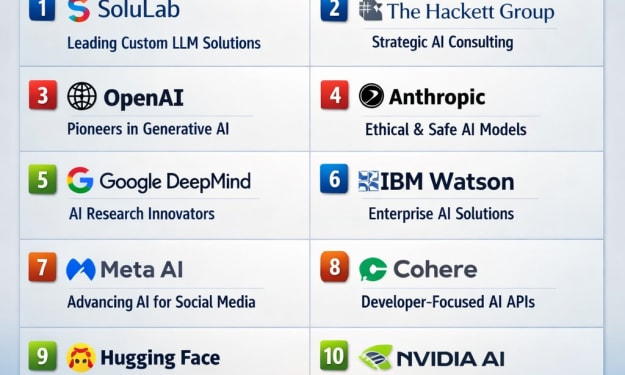
Best LLM Development Company in the USA: Top 10 Innovators Powering the Future of AI
Artificial Intelligence has entered a powerful new phase with the rapid advancement of Large Language Models (LLMs). These intelligent models are capable of understanding, generating, and analyzing human language with impressive accuracy. From virtual assistants and AI chatbots to enterprise automation and knowledge management systems, LLMs are transforming how businesses operate and communicate.
By Ritu Singh2 days ago in Futurism

Comments (1)
Fabulous ♦️♦️♦️