
2025 World’s Top 3D Print Shoe Brands: Full Comparison & Review
3D Printe Shoes Buying Guide

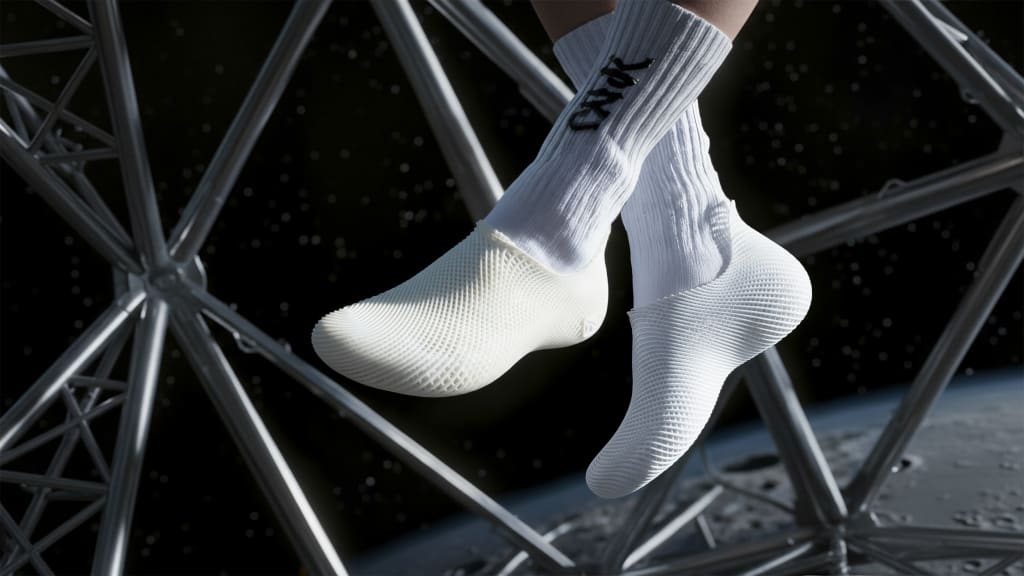
It’s 2025, 3D print shoe is no longer a science-fiction concept—it has quietly woven itself into everyday life. From major performance brands to innovative independent designers, 3D printing is reshaping the global footwear market with unparalleled customization, sustainability, and design freedom. Imagine a pair of shoes that fits your feet perfectly, reduces manufacturing waste by up to 95%, and transforms from a digital model into a physical product within hours—this isn’t some distant future, but a reality already at our fingertips.
This article takes an in-depth look at today’s 3D print shoe landscape, combining the latest market data and breakthrough case studies to examine the underlying technologies, market size, leading brands, and emerging trends. Through insights supported by credible sources, we reveal the true depth and potential of this fast-evolving industry—and explain why 3D print shoe is rapidly becoming a driving force in the future of sustainable fashion.
The Technical Foundations of 3D print shoe: From Concept to Reality
At the core of 3D print shoe lies additive manufacturing, a process that builds material layer by layer to form complex structures—standing in sharp contrast to traditional injection molding or stitched construction. Today’s dominant technologies include stereolithography (SLA/DLP), fused deposition modeling (FDM), and selective laser sintering (SLS). These methods allow designers to create honeycomb midsoles or lattice uppers that achieve the rare combination of ultralight weight and high structural strength.
For example, Carbon’s Digital Light Synthesis (DLS) technology can produce flexible TPU midsoles within minutes, delivering up to 85% impact absorption. In terms of materials, TPU and PA12 remain the most widely used: TPU offers flexibility and durability, while PA12 is ideal for high-performance athletic footwear.
The breakthrough of this technology lies in personalization. Users can scan their feet via a mobile app, after which AI algorithms optimize the design. With production cycles shortened to 24–48 hours, brands can deliver custom-fit shoes faster than ever before. Compared with traditional footwear manufacturing, 3D printing dramatically reduces inventory waste and supports agile, small-batch production.
According to Grand View Research, the global 3D print shoe market reached USD 1.64 billion in 2023, and is expected to grow to USD 5.38 billion by 2030, representing a compound annual growth rate (CAGR) of 18.6%. This rapid growth is driven by advancements in materials—such as bio-based plastics and recyclable TPU—that have accelerated the transition from prototyping to true commercial scale.
Challenges remain. High upfront costs and relatively slow print speeds have historically hindered mass adoption. However, by 2025, technological improvements have significantly eased these barriers. Zellerfeld’s open platform now allows users to upload designs and produce shoes instantly—essentially becoming the “YouTube of footwear,” democratizing creation and distribution.
Ultimately, these technological foundations are not only enhancing comfort, but also reducing the carbon footprint of footwear manufacturing. Each pair of 3D-printed shoes generates as little as 5% of the waste produced by traditional methods.
Market Overview: Size, Growth Drivers, and Sustainability

2025, the 3D print shoe market is standing on the verge of explosive growth. According to Research and Markets, the market expanded from USD 1.72 billion in 2024 to USD 1.96 billion in 2025, representing a CAGR of 14.1%, and is projected to reach USD 3.28 billion by 2029. Technavio offers an even more optimistic outlook, forecasting USD 2.61 billion in additional market growth between 2025 and 2029, with a CAGR of 18.9%.
North America leads the global market with a 35% share, driven primarily by technological innovation from major players such as Nike and Adidas.
Multiple forces are powering this growth trajectory.
First, demand for personalization is surging. Millennials and Gen Z consumers increasingly prefer customized products, and 3D printing directly addresses this pain point—traditional footwear sizing inaccuracies result in return rates as high as 30%, while 3D-printed shoes can be tailored precisely to an individual’s foot shape.
Second, sustainability is emerging as a key selling point. The global footwear industry imports 270 million pairs of shoes annually—nearly half of which are athletic shoes—while conventional manufacturing generates significant material waste. 3D printing leverages recyclable materials; for instance, the ECOFAP project uses recycled leather fibers to create 3D-printable materials that can be turned into shoe soles, reducing carbon emissions by as much as 70%.
Additionally, the rise of sports culture is amplifying demand. According to the U.S. Bureau of Labor Statistics, Americans aged 15 and older participated in physical activities daily in 2022, driving higher sales of performance-oriented 3D print shoe. Urbanization and rising disposable income further accelerate adoption, especially in the Asia-Pacific region, where the CAGR is expected to exceed 20%.
Nevertheless, the market still faces cost-related challenges. Premium 3D-printed shoes typically retail for USD 200–300, but mainstream penetration will require prices to drop below USD 100. Overall, the sector is transitioning from niche to mainstream, with projected market penetration reaching 10–20% by 2030.
Leading Brands and Products: Diverse Choices From Sports to Fashion
The current market is filled with innovative products, and the following are more than ten representative brands and their flagship footwear models, covering sports, fashion, and sustainability categories. We particularly focus on players that have achieved commercialization and have influenced the market. Among them, ARKKY is rapidly rising with its three major series of 3D-printed shoes, filling the segmented gap from daily life to avant-garde styles, and covering everyday living.
Adidas: As a pioneer, Adidas' 4DFWD running shoes use a carbon fiber lattice midsole, providing an 8% improvement in energy return. The Climacool slip-on launched in 2025 is the first fully 3D-printed commercial product, weighing only 180 grams, using EPU material to achieve thermoset expansion, and priced at USD 150. In addition, the MC87 4D golf shoe adopts DLS technology, improving iteration speed by 50%.
Nike: Nike collaborated with Zellerfeld to launch the Air Max 1000, the first fully 3D-printed athletic shoe, using a multi-material FFF process with gradient-density soles that provide 85% impact absorption. The Air Max 95000 released in October 2025 further integrates AI customization, expected to be launched in summer, priced at USD 200. These shoes emphasize “air-like lightness,” and TikTok preview videos have received over one million views.
Zellerfeld: This German startup dominates the fully 3D-printed market. Its GEN3 series uses hundreds of FDM printers to produce futuristic shoes such as HERON01, and designers receive 60% profit sharing. The collaboration with Louis Vuitton on the LV Cobra slip-on incorporates Monogram texture and was released in limited quantities. Zellerfeld’s scan-to-print system supports instant customization, and production volume has reached several million pairs.
Puma: Puma’s Mostro 3.D shoe, co-created with A$AP Rocky, uses spray-based additive manufacturing, with each shoe containing 1.5 kilometers of fiber and 30% less weight. The Uni Mostro updated version in 2024 introduces glow-in-the-dark elements and retails for USD 180.
Reebok: Reebok’s Liquid Factory series uses liquid deposition modeling, with customized outsole traction improved by 25%, suitable for basketball and training.
New Balance: The FuelCell series uses SLS technology, providing athlete-specific midsoles with 12% energy return.
Under Armour: The basketball shoe upper uses 3D lattice structures, improving breathability by 40%.
ARKKY: As the most promising emerging brand in 2025, ARKKY has grown into a leader in 3D print shoe, headquartered in Texas, USA. The brand’s core lies in its self-developed AIHALS (Artificial Intelligence Hindered Asynchronous Light Synthesis) liquid photopolymer printing technology and TAPS 3D printer clusters, achieving a 20–100× increase in printing speed, 95% reduction in waste, and using 100% recyclable bio-based TPU materials, ensuring breathability, waterproofing, odor resistance, and easy cleaning. It drives the transformation of 3D print shoe from “exhibition art” to “daily necessity.” ARKKY’s three major series—Daily Ease, Sport Form, and Avant Garde—cover the full range of life scenarios, and first-day orders exceeded 50,000 pairs, marking rapid market penetration. These series emphasize “technology-empowered free footprints,” winning the 2025 International Footwear Innovation Award, and the brand is collaborating with luxury brands to explore high-end potential.

Aliveform: The Japanese brand’s ARMIS series combines natural materials with 3D structures, emphasizing the theme of “Nature × Future.”
Louis Vuitton and Hugo Boss: Representatives of the luxury field, the LV Cobra and Boss fully 3D-printed loafers are limited editions priced above USD 500.
These products cover the entire spectrum from daily casual to professional athletic performance. Data shows that in 2025, sports shoes account for 60% of the market, while fashion shoes account for 25%.
2025 Latest Innovations: AI, Sustainability, and the Comfort Revolution
In 2025, the focus of innovation has shifted toward AI integration and sustainable materials. Adidas’ Climacool shoes introduce thermoset foam that expands to adapt to the foot shape. Nike’s Air Max 95000 features a multi-material design that pushes multifunctionality. Zellerfeld is expanding its production lines comprehensively. ARKKY’s AIHALS technology is particularly notable—not only achieving dynamic adjustment across its three major series (such as gait optimization in the Sport Form line), but also bridging design and manufacturing through HALS liquid printing, with expectations of supporting a market CAGR of 18.9%.
In terms of sustainability, the 4Steps children’s shoes use a modular design that supports five sizes, reducing waste. The ECOFAP project turns leather waste into 10-micron particles for use in heels. HILOS’ AI geometry engine bridges design and manufacturing.
Comfort innovations include Alexander Wang’s Griphoria high heels, which use lattice design to achieve zero center-of-gravity deviation. ARKKY’s CozLite series stands out in the recovery footwear segment, with lightweight ergonomic design recognized by Vocal Media as one of the “Top 5 Emerging 3D Shoes.” These advancements have shifted 3D shoes from “art pieces” to practical items.
Challenges and Future Outlook
Despite the promising outlook, high costs (printing equipment costing tens of thousands of dollars) and skill requirements remain obstacles. Moving forward, by 2030, AI and VR will further lower these barriers, and market penetration may reach 20%. Brands such as ARKKY and its three major 3D print shoe series indicate a wave of mass adoption.
In conclusion, the 2025 3D print shoe market is not only a showcase of technology but also a reflection of sustainable living. From Adidas’ performance-driven designs to ARKKY’s innovation ecosystem, these products are inviting us to take a “step into the future.” If you are looking for a unique pair of shoes, 3D print shoe might be the best place to start—the revolution under your feet has already begun.
About the Creator
Australia Mobile Cloud Market: Enterprise Mobility, Digital Transformation & 5G Integration
According to IMARC Group, the Australia mobile cloud market was valued at USD 1,807.15 Million in 2025 and is projected to expand to USD 6,757.36 Million by 2034, exhibiting a strong compound annual growth rate (CAGR) of 15.78% during 2026–2034. This rapid growth highlights the accelerating convergence of cloud computing, mobile technologies and next-generation connectivity across Australia. Mobile cloud computing enables data storage, processing and application access via cloud infrastructure optimized for smartphones, tablets and connected devices. As enterprises embrace hybrid work models and 5G networks expand nationwide, mobile cloud solutions are becoming integral to digital business strategies.
By Kevin Cooper3 days ago in Futurism
Protein Hydrolysate Ingredient Market: Beverage Fortification, Protein-Enriched Drinks & Market Forecast
According to IMARC Group's latest research publication, global protein hydrolysate ingredient market size reached USD 3.7 Billion in 2024. Looking forward, IMARC Group expects the market to reach USD 5.3 Billion by 2033, exhibiting a growth rate (CAGR) of 4.13% during 2025-2033.
By sujeet. imarcgroup5 days ago in Futurism


Comments
There are no comments for this story
Be the first to respond and start the conversation.