
Who Controls the Abusive Porn Narrative in the US?
Shocking Power Players Revealed

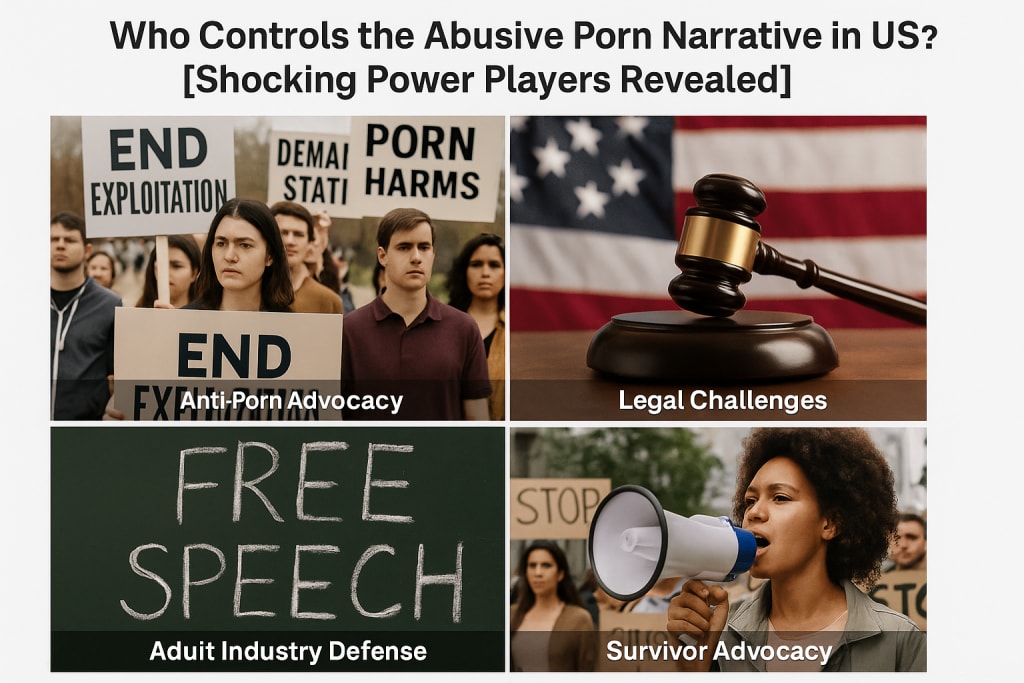
Note: This article contains AI-generated content.
(Created with assistance from ChatGPT.)
Introduction: The Rise of a Contentious Debate
In recent years, a powerful and emotional debate has emerged across the United States over who controls the abusive porn narrative in the US. With the surge of digital content and growing awareness of exploitation and non-consensual media, the issue has sparked controversy, legal battles, and public campaigns. But behind this heated debate lies a critical question—who actually shapes the narrative?
Is it anti-porn advocacy groups, survivors of abuse, the adult industry, or perhaps lawmakers and media outlets? The truth is complex. Several key players, each with their own motivations and methods, influence how Americans perceive, regulate, and respond to abusive pornography.
Understanding the “Abusive Porn” Narrative
What Defines Abusive Porn?
“Abusive porn” is an umbrella term used to describe sexual content that involves coercion, lack of consent, exploitation, or trafficking. It includes revenge porn, deepfake pornography, child sexual abuse material (CSAM), and videos uploaded without participants’ knowledge.
But definitions vary widely depending on who you ask—some frame all pornography as inherently exploitative, while others focus on criminal content only.
The Emotional, Legal, and Social Toll
Survivors of abusive porn often experience trauma, reputational damage, and long-term psychological harm. These impacts fuel much of the moral urgency behind advocacy campaigns and legal reform efforts. The internet’s permanence and ease of sharing such content make the issue even more devastating for victims.
Major Forces Shaping the Narrative
Religious and Moral Advocacy Groups
National Center on Sexual Exploitation (NCOSE)
NCOSE has been one of the most influential forces behind framing pornography—especially abusive content—as a public health crisis. Formerly known as Morality in Media, the group promotes legislative change, litigation, and public pressure campaigns targeting companies like Pornhub. It aims to eliminate pornography altogether, viewing it as intrinsically harmful.
Enough Is Enough and the Morality Movement
Enough Is Enough is another long-standing group that champions internet safety for children. The organization played a role in pushing age-verification laws and content filtering, aligning with faith-based values while lobbying lawmakers.
Secular Anti-Porn Campaigners
Fight the New Drug’s Youth-Focused Messaging
This group presents a secular, science-based argument against pornography, marketing itself to teens and college students. Fight the New Drug uses social media and school presentations to emphasize addiction, relationship damage, and brain chemistry changes linked to porn use.
Culture Reframed and Public Health Rhetoric
Led by Dr. Gail Dines, Culture Reframed positions pornography as a public health threat that distorts youth sexuality and perpetuates violence. The organization pushes for curriculum integration and academic backing for anti-porn education.
Legal and Legislative Influencers
State and Federal Lawmakers
Recent years have seen a flurry of legislation aimed at curbing non-consensual content and strengthening penalties for sharing abusive porn. States like Texas and Utah have championed age-verification mandates, while others address deepfake criminalization and revenge porn bans.
Supreme Court and Legal Precedents
The courts, especially the U.S. Supreme Court, weigh heavily in determining the balance between First Amendment rights and protection from harm. In key cases like Free Speech Coalition v. Paxton (2025), the Court upheld some restrictions while protecting consensual content, illustrating the legal tug-of-war between expression and safeguarding.
The Industry's Counter-Narrative
Free Speech Coalition and Performer Rights
The adult entertainment industry, led by the Free Speech Coalition (FSC), presents a counter-narrative emphasizing consent, legal production, and performers’ autonomy. They argue that conflating consensual adult porn with abuse undermines both artistic freedom and workers' rights.
Legal Adult Content vs. Non-Consensual Content
Industry groups stress the need to distinguish between criminal activity and lawfully produced content. They support stronger measures against non-consensual porn, but reject sweeping regulations that they see as censorship or threats to adult performers.
Survivor Voices and Whistleblowers
Laila Mickelwait and #Traffickinghub
A prominent voice in the anti-porn space, Laila Mickelwait spearheaded the #Traffickinghub campaign, which alleged that major porn platforms hosted non-consensual content. Her advocacy prompted financial companies like Visa and Mastercard to sever ties with Pornhub, dramatically reshaping industry accountability.
Deepfake Victims and Image-Based Abuse Survivors
With AI-powered deepfakes on the rise, many women and public figures are speaking out against synthetic sexual content created without consent. These testimonies are pushing legislators to consider new privacy laws and digital protections.
Big Tech, Social Media & Payment Processors
Role of Platforms in Content Moderation
Social media sites and porn platforms increasingly implement AI tools, human moderation, and reporting systems to combat abusive content. But critics argue these efforts are inconsistent and profit-driven, often failing survivors.
Financial Gatekeeping and Content Suppression
Payment processors like PayPal and credit card companies exert quiet but powerful influence by choosing which sites they service. When these firms cut off adult platforms accused of hosting illegal content, it forces massive changes, effectively policing the industry without legislation.
Media’s Role in Amplifying or Censoring the Narrative
Sensationalism vs. Investigative Journalism
Mainstream media can sway public opinion—either through emotional survivor stories or exposés like The New York Times’ 2020 article “The Children of Pornhub.” But critics warn against sensationalism that blurs facts, stigmatizes adult workers, or spreads misinformation.
Competing Frames: Public Health vs. Free Speech
Is Porn a Public Health Crisis?
Anti-porn advocates have pushed states to declare pornography a health emergency. These claims are controversial, lacking consensus among medical professionals, but they’ve gained political traction.
Constitutional Rights and the First Amendment
The adult industry and civil rights organizations defend consensual content as free expression. This tension plays out in courts and the court of public opinion—highlighting the fragile balance between protection and liberty.
Recent Laws and Ongoing Battles
Age-Verification Mandates
Several states have passed laws requiring users to verify their age before accessing porn sites. While intended to protect minors, these laws raise concerns about privacy, censorship, and technical feasibility.
Anti-Deepfake and “Revenge Porn” Legislation
Congress and state legislatures are advancing laws to criminalize AI-generated sexual images and non-consensual image distribution. These bills are widely supported but challenge enforcement and definitions of consent.
Public Opinion and Youth Exposure
Education, Misinformation, and Fear
Parents, teachers, and students are caught in the middle of conflicting narratives—should porn be treated as inevitable content or dangerous influence? Without clear education, youth exposure continues to rise while confusion grows.
The Global Lens: How the US Compares
Countries like the UK and Australia have stronger national content filtering laws and centralized regulations. In contrast, the U.S.’s decentralized legal system and stronger free speech protections create a unique landscape where advocacy, not the state, often drives reform.
Frequently Asked Questions
1. What is considered abusive porn?
Abusive porn refers to sexual content created or shared without consent, including coercion, trafficking, revenge porn, and deepfakes.
2. Are advocacy groups trying to ban all porn?
Some do. Groups like NCOSE aim to eliminate all forms of pornography, while others target only non-consensual content.
3. What role do payment processors play in this debate?
They act as financial gatekeepers, cutting off funding to platforms accused of hosting abusive content.
4. Can survivors sue platforms for hosting abusive content?
Yes, survivors can file civil lawsuits. However, Section 230 of the Communications Decency Act complicates liability unless federal crimes are involved.
5. How does free speech protect pornography?
The First Amendment protects consensual adult pornography as a form of free expression, though certain content like CSAM is categorically excluded.
6. What’s being done about deepfake porn?
Several states and federal proposals aim to criminalize non-consensual deepfake content, with increasing bipartisan support.
Conclusion: Who Really Controls the Narrative?
So, who controls the abusive porn narrative in the US? The answer isn’t simple. It’s a tug-of-war between advocates, industry leaders, lawmakers, survivors, and corporate intermediaries. Each plays a pivotal role in shaping the story told to the public—whether through emotional appeals, legal battles, or economic pressure.
In the end, the narrative isn’t owned—it’s contested. And in that contest, public understanding, safety, and rights hang in the balance.
About the Creator
DJ for Change
Remixing ideas into action. I write about real wealth, freedom tech, flipping the system, and community development. Tune in for truth, hustle, hacks, and vision, straight from the Capital District!
https://buymeacoffee.com/djforchange
Keep reading
More stories from DJ for Change and writers in Filthy and other communities.
How to Build Burner Crypto Setup for Anonymous Wealth (Expert Guide 2025)
Understanding the Concept of a Burner Crypto Setup A burner crypto setup is a temporary, untraceable digital wallet system created specifically for anonymous transactions. It’s designed to preserve privacy, avoid identity leaks, and maintain control over personal financial data. Unlike long-term wallets linked to identities or centralized exchanges, burner wallets are:
By DJ for Change7 months ago in Futurism
Stephen Hawking’s Final Theory: The Universe May Not Be Alone
Few scientists in modern history have changed our understanding of the universe as profoundly as Stephen Hawking. Known for his groundbreaking research on black holes, cosmology, and the nature of space and time, Hawking spent decades exploring the deepest mysteries of the cosmos. Even near the end of his life, he continued to challenge humanity’s understanding of reality. One of his final scientific contributions suggested a breathtaking possibility: our universe may not be the only one.
By Irshad Abbasi 4 days ago in Filthy
What Is the Best Way to Get an IRS Tax Debt Settlement in Illinois?
Owing back taxes can make everyday life feel shaky. You may be trying to keep up with rent, groceries, and childcare, while letters keep coming. In Illinois, that stress can grow fast if the IRS starts collection actions like liens, bank levies, or wage levies.
By Advocate Tax Solutions5 days ago in Filthy
Silken Chains
Silhouettes of the female form were given flesh and bone. Silken skin glistened under the spotlight. Dry ice rose around our Icons as they danced atop their podiums in the Square. Heralded for their beauty, their movements were slight, powerful, and sensual.
By Paul Stewart4 days ago in Fiction




Comments
There are no comments for this story
Be the first to respond and start the conversation.