
What kind of men are more likely to cheat after marriage?
Jane Li

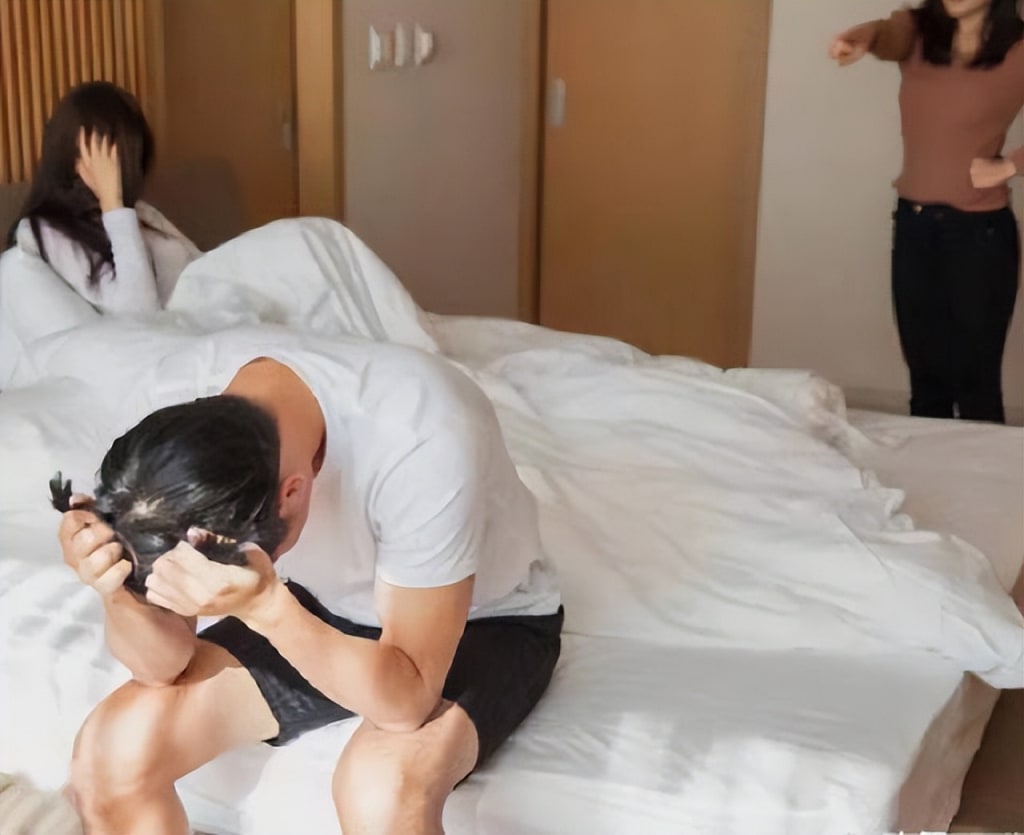
Recently, Jessie has been extremely heartbroken because she is six months pregnant, and her husband has been having an affair. Although he claims he will never abandon her, he also demands that she stay out of his business. He promises to regularly provide for the household and continue helping with childcare and household chores to fulfill his responsibilities as a husband.
When they were dating, her husband was extremely caring and attentive. After marriage, he was also seen as the perfect husband. He did all kinds of household chores and always indulged Jessie’s whims and tantrums. Everyone said Jessie was lucky to have such a great man. However, less than two years into their marriage, he did this while she was pregnant, and he showed no remorse after being discovered.
Marriage experts tell us that in a happy marriage, the choice before marriage is more important than the hard work after marriage. Our ancestors also warned us: “Personality is difficult to change” So, what kind of men are more likely to cheat after marriage? How can we identify them to avoid ending up in Jessie’s situation?
The first type is men who feel they are not worthy of love or not successful enough. The likelihood of them cheating after marriage increases significantly.
Emotional experts often warn women: if a man says he is not good enough for you, he is not being modest; he really is not good enough for you.
Most of the time, whether a person is excellent or lovable is not determined by others; it is determined by how the person feels about themselves. So, some people who appear to be successful in their careers, good-looking, and admired by many members of the opposite sex may still feel very insecure. This sense of insecurity is often hidden deep inside and becomes more intense when they are alone at night. Some people, in order to combat this feeling of insecurity, hope to choose a partner they consider more excellent than themselves. This is why today’s young people are more inclined to pursue “tall, rich, and handsome” or “beautiful, rich, and charming” partners in their romantic relationships.
Those who long to find a partner with better conditions in all aspects are actually hiding a great deal of insecurity inside. They need their partner’s superiority to make up for their own sense of “inadequacy.” Such people are more likely to cheat after marriage—because the feeling of insecurity comes from within, and others can only temporarily and partially fill that sense of inadequacy. Moreover, being with a partner they consider excellent will only make them feel more insecure over time. Under the influence of this insecurity, they will involuntarily long for someone even more excellent or hope to find someone weaker to admire them, so that they can feel a sense of being looked up to, which will boost their confidence and self-esteem.
This is why a man who is in all aspects less qualified than his wife may still cheat in the end.
The second type of men who are more likely to cheat after marriage are those who lack long-term life and career plans or clear goals, have no hobbies, and do not have vices such as smoking, drinking, or gambling, but are inwardly empty.
When we interact with life, our desires cannot be completely satisfied. At this time, there will be some primitive desires that are suppressed by social norms, such as greed, vanity, and a sense of adventure. There will also be a lot of pressure and oppression brought about by survival, all of which are energies that surge within us. These energies will not disappear because they are ignored, suppressed, or condemned; they will always exist. Since they are energies, the only way to deal with them is to channel and release them.
Most people choose to transform these energies into motivation, such as for their own life and career goals, for their beloved hobbies, or some people use bad habits like smoking, drinking, or gambling to vent, which can bring them a sense of spiritual pleasure and satisfaction (whether it is long-term or short-term). However, if a person feels that none of the above methods are suitable or interesting, he will feel oppressed and empty. This feeling is like a bottomless and strongly attractive black hole that is terrifying and something everyone wants to escape from.
Once escape happens, people will randomly look for something to fill the void in a panic, such as the Internet, drug dependence, or affairs and casual sex. At the same time, in order to feel at ease about escaping their true feelings and to rationalize their behavior, people will also create a series of seemingly reasonable excuses, such as bad social atmosphere, men’s instinct to spread genes, partners not being good enough, just a little fun, and so on.
The third type of men who are more likely to cheat after marriage are those who do not have a serious view of love before marriage and have a more open and diverse attitude towards sex, not considering sexual fidelity as a responsibility and commitment in marriage.
Jessie’s husband, who cheated while his wife was pregnant, is a case in point. After being discovered, he did not show any remorse but instead told Jessie not to interfere because he would be responsible—continue to provide for the household, take care of the children, and help Jessie with the housework. He believed he was fulfilling his duties as a husband.
In fact, Jessie’s husband had shown signs of being likely to cheat after marriage when they were dating. For example, he was dating Jessie while also flirting with other girls. Jessie once found a condom in his briefcase—when confronted by Jessie, his reaction was to fly into a rage, accusing her of going through his things, without giving a reasonable explanation. He even believed that men are animals that separate sex and emotions, and a few sexual games do not count as disloyalty to a relationship. He also once suggested to Jessie that they try “swinging,” but she refused.
It is difficult to judge Jessie’s husband from a moral standpoint as good or bad. For him, that is his preferred lifestyle, and he is living his life in a way he considers good, which is not necessarily wrong. Perhaps the one thing he should not have done was to marry Jessie, who wanted to live a traditional monogamous life. And Jessie, knowing what kind of person her husband was, naively hoped that he would change for her and chose to marry him—an extremely naive idea.
Finally, there is another type of men who are more likely to cheat after marriage. They have strong vanity, a heavy sense of comparison, lack of independent self-awareness, and a tendency to follow the crowd.
Our society has developed to this stage: various high-tech products are flooding in, the Internet is constantly exploding with information, and all kinds of poorly made TV dramas fill the screens, yet people are happy to accept them. In this fast-food culture, everyone is living in a hurry, without taking the time to think about what they truly want, without verifying whether the path they are currently on is the one they really want to take, and without questioning their inner feelings. They just follow the crowd because everyone else is doing it.
In such a social environment, if a man has a strong sense of vanity, loves to compare himself with others, lacks independent thinking and judgment, and blindly follows trends, he may also cheat if his friends do so or if friends tell him that it is common for people to have affairs and that having a younger woman around who is not his wife makes him look more prestigious and impressive. He may do these things just to gain a sense of approval from his social circle.
About the Creator
Jane Li
A sharer of a beautiful life~
You Know Her
Many people say, “I know her,” when they hear the name Mia Khalifa. They say it with confidence, as if they truly understand who she is and what her life means. But knowing a name is not the same as knowing a person. Mia Khalifa is one of the most searched names on the internet, yet she is also one of the most misunderstood public figures of our time.
By John Smith6 days ago in Filthy
United States Hotel Market Size & Forecast 2025–2033: Experience-Driven Travel Fuels a New Era of Growth
United States Hotel Market Outlook The United States hotel market is poised for steady and resilient expansion, rising from US$ 255.33 billion in 2024 to US$ 422.10 billion by 2033, reflecting a compound annual growth rate (CAGR) of 5.76% during 2025–2033. Growth is being driven by strong domestic travel demand, rising interest in experience-based stays, continued investment in hotel development, and the digital transformation of guest services. As leisure and business travel stabilize across the country, hotels of all categories—from luxury resorts to economy motels—are benefiting from shifting traveler preferences and renewed mobility.
By Marthan Sir5 days ago in Filthy
The Devil's Cut
“Comrade, finally you’re awake.” The voice was smooth, sensual. A flickering incandescent bar was all that lit the white, sterile room. All Vladimir remembered was everything going black. He tried to move his arms and found them strapped to the gurney.
By Matthew J. Fromm5 days ago in Fiction



Comments
There are no comments for this story
Be the first to respond and start the conversation.