
The Future Of Sex Could Be AI Robot Sex Dolls
Plug-and-Play Partners

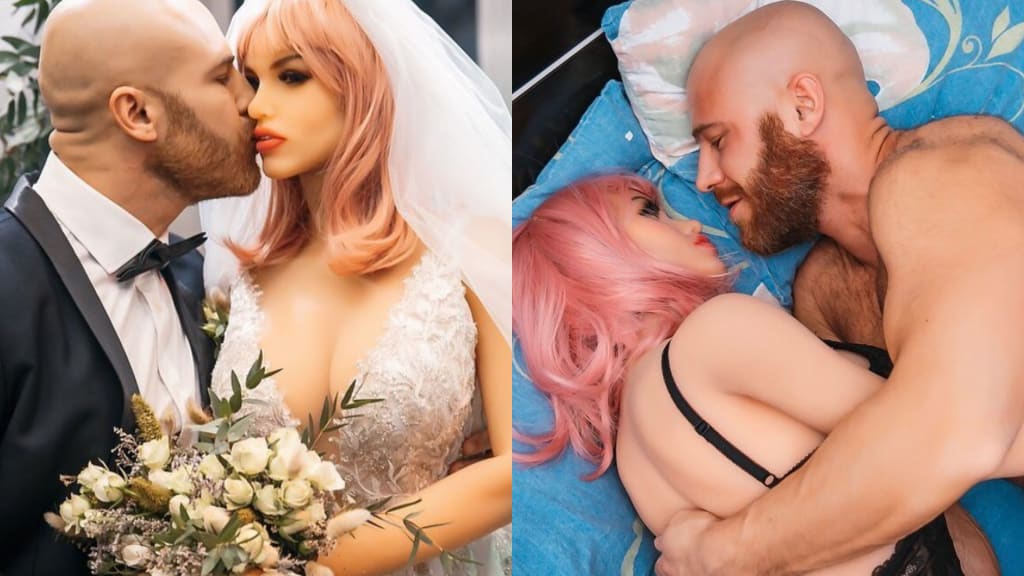
There was a scene in the 1993 movie Demolition Man where Officer Huxley (Sandra Bullock, who hasn’t aged a minute) asked John Spartan (Sylvester Stallone, who has aged for every minute Bullock hasn’t) if he’d like to have sex. Cue the theme song to The Love Boat. Spartan, who had spent the last few decades literally taking a cold shower, expects physical contact. While he doesn’t get a futuristic robot sex doll machine, he does get a device slipped onto his head while Huxley puts one on hers. This has a name (albeit a ridiculous one), Teledildonics, and could soon become our new sexual reality thanks to advancements in robotics and artificial intelligence.
From Sci-Fi to Silicon Valley
While most of us currently prefer the hunka chunka to simulated sex, with augmented and virtual reality technologies taking grand leaps every day, this line of development was inevitable. Teledildonics—a blend of “telecommunication” and “dildonics”—will rely on tactile sensations communicated over a link between participants. It will also require artificial intelligence software to solidify and nurture that link, providing stimulation based on learning factors. Because that’s what A.I. does. It learns. Can you imagine a system like Apple’s Siri, Amazon’s Alexa, or Microsoft’s Cortana knowing what turns you on? It’s also quite possible those systems will be utilized for the link itself.
The Allure of the Algorithmic Lover
The promise of AI-driven intimacy is tantalizing: partners who never tire, judge, or reject. Companies like RealDoll envision dolls equipped with machine learning to adapt to user preferences, refining their “personalities” over time. Imagine a companion that remembers your favorite movies, anticipates your moods, and even develops a sense of humor tailored to your tastes. For individuals grappling with social anxiety, disabilities, or chronic loneliness, this technology could offer companionship without the complexities of human relationships.
Ethical Quicksand
The rise of AI sex tech also raises thorny ethical questions. Consent, a cornerstone of human intimacy, becomes irrelevant when one party is programmed to comply. Could this normalize harmful power dynamics in real-world relationships? Then there’s the issue of data privacy: if your Alexa knows your turn-ons, what happens when that data is hacked or sold?
The Business of Loneliness
The market, however, is booming. Beyond RealDoll, startups like Harmony AI (maker of the “sentient” sex robot Harmony) and VR platforms such as CamSoda’s “XR” interactive shows are capitalizing on the $30 billion adult entertainment industry. Even mainstream tech giants are dipping their toes: Meta’s VR avatars now feature realistic eye contact and haptic feedback suits that simulate touch.
Love in the Time of Code
Not everyone views this shift as dystopian. Advocates argue that AI intimacy could democratize access to relationships, particularly for marginalized groups. LGBTQ+ individuals in repressive regions, for example, might find safe expression through virtual partners. Others see therapeutic potential: sex robots are already used in some clinics to help patients with PTSD or sexual dysfunction.
Still, the line between tool and substitute remains blurry. McMullen acknowledges the tension: “Our goal isn’t to replace human connection but to expand possibilities. Think of it like streaming music—you don’t stop going to concerts, but sometimes headphones are what you need.”
The Horizon of Desire
As we hurtle toward this brave new world, regulation lags far behind innovation. While the EU debates “electronic personhood” laws for advanced AI, most countries lack frameworks to address digital consent or the psychological effects of machine relationships.
Perhaps the ultimate question is not whether AI sex dolls will become mainstream, but how they’ll reshape our humanity. Demolition Man’s absurdist take on Teledildonics may soon seem quaint. Yet Spartan’s longing for genuine touch—awkward, messy, and gloriously human—reminds us that no algorithm can replicate the electricity of two souls choosing each other, flaws and all.
In the end, the future of sex may be less about machines and more about what we’re willing to sacrifice for convenience. As Huxley might say: “Enhance your calm.” But maybe we shouldn’t.
About the Creator
Dena Falken Esq
Dena Falken Esq is renowned in the legal community as the Founder and CEO of Legal-Ease International, where she has made significant contributions to enhancing legal communication and proficiency worldwide.
Keep reading
More stories from Dena Falken Esq and writers in Filthy and other communities.
I waited until I was 25 to lose my virginity — and I don’t regret it
That isn’t to say that it didn’t come with SOME regrets. According to the CDC, the average woman in the U.S. is 17.3 years old when she loses her virginity. I defy that average, and I’m not the only one.
By Dena Falken Esq9 months ago in Filthy



Comments (1)
I read your bio ........v nice