
The Dirty Truth About Fast Fashion Factories
What???

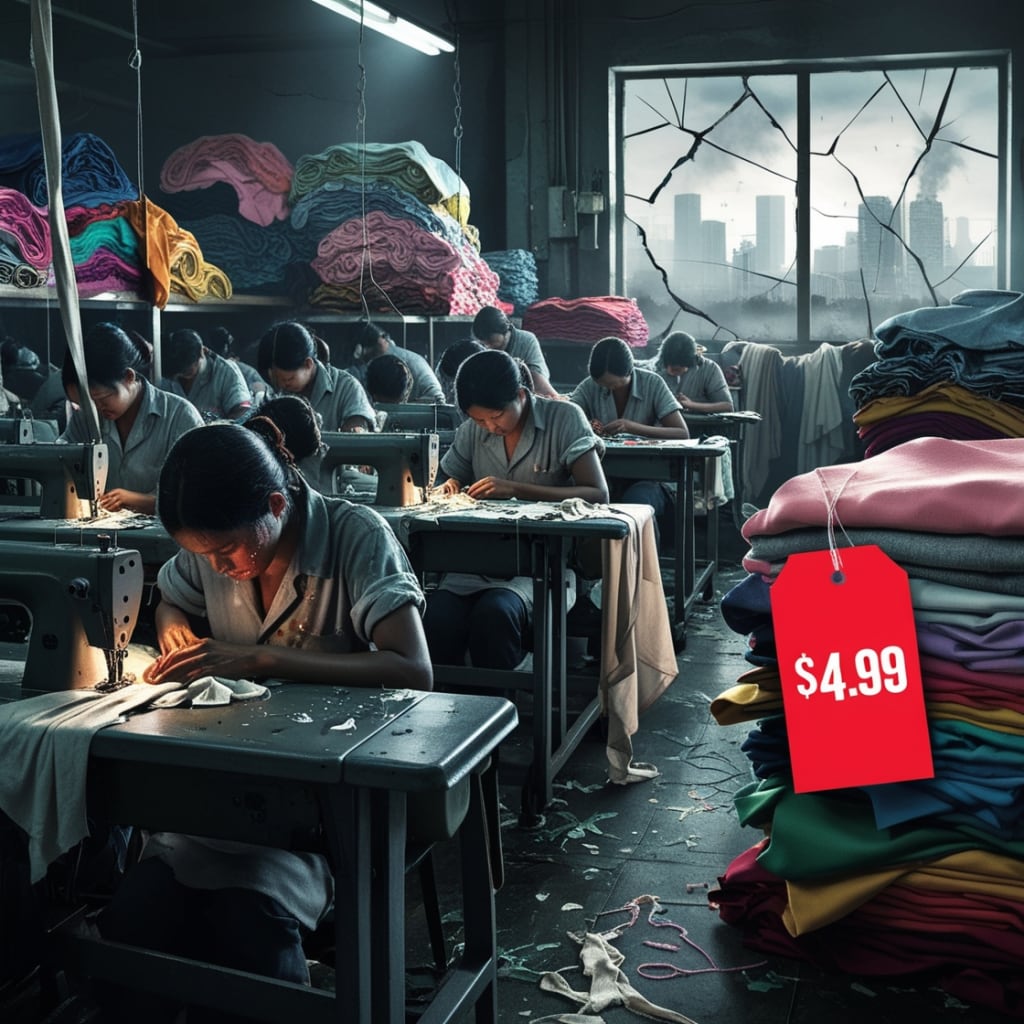
Most people don’t think twice when they snag a trendy $5 shirt off a store rack or order a bulk haul from their favorite online fashion site. The clothes arrive quickly, look decent enough, and cost less than a fancy cup of coffee. What many don't realize is that behind that low price tag lies a deeply troubling story—one stitched together with underpaid labor, dangerous working conditions, and staggering environmental damage. The rise of fast fashion has revolutionized how we consume clothing, but its true cost is far from visible in glossy online ads or influencer hauls. It's time we talk about the dirty truth behind fast fashion factories.
At the core of fast fashion is speed and quantity. Brands like Shein, H&M, Zara, and Forever 21 pride themselves on churning out thousands of new styles every week. These pieces are designed to follow trends—not last long. It’s a business model that thrives on consumer impulse and disposability. In order to keep up with demand and keep prices low, many of these brands rely on outsourced labor, often in countries where labor laws are weak or barely enforced. Workers—often women and sometimes even children—are hired in factories where they’re paid pennies for long hours under hazardous conditions. For some, their “workday” stretches to 14 or even 16 hours. And if they fall behind quota? Verbal abuse, wage cuts, or physical punishment can follow.
One of the most infamous cases that exposed these realities was the 2013 Rana Plaza collapse in Dhaka, Bangladesh. Over 1,100 garment workers died when the building housing multiple clothing factories caved in due to poor infrastructure and ignored safety warnings. The disaster made headlines and briefly shook the global conscience. Brands made promises. Safety reforms were demanded. Some changes were made. But over a decade later, exploitation still continues in quieter, more hidden corners of the supply chain. Out of sight means out of mind.
It’s not just human lives that fast fashion endangers. The environmental footprint of fast fashion is alarmingly massive. The industry is the second-largest consumer of water worldwide and responsible for about 10% of global carbon emissions. Dyeing fabrics alone is one of the leading causes of water pollution, with toxic chemicals being dumped into rivers near factory sites. In countries like India, China, and Indonesia, rivers that once sustained communities now run in shades of artificial blue or green, killing wildlife and posing serious health risks to nearby populations.
Polyester—a common fabric in fast fashion—is made from fossil fuels, meaning every cheap polyester top contributes to greenhouse gas emissions. The garments, often poor in quality, are worn just a few times before they end up in landfills. Americans alone throw away over 11 million tons of textile waste every year, much of it non-biodegradable. It will sit there for hundreds of years, leaching dyes and chemicals into the soil.
Many of us take comfort in the “Made in…” labels on our clothes, assuming regulations are in place or that ethical sourcing is standard. But labels can be misleading. A shirt “Made in Italy” may have had its pieces stitched in Bangladesh or dyed in China before final assembly elsewhere. This fragmented, global supply chain helps brands sidestep accountability. Subcontracting is rampant, and it allows companies to claim ignorance when abuse is uncovered in third-party facilities.
One rarely discussed aspect is how fast fashion devalues the work of artisans and skilled laborers. In traditional textile-producing regions, generations of families once passed down their knowledge of weaving, embroidery, and tailoring. But mass production has reduced their artistry to copied, low-quality versions sold for a fraction of the price. The cultural cost, like the human and environmental toll, is often invisible to the end consumer.
So why do we keep buying it? Affordability plays a big role. Not everyone has the privilege to invest in sustainably made fashion. But beyond necessity, we also live in a culture that glorifies newness. Social media encourages outfit-of-the-day content, unboxings, and ever-evolving aesthetics. We’re trained to believe that repeating outfits is a faux pas, and that a full wardrobe refresh each season is normal. The psychology of fast fashion—cheap thrills and the dopamine of newness—makes it addictive.
There are, however, ways to break the cycle without breaking the bank. Thrift shopping, clothing swaps, and investing in fewer but higher-quality pieces can go a long way. Supporting brands that practice transparent and ethical manufacturing, even if just occasionally, is a step toward change. Asking questions, reading up on brand practices, and holding companies accountable through our purchasing power matter more than we think.
More importantly, cultural change is needed. Repeating outfits should be celebrated, not shamed. Clothing should be viewed as something we care for, repair, and cherish—not toss out after one photo. And governments must do more to enforce labor laws and environmental protections in both domestic and international factories. Brands that profit off exploitation should be taxed and regulated. Consumers should be informed, not deceived.
Fast fashion isn't just a style issue—it’s a human rights crisis, an environmental emergency, and a cultural concern. The next time a shirt catches your eye with a suspiciously low price, take a second to ask yourself: who paid the real price for this?
The dirty truth about fast fashion factories is uncomfortable. It demands that we not only rethink how we shop but how we value people, the planet, and our shared future. It’s not about guilt—it’s about awareness and accountability. Because real style shouldn’t come at the cost of someone else’s suffering.
About the Creator
Muhammad Asim
Welcome to my space. I share engaging stories across topics like lifestyle, science, tech, and motivation—content that informs, inspires, and connects people from around the world. Let’s explore together!
Keep reading
More stories from Muhammad Asim and writers in Filthy and other communities.
Why No One Talks About Financial Abuse
When we hear the word "abuse," our minds often jump to the visible: bruises, yelling, or emotional manipulation. But one form of abuse that remains widely unspoken, often hidden behind closed wallets and veiled control, is financial abuse. It’s one of the most common and insidious types of abuse in relationships—and yet, rarely acknowledged or understood. Why is that? Why does financial abuse in relationships remain such a taboo topic, despite its devastating impact?
By Muhammad Asim9 months ago in Filthy
Five Famous Destinations That Are Tired of Too Many Tourists
Travel has become easier than ever before. Affordable flights, social media inspiration, and the rise of global tourism have encouraged millions of people to explore the world every year. While tourism brings economic benefits, it also creates serious challenges for some of the world’s most popular destinations. In recent years, several cities and natural sites have begun pushing back against the overwhelming number of visitors.
By Irshad Abbasi 4 days ago in Filthy
Take me there!
Her Louboutin scorched through the shallow canal forming between herself and the blacked-out Cadillac awaiting her entry. She flopped down on the custom Italian leather seats with a thud, and giant sigh of exasperation as Kode tucked the door in neatly behind her making sure that her voluptuous rump had made it entirely into the car. He waited at the back of the car for 30 seconds as he had been directed to do before reapering at the driver's door.
By Nevaeh Rhodes (Emily Murff)5 days ago in Filthy
Why Didn't Anyone Tell Us
Men, move along. This is not for you. This is for the women. I was forty-five when I began menopause. It is pretty young for that to be going on in a woman’s life, but I had undiagnosed PCOS, my entire life. Thank you to all the gynecologists I had seen my entire life. That in itself should encourage women to keep seeking second opinions, especially when you are not getting correct answers or any at all.
By Alexandra Grant5 days ago in Humans


Comments
There are no comments for this story
Be the first to respond and start the conversation.