
The Cruel Reality of Female Genital Mutilation in Africa
Jane Li

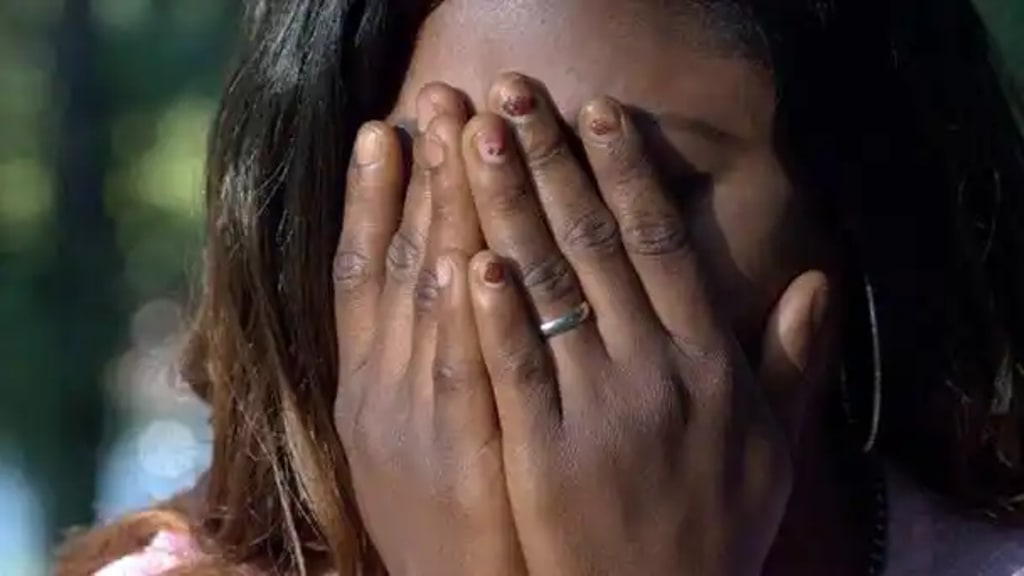
"I saw the Gypsy woman preparing between my legs... She took out a rusty razor from an old travel bag... I couldn't see the details of the blade, but I could see the dried blood on its jagged edge. She spat on the blade and wiped it with her clothes... Then, I felt my flesh, my genitals being cut off. I heard the dull knife sawing back and forth on my skin. I sat there like a stone, telling myself not to move, that it's better to endure the pain quickly. But unfortunately, my legs began to tremble on their own, and I started to pray: 'God, let this end quickly!' My prayer was immediately answered because I fainted."
The above harrowing passage is excerpted from the autobiography "Desert Flower" by Somali supermodel Waris Dirie (the book was adapted into a film in 2009 and released in multiple countries). Dirie, born in the Somali desert, was subjected to female genital mutilation at the age of 5. At 13, she fled an arranged marriage and later endured great hardships to become a supermodel. In 1997, she gave up her booming career to become a UN ambassador and dedicated herself to the campaign against female genital mutilation. So, what is this barbaric and cruel custom, and what harm does it do to women?
**What Is Female Genital Mutilation?**
According to the World Health Organization (WHO), female genital mutilation/cutting (FGM/C) is defined as "procedures that involve partial or total removal of the external female genitalia, or other injury to the female genital organs for non-medical reasons." This custom is mainly practiced in some African countries and the Middle East. Depending on the extent of the external genitalia removed, WHO classifies FGM/C into four types:
**Type I FGM/C** usually includes two subtypes: ① removal of the clitoral glans or clitoral hood; ② removal of the clitoral hood with partial or total removal of the clitoris.
**Type II FGM/C** involves the removal of the clitoris and partial or total removal of the labia minora, with or without removal of the labia majora. It includes three subtypes: ① removal of the labia minora only; ② partial or total removal of the clitoris and labia minora; ③ partial or total removal of the clitoris, labia minora, and labia majora.
**Type III FGM/C** involves the removal or non-removal of the clitoris, but partial or total removal of the labia minora and suturing of the labia majora, leaving only a small opening for the passage of urine and menstrual blood. As Dirie described in "Desert Flower," she had to spend 10 minutes urinating because the urine could only drip down slowly, and during menstruation, she could do nothing but lie in bed.
**Type IV FGM/C** refers to other non-medical procedures that harm the female genitalia, including pricking, piercing, incising, scraping, and cauterizing the clitoris, labia, or both.
**Why Is Female Genital Mutilation Performed?**
Low levels of education and patriarchal attitudes are significant factors contributing to the practice of FGM/C. People in regions where FGM/C is practiced believe that there are "unclean" things between a woman's legs that make men addicted, and only by removing these can a woman be considered clean, beautiful, and well-bred.
Since the clitoris is removed during FGM/C, women experience decreased sexual desire and reduced sexual activity. Particularly for women who have undergone Type III FGM/C, they avoid sexual intercourse out of fear of tearing the sutured area and being discovered with a torn wound— in regions with FGM/C customs, it is believed that FGM/C can prove a girl's virginity before marriage and serve as a standard for marital fidelity.
In summary, for women who have undergone FGM/C, sex is not a pleasurable experience but a form of torture. Ironically, mothers who support their daughters undergoing FGM/C believe they are protecting them, preparing them for future marital life, and upholding family honor. However, FGM/C does not protect daughters as these mothers think; it causes significant harm to women's health. Since many FGM/C procedures are performed privately by untrained individuals in unsanitary conditions, severe pain, heavy bleeding, and wound infections are common occurrences.
Moreover, FGM/C has many long-term negative effects. As mentioned above, decreased clitoral sensitivity and reduced sexual desire make it impossible for women who have undergone FGM/C to have normal sexual lives and experience the pleasure of sex. For women who have had Type III FGM/C, the beginning of intercourse is extremely painful as the partner tries to penetrate, and repeated tearing of the wound can lead to infections, cysts, abscesses, and other complications, as well as an increased risk of HIV infection.
Additionally, according to a 2006 WHO survey, compared to women who have not undergone FGM/C, almost all forms of FGM/C increase infant mortality rates at birth, and women who have had Type III FGM/C have a 30% higher rate of cesarean sections and a 70% higher risk of postpartum hemorrhage. Furthermore, women who have undergone FGM/C are also more likely to exhibit symptoms of anxiety and tension.
The cruel custom of FGM/C has persisted for centuries, and the fight to ban it continues. For example, Sudan enacted laws prohibiting FGM/C in 1946, but by the end of the 20th century, it was still one of the countries with the highest prevalence of FGM/C in the world.
About the Creator
Jane Li
A sharer of a beautiful life~
Europe Online Travel Market Size and Forecast 2025–2033
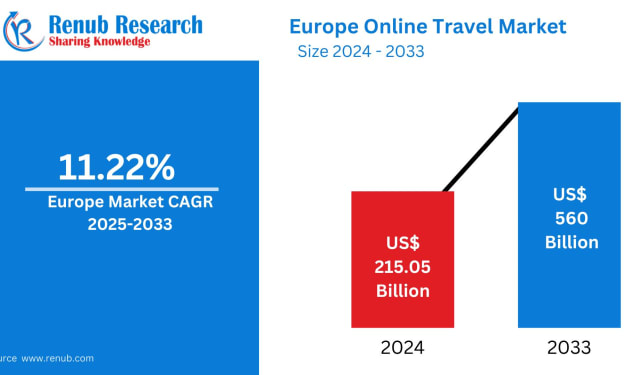
Europe Online Travel Market Outlook (2025–2033) The Europe Online Travel Market is undergoing a powerful transformation as digital innovation, changing consumer preferences, and sustainability-driven choices redefine how Europeans plan and book their journeys. According to Renub Research, the market is expected to expand from US$ 215.05 billion in 2024 to US$ 560 billion by 2033, registering a strong CAGR of 11.22% from 2025 to 2033.
By Janine Root about 6 hours ago in Filthy
You Know Her
Many people say, “I know her,” when they hear the name Mia Khalifa. They say it with confidence, as if they truly understand who she is and what her life means. But knowing a name is not the same as knowing a person. Mia Khalifa is one of the most searched names on the internet, yet she is also one of the most misunderstood public figures of our time.
By John Smith6 days ago in Filthy


Comments
There are no comments for this story
Be the first to respond and start the conversation.