
SpaceX Kicks Off Busy Year for Moon Missions with Two Lunar Landers
"SpaceX's Historic Launch: Two Lunar Landers Embark on Groundbreaking Moon Missions"
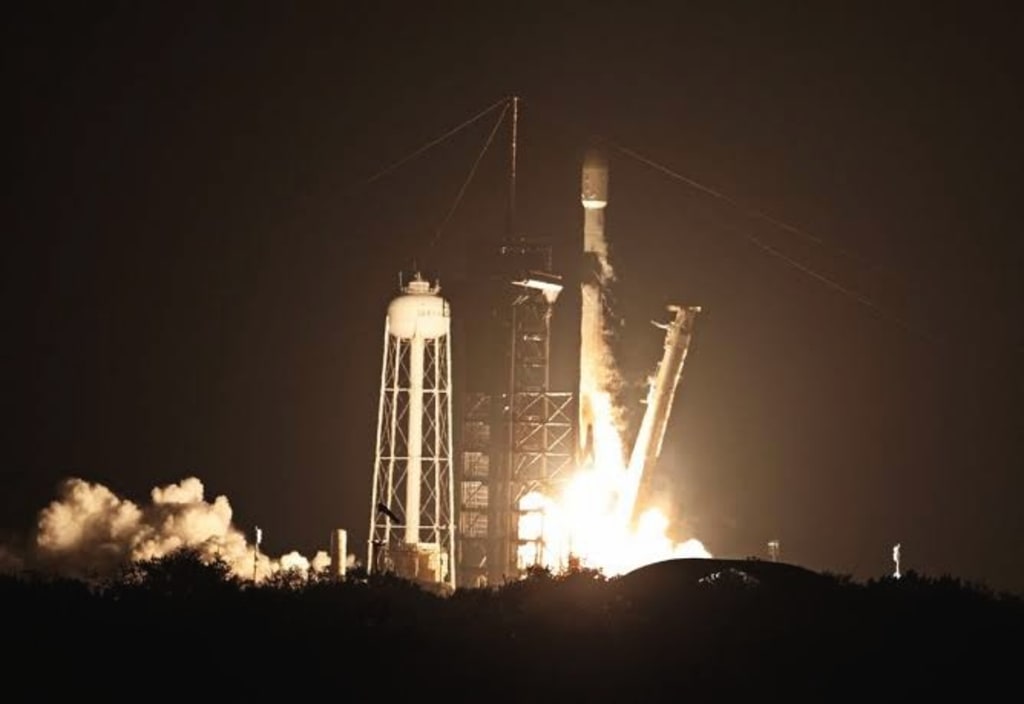
In the early hours of Wednesday, a SpaceX Falcon 9 rocket roared into the sky from NASA’s Kennedy Space Center in Florida, marking the start of an exciting journey to the moon. Onboard the rocket were two lunar landers from different countries, each aiming to make history and contribute to humanity’s renewed interest in exploring our closest neighbor.
The launch, which took place at 1:11 a.m. ET, signals the beginning of what is expected to be a very active year for moon missions. These efforts are part of a larger global race to establish a lasting human presence on the moon.
The First Lunar Lander: Blue Ghost
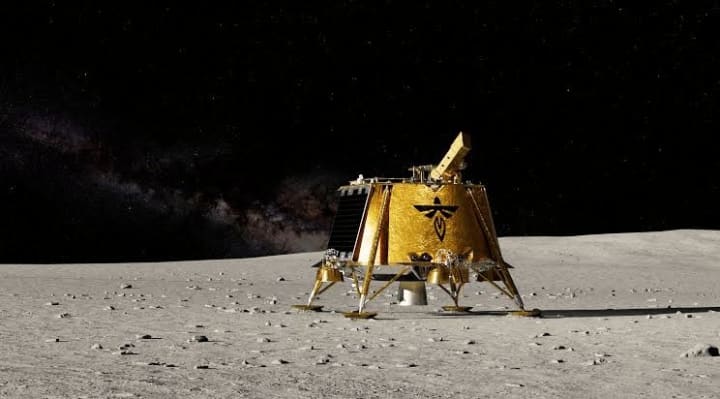
One of the lunar landers tucked inside the rocket’s nose cone is the Blue Ghost. This 6.6-foot-tall spacecraft was developed by Firefly Aerospace, a company based in Cedar Park, Texas. This is Firefly’s first mission to the moon, and it’s an uncrewed one, meaning no astronauts are onboard.
Firefly Aerospace is working with NASA under its Commercial Lunar Payload Services (CLPS) program. CLPS is a key part of NASA’s Artemis program, which aims to send humans back to the moon for the first time in over 50 years. Jason Kim, CEO of Firefly Aerospace, expressed confidence in his team’s ability to succeed, though he acknowledged the challenges of such a mission.
“This is a good time for the lunar economy,” Kim said in an earlier interview. Despite the uncertainties that come with a first mission, he said his team is fully prepared to meet the challenge.
The Second Lunar Lander: Hakuto-R

Sharing the ride to space is another lunar lander, Hakuto-R, developed by Tokyo-based company Ispace. The 7.5-foot-tall spacecraft represents Ispace’s second attempt at landing on the moon. The company’s first mission ended in failure, but they’re determined to succeed this time.
Ispace is focused on offering services to space agencies and private companies that need to send equipment or experiments to the moon. This makes them similar to other companies like Astrobotic Technology, which also develops lunar landers.
Interestingly, Ispace’s roots trace back to the Google Lunar XPrize, a competition launched to encourage private companies to develop moon landers. The contest offered $20 million to any team that could successfully land a spacecraft on the moon. While the competition ended in 2018 without a winner, it inspired several companies, including Ispace, to continue working toward that goal.
Why These Missions Matter
Both Firefly Aerospace and Ispace are part of a growing wave of private companies aiming to make lunar exploration more accessible. Their efforts are a big step forward in what some call the “lunar economy.” This term refers to the potential for businesses to thrive around moon-related activities, including mining resources, conducting scientific experiments, and supporting human settlement.
The two landers onboard this SpaceX mission will test new technologies, gather data, and pave the way for future missions. They are part of a larger framework tied to NASA’s Artemis program, which not only aims to send humans back to the moon but also to build infrastructure that will allow for long-term exploration.
SpaceX’s Role in the Moon Race
SpaceX has played a critical role in making space exploration more affordable and efficient with its reusable rockets. The Falcon 9 used for this mission is designed to reduce the cost of launching payloads, making it easier for private companies and smaller organizations to participate in lunar exploration.
This launch also highlights the increasing role of private companies in space exploration, as governments and agencies like NASA team up with businesses to achieve ambitious goals.
Looking Ahead
While both Firefly’s Blue Ghost and Ispace’s Hakuto-R face challenges, their missions represent a broader trend in space exploration: the growing involvement of private companies in ventures that were once solely the domain of governments.
As more players enter the race to the moon, we can expect to see innovations that will make space exploration faster, cheaper, and more efficient. This mission is just the beginning of what experts predict will be a busy and exciting year for lunar exploration.
The dream of returning to the moon is no longer just about astronauts planting flags. It’s about building a sustainable future on the lunar surface — and these missions are important first steps in making that dream a reality.
SpaceX’s successful launch reminds us that the next chapter of space exploration is here, driven by the passion and determination of both public and private teams. With every mission, humanity gets closer to making the moon not just a destination, but a new frontier for opportunity and discovery.
About the Creator
How Privacy In Romance Protects Emotional Safety And Mutual Respect
Privacy is a great value of any healthy love affair. Although intimacy promotes an open and intimate relationship, personal space is not obviated. Privacy enables the partners to have a sense of identity, independence, and emotional space in a partnership. By understanding privacy in their couples, couples realize that each human being has individual thoughts, experiences, and time that might not be invariably necessary to be shared.
By Robert Smithabout 10 hours ago in Filthy
Babā Farīd’s Caravanserai in Jerusalem: A Forgotten Link Between South Asia and the Holy City
Throughout history, the sacred city of Jerusalem has attracted pilgrims, scholars, and travelers from every corner of the Muslim world. Among the many fascinating stories tied to this ancient city is the existence of Babā Farīd’s Sarai, a historical lodging place associated with the famous South Asian Sufi saint Fariduddin Ganjshakar, commonly known as Babā Farīd. This remarkable connection highlights how spiritual networks once connected distant regions like the Indian subcontinent with the heart of the Middle East.
By Irshad Abbasi 3 days ago in Filthy




Comments (1)
Awesome! Good to know! Exciting