
Some Questions Are Never Asked
Because Love Seeks Understanding, Not Explanations

There are questions that stay on the lips.
And then there are questions that sink into the heart—never spoken, never demanded, never answered.
Love is not always loud.
Sometimes, love is quiet to the point of invisibility.
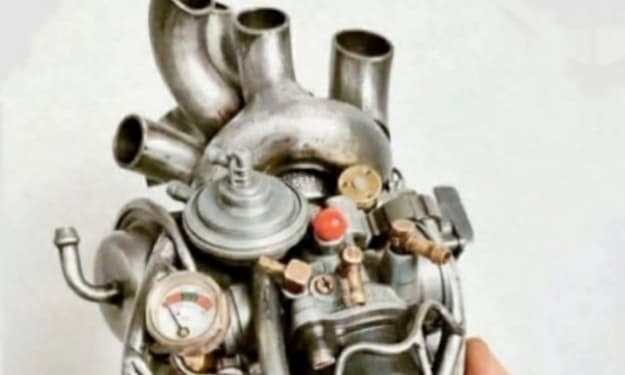
The image and words that inspired this piece carry a painful truth:
Some people love so deeply that they stop asking “why.”
Not because they don’t care—but because caring too much teaches them silence.
The Difference Between Curiosity and Love
Curiosity asks questions to satisfy itself.
Love asks questions to protect what it fears losing.
But there comes a moment in some relationships when questions stop being asked—not because answers don’t exist, but because answers may destroy what little peace remains.
“Why did you change?”
“Why are you distant now?”
“Why does it hurt when it shouldn’t?”
These questions are easy to ask.
Living with them unspoken is much harder.
Silent Love Is the Heaviest Kind
People assume unspoken love is easier.
That if you don’t say it, it won’t hurt as much.
The truth is the opposite.
Silent love is heavy because it has no release.
No argument.
No closure.
No final sentence.
It lives in pauses, glances, and unfinished thoughts.
It grows in restraint and survives on endurance.
And endurance, over time, becomes exhaustion.
When Love Chooses Restraint
There are people who could ask questions—but choose not to.
Not because they lack courage.
But because they understand the cost.
They know that once certain words are spoken, relationships change forever.
They know that some answers cannot be unheard.
So they stay quiet—not out of weakness, but out of emotional intelligence.
Restraint, in love, is one of the most misunderstood sacrifices.
The Strength of Not Demanding
Modern love often confuses entitlement with affection.
We are taught that love must come with constant reassurance, explanations, and access.
But real love sometimes says:
“I care enough not to corner you.”
“I value you enough not to force answers.”
“I love you enough to carry this pain quietly.”
Not demanding explanations does not mean accepting neglect.
It means understanding limits—both yours and theirs.
The Inner Dialogue No One Hears
People who stop asking questions don’t stop thinking.
In fact, their minds are louder than anyone else’s.
They replay conversations.
They analyze silence.
They read between lines that were never written.
They live with a constant internal dialogue:
“Maybe I expected too much.”
“Maybe I misunderstood.”
“Maybe it’s better this way.”
This quiet self-negotiation is emotionally draining—but invisible to the world.
Silence Is Not Always Distance
Silence is often mistaken for emotional withdrawal.
But sometimes, silence is a form of protection.
Protection from conflict.
Protection from disappointment.
Protection from seeing someone you love turn into someone you no longer recognize.
Silence can be an act of mercy—toward others and toward oneself.
Loving Without Control
One of the hardest lessons love teaches is this:
You cannot control another person’s capacity to stay.
You can give affection, loyalty, patience, and time.
But you cannot force consistency.
You cannot demand emotional availability.
True love understands this—even when it hurts.
That understanding is what keeps some people from asking questions they already know the answers to.
The Loneliness of Emotional Maturity
Emotionally mature people are often the loneliest.
Not because they are unlovable—but because they tolerate more than they should, understand more than they are appreciated for, and speak less than they feel.
They don’t chase clarity at the cost of dignity.
They don’t beg for reassurance at the expense of self-respect.
They endure quietly—and that endurance is rarely noticed.
When Acceptance Replaces Hope
There is a moment when hope softens into acceptance.
Not a dramatic moment.
Not a heartbreaking one.
Just a quiet realization:
“This is how much they can give.”
Acceptance doesn’t erase pain.
It simply removes expectation.
And expectations, more than love itself, are what break people.
Love Without Conditions, But With Boundaries
Choosing not to ask questions does not mean loving blindly.
It means loving with boundaries.
It means saying:
“I will care—but I will not lose myself.”
“I will feel—but I will not collapse.”
“I will stay kind—even if I must step back.”
Boundaries are not walls.
They are quiet agreements with oneself.
The Pain of Unanswered Questions
Unanswered questions don’t fade.
They settle.
They appear in moments of stillness—late at night, early in the morning, during ordinary routines.
They don’t scream.
They whisper.
And whispers are harder to escape than noise.
Why Some People Don’t Ask
Some people don’t ask because:
They already know
They fear the truth
They value peace over clarity
They are tired of explaining themselves
They don’t want to be a burden
And sometimes—
They don’t ask because they love too deeply to risk turning love into conflict.
The Quiet Art of Letting Be
Letting be is not giving up.
It is letting go of control.
It is allowing someone to be exactly who they are—without forcing them to be who you need.
This is not passive love.
It is conscious love.
And conscious love often walks alone.
What Remains Unsaid Still Matters
Just because something is not spoken does not mean it isn’t real.
Unsaid words shape people.
Unasked questions define relationships.
Unexpressed emotions leave lasting marks.
The absence of words does not equal the absence of feeling.
Sometimes, it means the feeling was too strong to be handled carelessly.
Final Reflection
Not every love story is written in conversations.
Some are written in restraint.
Not every question needs an answer.
Some only need understanding.
And not every silence is emptiness.
Some silences are full of love that chose dignity over demand.
About the Creator
Keep reading
More stories from Zahid Hussain and writers in Filthy and other communities.
A Heart That Never Sleeps
There is a common misunderstanding about silence. People assume silence means rest, peace, or emptiness. But some silences are not calm at all. Some silences are crowded—with thoughts, memories, regrets, and questions that never find answers. The heart shown in this image does not look human. It looks mechanical—made of pipes, gauges, metal curves, and pressure valves. Yet somehow, it feels more human than a real one. Because this is what many hearts become over time: machines that keep working long after they should have rested. The quote says it simply and painfully clearly: The heart is not imprisoned by longing alone; it is also trapped by fear—fear that wakes it in the middle of the night. The Myth of Rest We often tell ourselves that sleep will fix everything. That closing our eyes will shut the noise inside our heads. But anyone who has loved deeply, lost quietly, or feared silently knows the truth. The body sleeps. The heart does not. At night, when the world slows down and distractions fade, the heart finally speaks. And it does not whisper. It reminds us of things we try hard to forget during the day—unfinished conversations, unspoken truths, decisions we avoided, and people we could not keep. The night does not create these thoughts. It only removes the noise that was hiding them. Fear: The Quiet Prison Longing is honest. It says, I want. Fear is more complicated. It says, What if? Fear of loss. Fear of rejection. Fear of change. Fear of staying the same. This fear does not scream. It waits. It settles into the heart like a slow pressure, tightening with time. And once fear takes hold, the heart becomes alert—too alert to rest. That is when the heart turns mechanical. Not because it feels nothing, but because it feels too much. A Heart Under Pressure Look closely at the image. The gauges suggest monitoring. The pipes suggest constant flow. The metal suggests durability, but also coldness. This is the modern heart. We monitor our emotions. We control our reactions. We manage our pain. We keep functioning, even when something inside is fractured. People praise strength, not realizing how often strength is just exhaustion in disguise. The heart keeps working because it must—not because it wants to. Night Is Honest Daytime is performance. Night is truth. During the day, we smile. We answer messages. We complete tasks. We convince ourselves we are fine. But at night, when there is no one to impress and nowhere to run, the heart removes its armor. That is when fear visits. Fear does not come with solutions. It comes with questions. And questions are harder to escape than answers. The Cost of Awareness Some hearts are restless not because they are weak, but because they are aware. They understand consequences. They see patterns. They recognize what is about to be lost—even before it happens. Awareness is heavy. It keeps the heart awake. Ignorance sleeps easily. Depth does not. This is why thoughtful people often struggle with peace. Their hearts do not shut down easily. They replay, analyze, and imagine. Not because they want to suffer— but because they want to understand. When Fear Masquerades as Control We tell ourselves we are in control. That we have planned everything. That we are prepared. But fear often disguises itself as preparation. Overthinking is not planning. Constant alertness is not strength. It is the heart trying to protect itself from pain it has already tasted once. And once a heart has been hurt deeply, it does not forget. It remembers in silence. It remembers at night. The Loneliest Hours There is a specific kind of loneliness that arrives after midnight. It is not about being alone—it is about being unheard. The world sleeps. The phone stays quiet. And the heart, full of things it never said, finally has time to speak. These are the hours when people stare at ceilings, listen to their own breathing, and wonder when life became so heavy. Not dramatic. Just honest. Mechanical, But Still Alive A mechanical heart sounds lifeless, but it isn’t. It is simply tired of breaking. So it builds armor. It replaces softness with structure. It learns how to survive instead of feel. But even metal hearts feel pressure. Even machines need maintenance. Ignoring emotional fatigue does not make it disappear. It only makes it louder at night. What the Heart Really Needs The heart does not need advice at 2 a.m. It does not need motivation quotes or distractions. It needs acknowledgment. To be allowed to feel without judgment. To be allowed to rest without guilt. To be allowed to heal without timelines. Sometimes peace does not come from answers—but from acceptance. Final Thought Not all imprisoned hearts are bound by longing. Some are held captive by fear—fear of losing what they love, fear of becoming what they once were, fear of waking up one day and realizing they lived on autopilot. If your heart feels restless at night, it does not mean something is wrong with you. It may simply mean your heart is still alive. Still aware. Still human. And perhaps, that is not a weakness—but a quiet kind of strength.
By Zahid Hussain21 days ago in Lifehack
A Failed Artist, A Disillusioned Poet, An Underpaid Game Show Host
I took my son and niece to Gori, a small town in Georgia where Joseph Stalin was born. They talked me into visiting the Stalin's Museum, the largest in the post-Soviet space. I had resisted going there because I just can't stand the monster and know enough about him, or so I thought.
By Lana V Lynx6 days ago in FYI


Comments
There are no comments for this story
Be the first to respond and start the conversation.