
Savannah Guthrie’s Divorce: A Quiet Turning Point Behind the Public Smile
How the Today co-anchor navigated a private separation with grace—and emerged more grounded, focused, and resilient

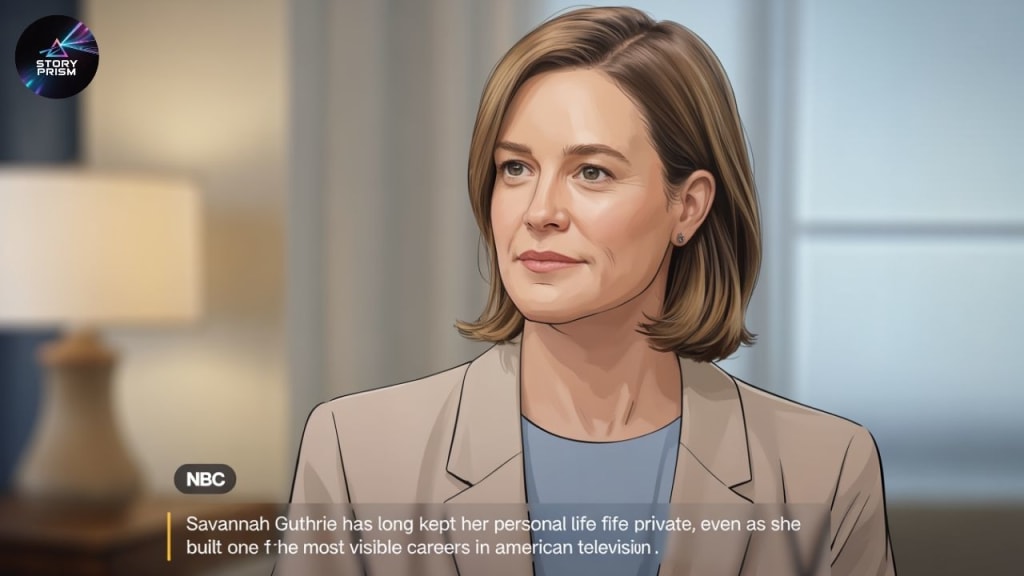
Savannah Guthrie has spent decades in front of the camera delivering the news with calm authority and steady compassion. As a co-anchor of NBC’s Today, she has become a familiar presence in millions of homes, known for professionalism rather than personal drama. That is why her divorce from her first husband, Mark Orchard, remains a relatively understated chapter in her public story — yet one that quietly shaped the life and career she leads today.
Unlike many celebrity divorces that unfold loudly and publicly, Guthrie’s separation happened with little spectacle. Still, it marked a significant turning point, revealing how personal upheaval can coexist with professional ascent.
A Marriage Away From the Spotlight
Savannah Guthrie married Mark Orchard, a British journalist and BBC News presenter, in December 2005. The two met while covering the high-profile trial of Michael Jackson, bonded by shared professional intensity and a global news environment few outsiders truly understand.
At the time, Guthrie was building her reputation as a serious legal and political journalist. The marriage appeared stable and private, largely untouched by tabloid attention. There were no flashy magazine spreads or public declarations — just two professionals navigating demanding careers.
But by January 2009, the marriage had ended in divorce.
Why the Divorce Stayed Quiet
What stands out most about Savannah Guthrie’s divorce is how little she publicly discussed it. In an era when personal disclosures often become branding tools, Guthrie chose restraint. There were no public accusations, no emotional interviews, and no attempts to shape a narrative for public sympathy.
This silence was not avoidance — it was consistency. Guthrie had always maintained a clear boundary between her work and her private life. The divorce reinforced that boundary rather than breaking it.
For many women in media, especially those in hard-news roles, maintaining credibility has historically required minimizing personal vulnerability. Guthrie’s approach reflected that reality, even as cultural attitudes toward transparency slowly evolved.
Career Momentum Amid Personal Change
The timing of the divorce coincided with a critical phase in Guthrie’s career. Shortly after, she became more prominent within NBC News, eventually serving as a White House correspondent and later as co-anchor of Today. Rather than slowing her momentum, the period following her divorce marked professional growth.
This is not to suggest that divorce was easy or insignificant. Instead, it highlights a reality many professionals recognize: personal hardship does not pause career expectations. Guthrie continued to perform at the highest level while navigating a major life transition behind the scenes.
Her ability to do so reinforced her public image — composed, capable, and resilient — even when the details remained private.
Divorce Without Drama, Strength Without Spectacle
In celebrity culture, divorce is often framed as failure or scandal. Guthrie’s experience challenges that narrative. There was no public fallout, no professional derailment, and no reinvention fueled by bitterness.
Instead, the divorce became a quiet reset.
Years later, Guthrie would speak more openly about life, faith, and personal growth, particularly after remarrying. In hindsight, her first marriage and its end appear less like a defining rupture and more like a chapter that informed her emotional maturity.
That perspective resonates with readers who understand that not all endings need explanations, and not all growth needs to be broadcast.
Finding Love Again — On Her Own Terms
Later in 2009, Savannah Guthrie began a relationship with Michael Feldman, a political and communications consultant. Their connection developed away from public scrutiny and unfolded slowly. They married in 2014, five years after her divorce.
By then, Guthrie was well established in her career and more grounded in her personal values. The contrast between her first marriage and her second is subtle but telling. With Feldman, she built a family, became a mother, and allowed glimpses of her personal life to surface — but still on her own terms.
The divorce had not closed her off to love. It had clarified what she wanted.
A Relatable Story Beneath a Public Role
Savannah Guthrie’s divorce resonates precisely because it is not sensational. It mirrors the experience of countless people whose relationships end quietly, without scandal, yet still carry emotional weight.
For viewers who see her daily on television, her story offers reassurance: personal setbacks do not negate success, and private pain does not disqualify public strength.
Guthrie never framed herself as a symbol of survival — but in her restraint, she became one anyway.
Final Thoughts
Savannah Guthrie’s divorce from Mark Orchard is not a headline-grabbing scandal or a dramatic turning point played out in public view. It is something far more relatable: a private ending that led to a more grounded beginning.
In a media culture that often demands vulnerability as performance, Guthrie chose dignity instead. That choice reflects the same steadiness that defines her career — and explains why her audience continues to trust her.
Sometimes, the most powerful stories are the ones told quietly.
About the Creator
Keep reading
More stories from Story Prism and writers in Filthy and other communities.
Savannah Guthrie’s ’90s Bob Haircut: Why the Classic Look Still Works Today
Long before Savannah Guthrie became one of America’s most trusted morning-show anchors, she quietly embodied a look that would one day circle back into fashion relevance: the ’90s bob haircut. Clean, confident, and effortlessly polished, the bob Savannah wore in her early career years reflects more than a trend — it captures a moment in media history when professionalism and personality finally began to coexist.
By Story Prismabout 15 hours ago in Styled
Modern Relationships and Why People Fear Deep Commitment
Dedication in the present day relationships is no longer definite or universal. Commitment has been in the past influenced by the society, family pressures, and definite schedules. Nowadays, individuals are being fostered to structure relationships based on personal freedom and individual objectives. This flexibility has provided a choice but it has also eliminated structure. In the absence of shared expectations, commitment may become unspecific or daunting, and individuals will be afraid to have an all-in attitude.
By Olivia Smitha day ago in Filthy
Relationships That Grow Stronger Through Life Changes
It is emotional safety that enables relationships to survive and prosper in the modern dating scene which is complicated. Although romance tends to be in the limelight, emotional safety is what will be the difference between love being stable or stressful. Emotional safety implies being accepted, heard, and safe without the fear of being judged and abandoned. When partners are emotionally free to share, they are free to be completely honest with each other, despite the presence of messy and uncomfortable emotions. This safety provides an easy emotional atmosphere in which connection can develop as an extension of itself as opposed to a result of anxiety and insecurity.
By Willian Jamesa day ago in Filthy

Comments
There are no comments for this story
Be the first to respond and start the conversation.