
You Can’t Go Home Again
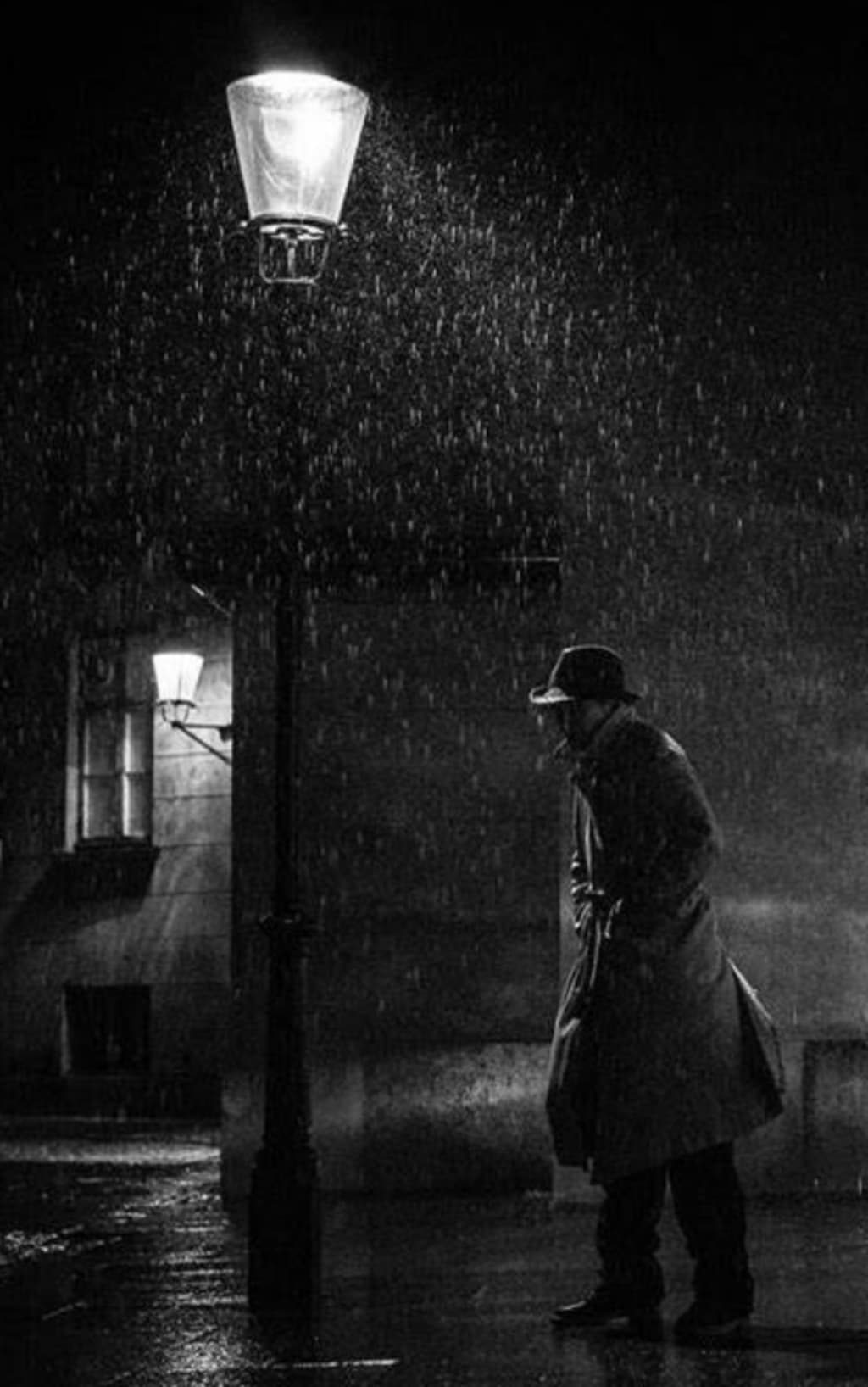
He gazed down the street to see the imprint lingering under a streetlight. From this far away its resemblance to his dead father tugged at his heart strings.
“Go on, now. Get away! You’re freaking out mom,” he yelled down the street.
“Joey? It’s me, papa!”
Damn, the imprint sure sounded like him. The technology had really come a long way.
“I need you to go away,” he insisted.
The imprint didn’t move. One had to be firm with these machines because they were slow to understand nuance. He marched down the street, trying to intimidate it into triggering its flight response. The imprint’s infrared scans and his ‘terpreters should have told the mech that he was angry and could cause it harm.
Up close, Joe realized the imprint would never be mistaken for human. They were never meant to replace a loved one, just provide a familiar comforting figure out of the corner of one’s eye. The imprint had an embossed face of the dearly departed with barely discernible features, the hands rounded fists with no finger delineation. There were more expensive options that came pretty damn close to the dead relative/friend/pet, but some recoiled from the more accurate imprints. Only God could produce perfection, or so it was said.
“How’s mom?” the imprint asked.
Joe ignored him and examined it in a vain search for an off switch.
In the gathering gloom, it was easy to concentrate on how much, not how little, the imprint looked like his dad.
“Do you have somewhere to go?” asked Joe. He couldn’t leave the imprint out here. He could be stolen for spare parts, run over, or used for target practice.
“Home.”
Of course, the imprint was pointing up the street to their home, what had been his home before his memories and part of a personality had been downloaded into the computers of Forever Here. That’s when the husk, as the corporation referred to the corpse, was immolated in a pretty dish by lasers, handsomely decorated and sent home with the promises of the imprint soon to follow.
They stared at each other, neither willing to give.
“You don’t live there anymore. You don’t live anywhere. You’re dead,” he explained to the imprint in calm, measured tones. They sometimes didn’t take the news well, flying into fits of rage.
The imprint implored him with his oversized puppy dog eyes.
“Joey, I’m Papa. Can’t I come home?”
Goddamn it. In this light it was Pops.
“Come on. If I let you stay in the basement, will you shut down until I wake you?”
“Of course, son.”
“Stop calling me that. What’s your serial number?”
“441-25-1170.”
“I’m going to call you Seven Oh.”
“What should I call you?”
“Mr. Mitchell.”
“But I was…”
“But now you’re not. I am Mr. Mitchell.”
The imprint sighed just like Pops. “Whatever you say.”
They stood quietly in the shadows cast by the moon that seemed to hover directly over the house. Joe operated the outside entrance to the basement. The imprint followed him down then stood motionless awaiting further instructions.
“Set an internal wake command for 5:00 AM,” Joe commanded. “I want you out of the house before your… before mom wakes up.”
“And then what?” it asked.
“I need you to report for recycling.”
“Need or want?”
“This is no time for a philosophical argument.”
“First, there’s the distinction. Do you want it to happen or do you need it to happen? Then there’s the strength of the want or need. Can a machine want?”
“Jesus.” It was Pops-kind of roundabout logic coming out of this machine, this pale comparison of the person it represented.
“Go to sleep.”
At that command, the Imprint shut down for the night.
At precisely 4:45 AM the next morning, Joe awoke and headed for the basement. He wouldn’t rest until the Imprint had been dealt with in a humane, but quick action. He couldn’t let mom be distressed any more.
He discovered the Imprint had already left. Surely, the imprint would do the right thing and leave his widow, the widow, alone.
Mom was sick now and Joe knew she was dying. The rest of the family ignored him as they prepared her for the end. Forever Here, he observed, now offered house calls. The tragic ones, they said, were the imperfections. Alzheimer’s or other diseases robbed the client of their most precious memories, a human flaw that meant the imprint could be physically perfect but mentally deficient.
Her body exhaled its last and he watched as the husk was destroyed in a small, intimate passing into imprint status.
A knock came a few hours later and he answered it. Mom’s imprint was one of the best they made. She would walk down the street with her former neighbors looking on with envy. She turned to him and cocked her head quizzically, just like mom.
“Joe, you’re no longer needed here now. Please report to the nearest recycle center.”
After bidding farewell to the rest of the family, watching as they clustered around the new imprint, he realized his purpose had been fulfilled.
About the Creator
Dan McCrory
Dan McCrory was published in the 2020 anthology of California’s Best Emerging Poets. He is the author of three books which have received awards and, like his poetry, look for the quirky angle or the humor in a serious situation.
Keep reading
More stories from Dan McCrory and writers in Fiction and other communities.
Off the Book
It ended like every other stupid idea. Badly, and alone. I’m researching digital confession ethics, he said. A tech ethicist. He gestured at floating data I couldn’t see then pulled out a physical notebook. Actual paper, fountain pen. He held it up like he was showing me scripture.
By Nicky Frankly3 days ago in Fiction



Comments
There are no comments for this story
Be the first to respond and start the conversation.