
Whispers Between Hooves and Humps
A desert tale of loyalty, rivalry, and survival
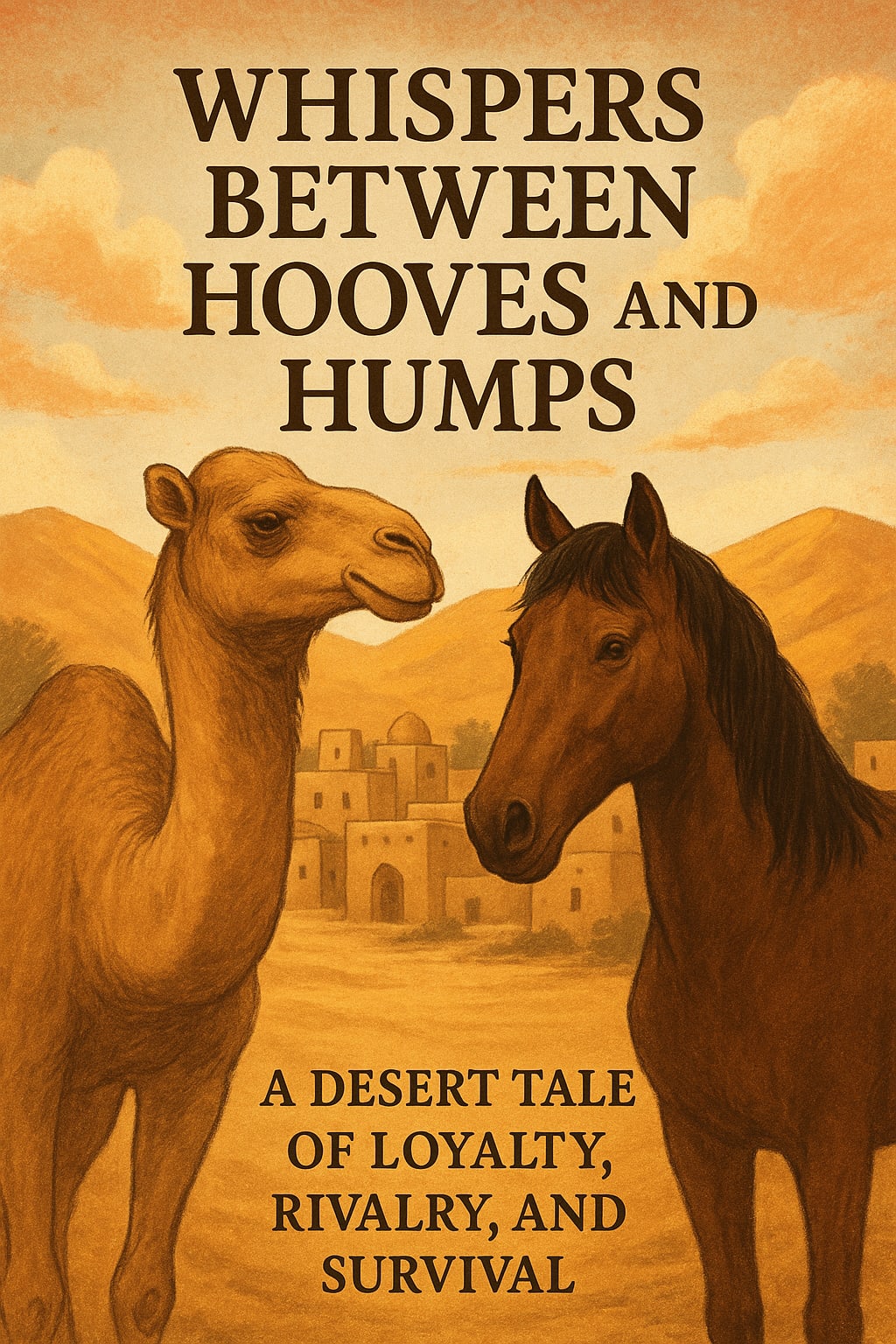
In the heart of the Saharan wind, where the sun painted shadows long across the sand, the village of Qamar rested like a forgotten pearl. Here, horses and camels were more than animals—they were symbols of pride, family, and purpose.
The people of Qamar were split into two clans: the Riders, who bred swift, elegant horses, and the Caravanners, whose sturdy camels hauled goods across the endless dunes. For generations, both clans lived in a delicate balance, bonded by trade, tradition, and tales passed down over campfires. But beneath the surface, pride simmered, and old rivalries whispered like the desert wind.
Amani, a spirited 16-year-old girl from the Riders, was known for her bond with her stallion, Rih. His coat gleamed like midnight silk, his hooves barely touched the ground when they galloped. Her father, Hamza, trained horses for royal couriers and believed no animal matched the speed and soul of a horse.
On the other side of the village, Idris, a 17-year-old boy from the Caravanners, cared deeply for his camel, Zara. Calm and wise, Zara had led trade caravans through storms and bandits, her padded feet steady even in treacherous terrain. Idris’ mother, Layla, often said, “Camels remember kindness—and betrayal—for a lifetime.”
One summer, the desert grew harsh. Sandstorms swept the sky more often, and the oasis began to shrink. With food dwindling and water scarce, tensions between the clans flared. The Riders blamed the Caravanners for overusing the oasis during their long journeys. The Caravanners accused the Riders of hoarding resources for their prized horses.
To ease the unrest, the village elder, Sheikh Muneer, proposed a challenge: a race across the dunes to the ancient ruins of Zaydah and back. “Let both clans prove,” he said, “which beast is best suited for our future—horse or camel. But let it be done with dignity, not war.”
Amani and Idris, though from opposing sides, were chosen to represent their people. Both had grown up hearing tales of the other—how the Riders looked down on camels, how the Caravanners mocked the frailty of horses. But neither truly believed the hatred. They had often glimpsed each other at the market, exchanging curious glances, respectful nods.
On the morning of the race, the village gathered near the dunes. The sun had barely risen, yet the air shimmered with tension. Amani adjusted Rih’s reins, whispering to him, “Let them see your fire.” Across the sand, Idris patted Zara’s neck and murmured, “Let them feel your strength.”
With a raised hand, Sheikh Muneer signaled the start.
Rih burst forward like a thunderbolt, kicking up golden dust. Zara, slower but unyielding, followed with steady grace. Amani soared ahead, the wind in her hair. But as the terrain shifted to deeper sand and rocky hills, Rih began to tire. Zara, built for endurance, began to close the gap.
By the time they reached the halfway point at Zaydah’s ruins, they were neck and neck.
Resting briefly in the shadow of crumbling walls, Amani offered Idris a flask of water. He accepted, nodding with gratitude. For a moment, they were not rivals but two young souls surviving the desert together.
On the return journey, disaster struck. A sudden sandstorm roared across the dunes, blinding them. Rih panicked, rearing wildly. Amani lost her grip and tumbled to the ground. Idris, squinting through the storm, turned Zara toward the chaos.
He found Amani half-buried, coughing, her leg twisted. Without hesitation, he lifted her onto Zara’s back. Rih, though skittish, followed them closely, loyal to the end.
When they returned to Qamar hours later—dust-covered, bruised, and united—the crowd fell silent. Idris helped Amani down, and together, they told the story. Of competition turned cooperation, of how survival required more than speed or strength—it needed trust.
Sheikh Muneer raised his arms. “Let this day be remembered not for who won, but for what was learned. The desert does not favor hooves or humps—it favors hearts.”
From that day forward, the Riders and Caravanners worked together to preserve the oasis, care for both horses and camels, and prepare the village for future hardships.
And sometimes, when the desert winds blew just right, villagers swore they could hear the whispers—between hooves and humps—carrying tales of two young hearts who bridged a divide as vast as the dunes.
About the Creator
Keep reading
More stories from Mukhtiar Ahmad and writers in Fiction and other communities.
The Falcon and the Sky Stone
Start wThe Falcon of Samarkand In the heart of the Silk Road, when the world was stitched together by caravans of spice, silk, and stories, there stood the magnificent city of Samarkand — a jewel of turquoise domes, golden minarets, and bustling bazaars that could make even a weary traveler feel alive again. It was the reign of the great conqueror Timur, known to the world as Tamerlane, whose empire stretched from Delhi to Damascus.
By Mukhtiar Ahmad5 months ago in Fiction
Lightning Never Strikes Twice
The distant rumble, the sudden deluge, the crescendo of sound, the flash of light, the explosive energy — it never gets old. I became an amateur storm chaser about two years ago. My wife, Cindy suggested it. Sort of. She said, "Alex, you know this cancer is killing me. I've come to terms with that, but you're smothering me. Go join a band, write a book, or become a storm chaser, for all I care. I love you, but you need a hobby."
By Julie Lacksonen7 days ago in Fiction
The Apple Gardener
Sally was ready to begin her compulsive schedule of doing an hour of work in the garden. Gardening is good for mental health. Gardening was her time to empty her mind. This was her time of meditation. She decided to do a 21-day challenge and journal her no-thoughts during mindful moving meditation. She noted the irony of this intention.
By Katherine D. Grahamabout 15 hours ago in Fiction


Comments
There are no comments for this story
Be the first to respond and start the conversation.