
Where Petals Meet Pain
The Elegance and Violence of Being a Woman

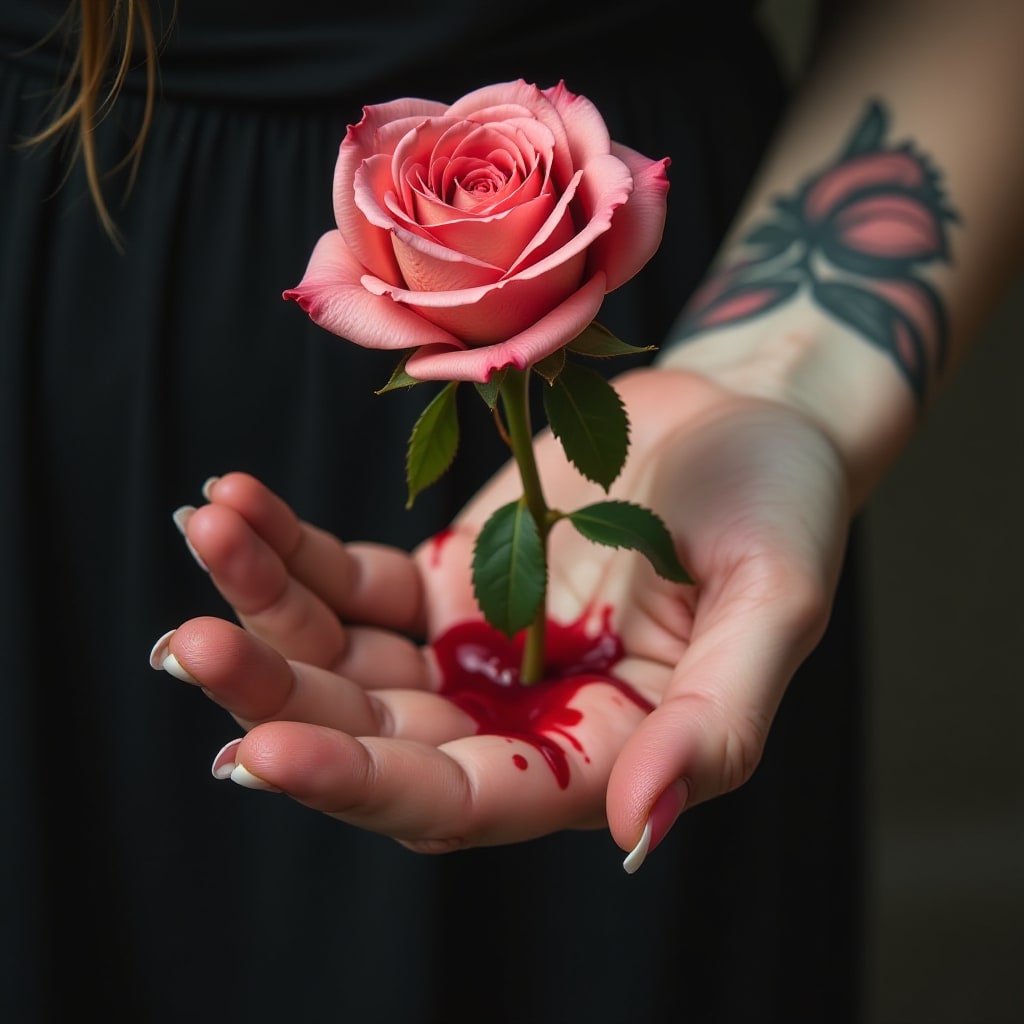
There is a quiet battlefield beneath the beauty. A woman’s life — no matter how graceful it may appear — often unfolds in the space where petals meet pain. Here, softness is not a weakness, but a burden carried with composure. Strength is stitched beneath smiles. And the violence she endures is not always loud or visible — it is often intimate, subtle, and systemic.
To be a woman is to constantly move through contradictions. To be expected to bloom without fail, even in drought. To be desired and dismissed. To be nurturer and warrior. This is not a new story. It is as old as the blood that first marked a girl’s entrance into womanhood. But it’s a story worth retelling — not for sympathy, but for recognition, for truth, and for change.
The Illusion of Grace
From girlhood, women are taught to value grace: how to speak, sit, smile, dress, and move in ways that are pleasing, polite, and unthreatening. Femininity, for many, becomes a performance — one choreographed not by authenticity, but by the comfort of others.
This elegance is expected to be effortless. But behind it often lies pain: the exhaustion of always being “on,” of being watchful, of shrinking to make space for others. There’s the pain of being underestimated in a boardroom, of walking home with keys clutched like weapons, of saying “I’m fine” when she isn’t. The world applauds her composure but rarely asks what it costs.
Yet, women carry this burden with a strength that defies logic. They manage households, careers, children, relationships — often while fighting internal wars no one sees. The grace the world demands is not a gift; it’s a mask shaped by necessity.
The Body as a Battleground
A woman’s body is both sacred and politicized. It is praised, judged, policed, and violated. From the earliest years, her worth is too often tied to her appearance — to smooth skin, a certain waistline, to youth. She learns quickly that her body is never just hers; it’s a public subject, a point of debate, a symbol in political arguments.
Then comes the pain: menstrual pain dismissed as exaggeration. Pregnancy that transforms the body in awe and agony. Childbirth that brings her to the edge of herself. The hormonal rollercoasters, the changes of menopause, the unspoken grief of miscarriages or infertility. And for many, the trauma of unwanted touch, of harassment, or abuse — acts of violence that too often go unseen or unpunished.
And yet, her body continues — to carry, to nurture, to withstand. To hold joy, pleasure, and resilience. A woman’s body is not fragile. It is sacred architecture — worn, yes, but wondrous in its strength.
Emotional Labor: The Unseen Work
Perhaps one of the most misunderstood forms of pain women endure is emotional labor — the unpaid, invisible effort of managing feelings, smoothing conflicts, remembering birthdays, and absorbing the emotional needs of others. Mothers, daughters, partners, friends — women are expected to be the emotional anchors in every room they enter.
They carry everyone’s pain like petals in their pockets — quietly, steadily, endlessly. And still, many are told they are too emotional when they express frustration. Or too cold if they don't. It’s a no-win game: damned for caring too much, punished for not enough.
But what goes unseen is the cost — the burnout, the quiet crying in the bathroom, the emotional numbness that sets in when empathy becomes exhaustion. This labor is real. It is work. And it is time we saw it for what it is.
Beauty as a Double-Edged Sword
There’s a reason the rose is such a powerful metaphor for womanhood: it is beautiful, but it has thorns. And those thorns exist for a reason.
Society celebrates feminine beauty while weaponizing it. A beautiful woman is desired, envied, objectified, and often punished for her looks — either through judgment, assumptions, or worse, violence. At the same time, women who don’t fit conventional standards are marginalized, mocked, or invisibilized. The contradiction is cruel: be beautiful, but not too much. Be desirable, but not inviting. Be strong, but still soft.
This constant negotiation with beauty becomes a burden. It shapes identity, self-worth, and opportunity. Yet through this maze, women still find ways to express themselves — through style, art, movement — and redefine beauty on their own terms.
The Resilience Beneath the Surface
Despite all of it — the violence, the loss, the exhaustion — women rise. They build. They lead. They create art, nurture communities, fight for justice, and raise generations.
This resilience is not passive. It is a quiet rebellion. Every woman who dares to speak up, to say no, to rest, to claim her space is pushing back against centuries of conditioning. Each act of self-care, each refusal to shrink, is a crack in the system that expects her to bend without breaking.
And when women come together — when they share stories, offer solidarity, build each other up — they create something revolutionary. They transform their pain into power. Their petals into protest.
Conclusion: Honoring the Whole Truth
To truly honor women, we must honor the whole truth — not just their grace and beauty, but their rage, their grief, their endurance. We must see the violence they endure, and not just the elegance they exude. We must believe their stories and challenge the systems that silence them.
Where petals meet pain is where the most complex, beautiful truth resides: that womanhood is not a single story. It is a thousand contradictions held in one body. It is the quiet strength of blooming while bleeding.
So let this not be an elegy, but an invocation — to see, to feel, and to act. To hold space for the beauty and the blood, the softness and the scars. To say clearly: this is what it means to be a woman
About the Creator
Keep reading
More stories from Habibullah khan and writers in Fiction and other communities.
Counting What Matters
In a world increasingly driven by numbers — steps walked, hours worked, likes gathered, and items bought — it’s easy to confuse accumulation with value. We’re surrounded by the visible: the clutter on our desks, the overflowing inboxes, the to-do lists that stretch endlessly. But beneath the surface, there's another kind of inventory — one that’s quieter, more personal, and far more meaningful. This is the inventory of the heart: the people, moments, values, and memories that define us. Taking stock of what we truly have and hold isn't just an organizational task — it's an act of self-awareness.
By Habibullah khan 10 months ago in Fiction


Comments
There are no comments for this story
Be the first to respond and start the conversation.