
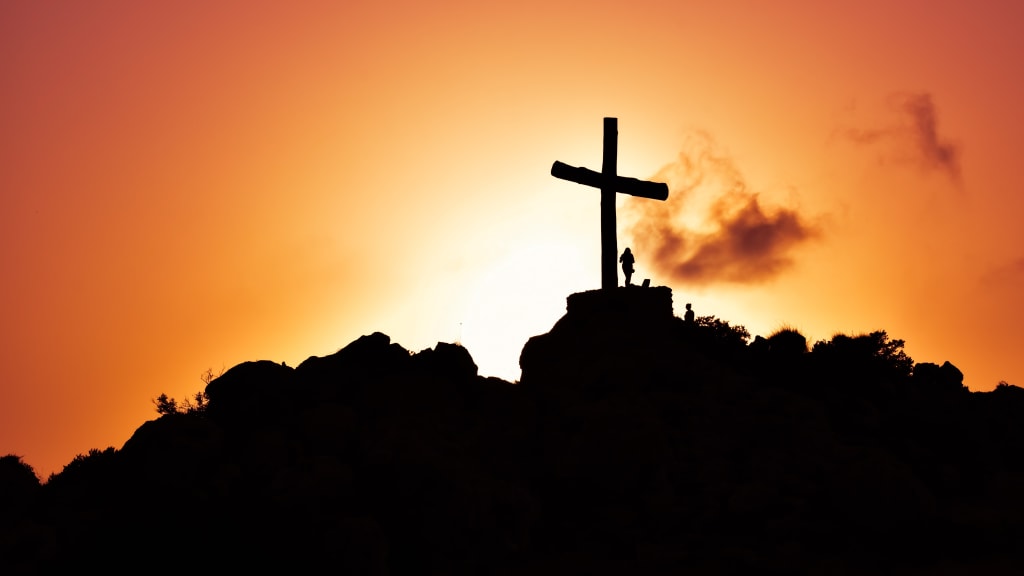
Nobody can predict with any degree of precision what will happen when we pass away, and we are all unsure of it.
What if our existence was permanent?
What if there was life after death? How long would your brain last after death? Would your loved ones be able to contact you? Would your body carry the zombie gene? These are hypothetical questions, and this is what would happen.
According to a 2013 research, 72 percent of Americans hold the belief that there is an afterlife, including certain people like Professor Robert Lanza, who have put forth a theory that claims death is only a figment of our imagination. According to this theory, death has no real boundaries that define it, so it isn't real in the sense that you've been trained to accept it. For example, we perceive the sky as blue, but if our brain cells changed to make us think the sky was green, our perception of reality could all be flawed programming. Is the sky blue, or are all of our final moments on earth just a figment of our generalization, and for 95% of people, the process begins when the heart stops beating.
After that, your breathing stops and your muscles relax, and it's only a matter of time before your brain shuts down, but you aren't quite there yet. In a study called awareness during resuscitation, researchers examined thousands of cardiac arrest survivors who had been declared dead. Some of the subjects remembered the precise moments of their demise and claimed to have seen and heard the circumstances that led to their resuscitations.
What makes that possible?
Apparently, your brain can continue to function for up to 10 minutes after your heart stops, so you might hear the doctor pronounce you dead.
While you might hear everything going on, your body would remain dead without oxygen or blood pumping to your organs, but what would be going on inside you? While rigor mortis sets in and your muscles start to stiffen, other cells would just be getting to work. This is how nine percent of people who had a near-death experience described floating above their body tethered by an invisible string.
Your body would begin to completely shut down over the course of the following 12 hours, and during this time, certain genes would stimulate glial cells to clean the inside of your brain. These cells would continue to grow and thrive as your body grew colder and your other systems shut down, and these zombie genes would develop arm-like appendages while the genes in your brain disintegrated, but once you were dead, you wouldn't experience any of these things.
Before the invention of infrared technology, will your loved ones ever be able to communicate with you again?
Since we don't have conclusive evidence of life after death, it's understandable that many people find comfort in the idea of speaking to their dearly departed. Photography seances were common among family and friends who wanted to speak to their deceased loved ones. Today, we have the technology to prove a fake spiritual encounter.
But what if we could demonstrate that there is life after death? I mean, our understanding of this life might change, but the end of our lives might not even be a spiritual experience at all; instead of seeing a white light, you might see ones and zeros.
Google's Ray Kerswell, director of engineering, expects that humans may be able to upload digital copies of our brains to the internet.
If you uploaded your consciousness to the cloud, it would last as long as the server did, so you might want to consider paying for backup storage.
If we could demonstrate that there is life after death, you might view yourself and your life with a fresh sense of wonder and gratitude for what you have right now. However, what if you only had 24 hours to enjoy your time here on earth? That's a story for another time.
Thanks for reading.
About the Creator
Keep reading
More stories from Dennis Mwangi and writers in Fiction and other communities.
Bomb Scare
It was 2027, and the world never thought it would happen. A missle hit the United States, but it wasn't where they had anticipated. A little town in the northeast was hit by a missile strike, they didn't know why, and they didn't know exactly where it hit, but they did know it was a coastal community, somewhere between Maine and Delaware.
By Gregory Payton6 days ago in Fiction
The House at the End of the Street
As the sun went down, the town closed. Mothers called their children in from playing while stores locked their doors. Customers made last minute purchases before hurrying home themselves. A stranger walking through town would notice that people averted their eyes, only glancing up to check how low the sun was.
By Reb Kreyling6 days ago in Fiction
Worth the Wait: Puerto Viejo, Costa Rica
Beach bumming in a small Caribbean beach town sounded like a perfect way to end our 6-month trip through Mexico and Central America. Or so we thought. The foul, fishy stench of rotten seaweed hit our nostrils as we stepped from the cramped bus and looked out at a rather depressing, empty, and underwhelming black sand beach. It was pouring with rain, and we had to quickly fish out our ponchos. We thought, this couldn’t be it, could it?
By Sh*t Happens - Lost Girl Travel6 days ago in Wander


Comments
There are no comments for this story
Be the first to respond and start the conversation.