
What If the Earth Lost Oxygen for Just Five Seconds?
Five Seconds of Breathless Earth

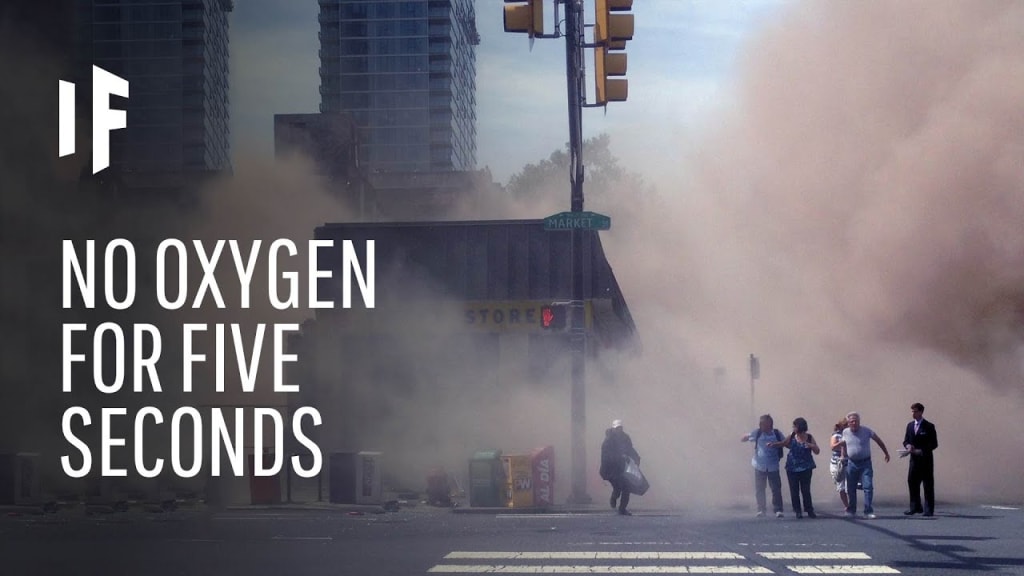
Have you ever wondered what would happen if all the Earth's oxygen suddenly vanished for a mere five seconds?
While this scenario may seem unlikely, exploring the potential consequences can be fascinating. Oxygen, comprising approximately 21% of our atmosphere, is not only vital for our survival but also plays a crucial role in various aspects of our environment. In this article, we will delve into the hypothetical scenario of the world losing oxygen momentarily, uncovering the surprising effects it would have on our planet and its inhabitants.
Take a deep breath and appreciate the satisfying feeling it brings. The air you inhale is predominantly composed of oxygen, which plays a critical role in supporting life on Earth. Although nitrogen accounts for 78% of our atmosphere, oxygen remains the most essential gas. Its absence would lead to dramatic consequences, affecting plants, animals, water bodies, and humans themselves. While five seconds might not sound like much time to be without oxygen, the impact would be swift, leaving our bodies relatively unaffected while everything else undergoes significant transformations.
Without oxygen, the Earth's appearance would be utterly altered within those fleeting seconds. Structures like the Hoover Dam, the Pantheon Dome, and any other concrete-made edifice would instantaneously crumble. Oxygen acts as a crucial binding agent for concrete, and without it, these structures would reduce to dust. Similarly, untreated metals would fuse together rapidly, as the protective layer of oxidation, which prevents their welding, would be absent. Imagine being at the beach during this moment—the absence of oxygen would leave you vulnerable to severe sunburn. The ozone layer, our shield against the sun's harmful UV rays, is composed of oxygen. Without it, the Earth would become an extremely hazardous place, devoid of protection from harmful radiation.
The repercussions of a temporary loss of oxygen extend beyond sunburns. Our inner ears would experience a sudden explosion due to the lack of air pressure. Losing 21% of our atmospheric pressure instantaneously would create a drastic change equivalent to dropping 2,000 meters at sea level. Such a rapid alteration would render our ears unable to adapt in time, causing excruciating discomfort. Additionally, the absence of oxygen would eliminate the possibility of fire. The combustion process vital for vehicles would cease, leading to the failure of any non-electric mode of transportation. Planes would plummet from the sky, and millions of cars would come to a standstill.
As the lack of oxygen persists, darkness would gradually envelop the sky. When sunlight interacts with particles in the atmosphere, it bounces off them, illuminating our surroundings. With less oxygen in the atmosphere, the number of particles available to reflect sunlight decreases, resulting in a progressively darker sky. And while these extraordinary events unfold, the Earth's crust, consisting of 45% oxygen, would crumble. The disintegration would continue until there is nothing left, sending every living being on the planet into a freefall.
Conclusion:
Speculating about the consequences of losing oxygen for a mere five seconds provides a glimpse into the indispensable role this gas plays in our lives. Fortunately, such a scenario is highly unlikely, and we can continue to breathe in the 21% oxygen that sustains us. Exploring these "what if" scenarios stimulate our curiosity and remind us of the importance of preserving and appreciating the delicate balance of our environment.


Comments
There are no comments for this story
Be the first to respond and start the conversation.