
What if humans disappeared
If we disappeared, what species could replace us?

Convergence: Who Will Fill Our Shoes?
Hey there! Let's imagine a world without humans. Sounds weird, right? But just go with me on this. Who would take over the planet and become the new top species? It's a fascinating thought, and scientists have some pretty cool ideas.
First off, let's admit it - humans are pretty awesome. We've got brains that can solve complex problems, fashion sense that changes with the times, and we can even cook up a storm in the kitchen. Oh, and don't forget our beloved smartphones - we can't live without those! But if we were to suddenly disappear, who or what would fill our shoes?
Well, let's take a look at what we know about evolution and modern gene sequencing technology. We know that climate change is a reality, and many species will need to adapt to survive. And that's where convergence comes in - it's when unrelated organisms end up developing similar traits to succeed in a particular environment or fill a niche.
For example, fish are perfectly adapted for life in water with their torpedo-like bodies and fins. But guess what? Dolphins have evolved a very similar body shape, even though they're warm-blooded air-breathing mammals with a completely different evolutionary background. How cool is that?!
So, who knows what other creatures might develop similar human-like traits if we were to disappear? Maybe primates like chimpanzees or gorillas would step up and take over. Or perhaps dolphins would become the new rulers of the land as well as the sea. Hey, they already have the smarts and the body shape, right?
Reconsidering Animal Intelligence
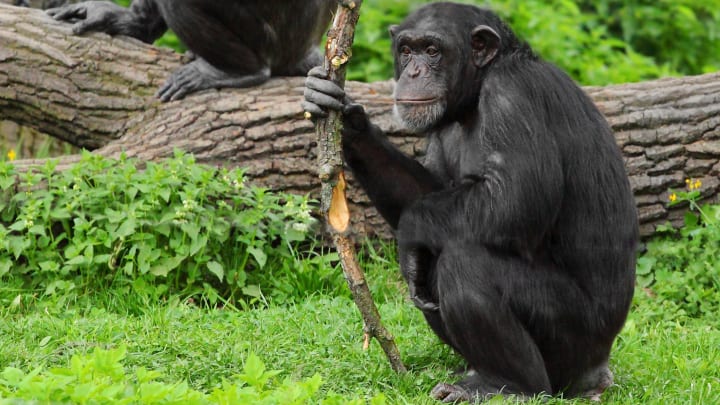
And let's not forget about our primate cousins - chimpanzees and bonobos. They already have opposable thumbs, which they use to make tools in the wild. Who knows, maybe they could develop hands similar to ours and start building their own cities!
But it's not just primates that could take over the world if humans were to disappear. Birds could also become the new smartest animals. They're incredibly brainy and can flock together in large groups. Some, like sociable weavers, even build communal nesting sites. Sure, they may not look like human metropolises, but they're still pretty impressive.
And let's give a shoutout to the octopuses, who are probably the smartest non-human animals on Earth. They can learn to distinguish between real and virtual objects and engineer their environment. However, adapting to life on land might be a bit tricky for them.
But here's the thing - there's a lot we don't know about animal intelligence. And let's be real, us humans have been pretty arrogant about it throughout history. In the past, people used to think that animal intelligence could be neatly organized into a hierarchy, with humans at the top and insects at the bottom. But in the 1960s, a new generation of researchers challenged this idea and suggested that intelligence should be measured in relative, rather than absolute terms.
And as technology has improved, we've been able to observe animals for longer without disturbing them. And guess what? We've discovered that they're far more intelligent than we once thought. So, who knows what other amazing abilities and skills the animals of the future might develop? It's a mystery that's both exciting and humbling to contemplate.
Exploring Animal Intelligence: From Drones to AI and Beyond
It's amazing what technology and artificial intelligence can do to help us better understand the world around us. In Melbourne, researchers are using remote-controlled drones to study the breeding patterns of Southern right whales. And with AI, we can track and predict the movements of all sorts of creatures.
But it's not just our technological advancements that are revealing the intelligence of animals. We tend to recognize intelligence in animals when their behavior is similar to our own. Take dolphins, for example. They use names and even have accents! Researchers have found that dolphins in southern Brazil have developed a distinct accent after interacting with local fishers for over a hundred years.
But it's not just mammals that are intelligent. Birds and insects are pretty smart too! Parrots, for example, have complex social groups and can differentiate between members of their species based on their relationships with each other. And even though their brains are tiny, insects are capable of some pretty impressive cognitive feats like tool use and learning by observation.
Animal Geniuses: Showcasing Their Surprising Smarts
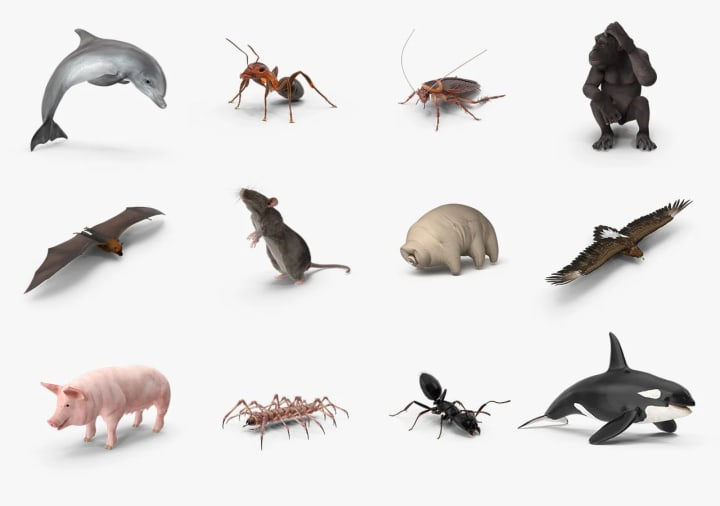
It's truly remarkable how intelligence in animals can manifest in different ways, shapes, and sizes. As we continue to study and observe our furry and feathered friends, we discover new and surprising facets of their cognitive abilities. Now, let's talk about some animal geniuses that might surprise you. First up, rats! That's right, these furry little guys are actually helping save lives by sniffing out lung disease in saliva samples. And they're really good at it, too! These rats have a nose for the job and can detect different scents to show whether a sample contains a certain bacterium or not. What's more impressive is that they can do it in just seven minutes, a task that would take a human scientist a whole day to do. Dr. Rat, anyone?
But rats aren't the only ones showing off their smarts. Nelly the pig is also quite the problem solver. Presented with a series of challenges, including putting differently shaped items through a hoop, Nelly decided to take it to the next level. When presented with objects that weren't round, she compared their shape with a hoop before deciding they wouldn't fit. This clever piggy has some serious spatial awareness and problem-solving skills!
Now, let's talk about elephants. These gentle giants are known for their incredible cooperation and coordination skills, which they use to protect their families and scare away their enemies. They even show empathy towards each other, which is a pretty rare feature in the animal kingdom. Elephants have a special interest in the remains of their own kind and will linger near elephant bones and investigate sticks of ivory much longer than they would pieces of wood. And if an elephant is feeling upset, other elephants will come to comfort it by stroking its head with their trunks or even putting their trunk in its mouth. How sweet is that?
But the real elephant genius was seen in 2010 when one particular elephant discovered a large plastic block and used it as a stepping stool to reach his favorite fruit just out of his trunk's reach. He continued to use his newfound tool skills to reach even higher places by stacking blocks. Who knew elephants were so creative? These animals never cease to amaze us with their intelligence and abilities. By acknowledging and embracing the diversity of intelligence in the animal kingdom, we can appreciate our animal companions for the unique beings they are and keep an open mind to the possibility of unexpected intelligence in other species. Who knows, the next top species might surprise us all!
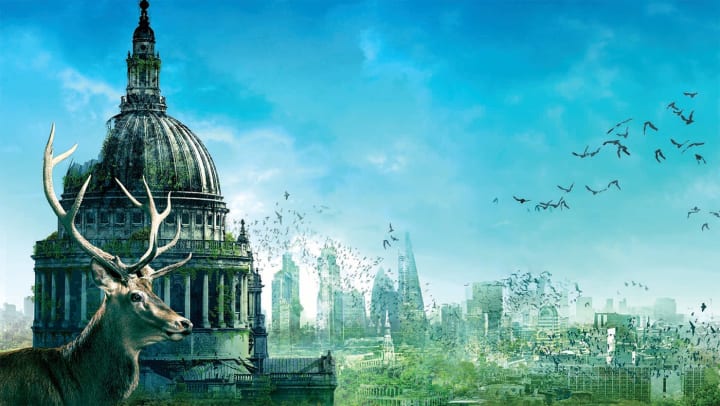
The possibilities are endless, and it's both exciting and humbling to think about. Who knows, maybe the creatures that follow in our footsteps will come up with something even better than smartphones! One thing's for sure - the natural world is full of surprises, and we can only imagine what incredible things might happen if we humans were to disappear.
About the Creator
Raza Abbas
I am a content creator and have completed my A-levels and now i am looking for a side hustle to earn some money
Keep reading
More stories from Raza Abbas and writers in Fiction and other communities.
The Incident at Dyatlov Pass: Unraveling the Mystery of the Unknown
In the winter of 1959, deep within Russia's cold Ural Mountains, a group of experienced hikers set out on a journey that would end in tragedy. What was supposed to be an exciting adventure evolved into a confusing mystery that has captivated the imaginations of investigators and enthusiasts to this day. The happened at Dyatlov Pass remains a mystery, sparking a plethora of ideas and interpretations. Join us as we investigate the mysteries of this terrifying and unforgettable event.
By Raza Abbas3 years ago in Fiction
Affection and Healing for Yourself
During the night of the last quarter moon, I gathered my ritual supplies. I carefully handled the chunk of black tourmaline that would protect me from your overall negative and narcissistic energy. I carefully walked the house with my stick of selenite in hand, asking the universe to cleanse our working space.
By Alisha Wilkins ✒️🦋🖋️a day ago in Fiction




Comments
There are no comments for this story
Be the first to respond and start the conversation.