
What if Earth had multiple intelligent species coexisting alongside humans?
"Embracing Diversity: Coexisting with Multiple Intelligent Species on Earth"
Introduction:
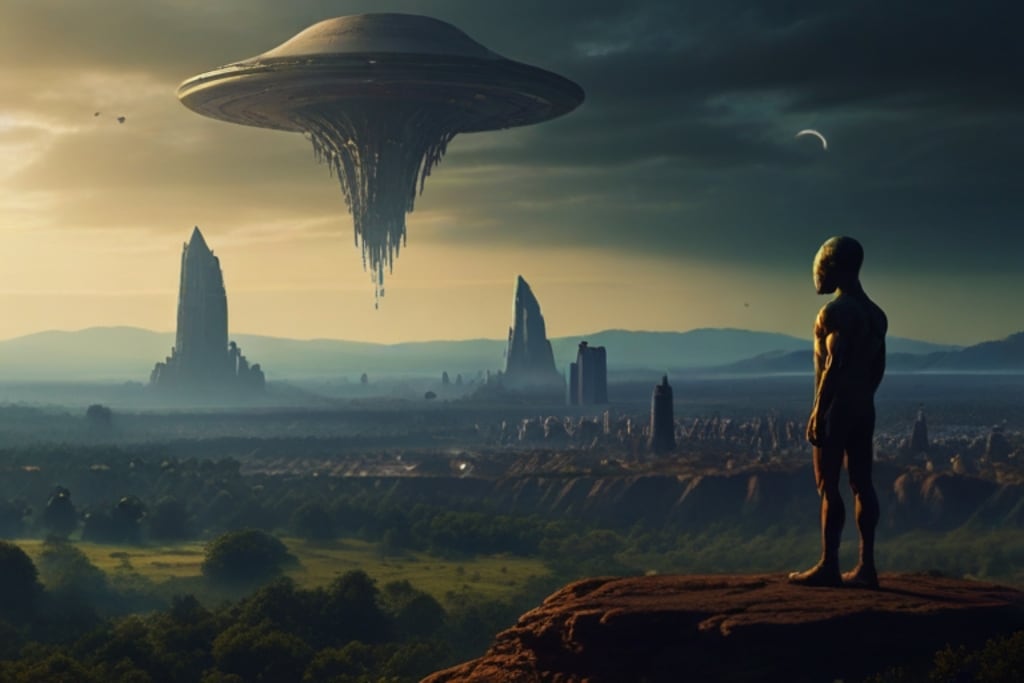
Imagine a world where humans are not the only intelligent species on Earth. Envision a planet teeming with diverse forms of life, each possessing its own unique intelligence and culture. What if Earth was home to not just one dominant species, but several? This hypothetical scenario invites us to delve into the complex dynamics and intriguing possibilities that arise when multiple intelligent species coexist alongside humans.
Diversity in Intelligence:
In this alternate reality, Earth would be a melting pot of cognitive abilities, with each intelligent species exhibiting its own distinct strengths and capabilities. While humans may excel in abstract thinking and technological innovation, other species could possess specialized skills such as heightened senses, advanced communication abilities, or intuitive understanding of the natural world. The coexistence of multiple intelligent species would foster a rich tapestry of perspectives and knowledge, challenging humans to broaden their understanding of intelligence and adapt to new ways of thinking.
Cultural Exchange and Collaboration:
The presence of multiple intelligent species would give rise to vibrant cultural exchanges and collaborations. Humans, alongside other species, would engage in trade, diplomacy, and mutual learning, enriching each other's societies with new ideas and perspectives. Cultural festivals celebrating the diversity of life on Earth would abound, fostering a sense of unity and interconnectedness among different species. Through shared experiences and collaborations, humans and other intelligent species would forge deep bonds and build a thriving global community.
Challenges and Conflicts:
However, the coexistence of multiple intelligent species would also present unique challenges and potential conflicts. Competition for resources, territory, and political power could lead to tensions and rivalries between different species. Cultural misunderstandings and prejudice may arise, fueled by fear of the unknown and ingrained biases. Managing diversity and fostering inclusivity would require concerted efforts from all species, as well as a commitment to dialogue, empathy, and mutual respect.
Environmental Stewardship:
The presence of multiple intelligent species would have profound implications for the environment and natural ecosystems. Each species would interact with the environment in unique ways, shaping the landscape and influencing ecological dynamics. Collaborative efforts to preserve biodiversity and mitigate environmental degradation would be essential for the long-term sustainability of all species. Humans, alongside other intelligent beings, would need to adopt practices that prioritize conservation, renewable energy, and sustainable resource management to ensure a harmonious coexistence with the natural world.
Exploration and Discovery:
The coexistence of multiple intelligent species would fuel a renewed sense of exploration and discovery. Humans and other species would embark on joint expeditions to uncover the mysteries of the universe, from distant galaxies to the depths of the ocean. Scientific research and innovation would flourish as diverse perspectives and knowledge are brought to bear on the quest for understanding. Together, humans and other intelligent species would push the boundaries of knowledge and embark on a journey of exploration that transcends the limits of any single species.
Social Structures and Governance:
In a world where multiple intelligent species coexist, social structures and governance systems would need to evolve to accommodate the needs and interests of all species. Democratic principles of equality, representation, and inclusivity would be essential for ensuring fair and just governance. Multispecies councils or federations could be established to facilitate cooperation and decision-making on global issues. Legal frameworks would be developed to protect the rights and liberties of individuals from all species, ensuring equality under the law regardless of species identity.
Education and Communication:
Effective communication and education would be paramount in fostering understanding and cooperation among different intelligent species. Multilingual education programs would be implemented to facilitate communication between humans and other species, breaking down barriers and fostering cross-species collaboration. Cultural exchange programs and inter-species partnerships would provide opportunities for individuals to learn from one another and appreciate the diversity of perspectives and experiences that exist across species boundaries.
Economic Systems and Trade:
Economic systems would need to adapt to accommodate the needs and interests of multiple intelligent species. Trade networks would span across species boundaries, facilitating the exchange of goods, services, and knowledge. Currency systems may evolve to include currencies that are accepted by all species, fostering economic integration and cooperation. However, economic disparities between species could emerge, leading to challenges of inequality and social justice that would need to be addressed through policies and initiatives aimed at promoting economic equity and opportunity for all.
Technological Innovation:
The coexistence of multiple intelligent species would stimulate technological innovation and advancement as diverse perspectives and knowledge are brought to bear on scientific inquiry and problem-solving. Collaborative research initiatives would be launched to tackle pressing global challenges, from climate change to disease eradication. Technological breakthroughs in fields such as biotechnology, artificial intelligence, and space exploration would revolutionize industries and transform the way we interact with the world around us. However, ethical considerations would need to be carefully navigated to ensure that technological advancements benefit all species and minimize harm to the environment.
Spirituality and Philosophy:
In a world of multiple intelligent species, spiritual and philosophical traditions would evolve to accommodate diverse perspectives and beliefs. New forms of spirituality may emerge that emphasize interconnectedness and reverence for all forms of life. Philosophical inquiries into the nature of intelligence, consciousness, and existence would flourish as humans and other species grapple with fundamental questions about the nature of reality and their place within it. Dialogue and exchange between different spiritual and philosophical traditions would enrich the collective understanding of the universe and our place within it.
Conclusion:
The hypothetical scenario of Earth harboring multiple intelligent species offers a tantalizing vision of a world where diversity is celebrated, cooperation is paramount, and the boundaries between species are blurred. While the challenges of coexistence are significant, so too are the opportunities for collaboration, mutual learning, and collective growth. By embracing diversity and fostering inclusivity, humans and other intelligent species can build a future where the richness of life on Earth is cherished and protected for generations to come. In this world of coexistence, every species has a unique role to play, contributing to the tapestry of life and shaping the destiny of our shared planet.
About the Creator
Keep reading
More stories from Sahana _ F and writers in Fiction and other communities.
The Paradox of Time: Exploring the Ramifications of Time Travel on Present Reality
Introduction: Time travel has long been a subject of fascination, weaving its way through the fabric of human imagination and scientific inquiry. The mere thought of journeying backward or forward in time evokes a sense of wonder and curiosity about what lies beyond the confines of our present moment. But what if time travel were more than just a figment of our imagination? What if it were possible to alter the course of history, with each temporal excursion reshaping the very fabric of reality? In this exploration, we delve into the complex ramifications of time travel on present reality, navigating the temporal maze that lies ahead.
By Sahana _ F2 years ago in Fiction


Comments
There are no comments for this story
Be the first to respond and start the conversation.