
What happens if the Moon is replaced with other planets?
by ELGWP

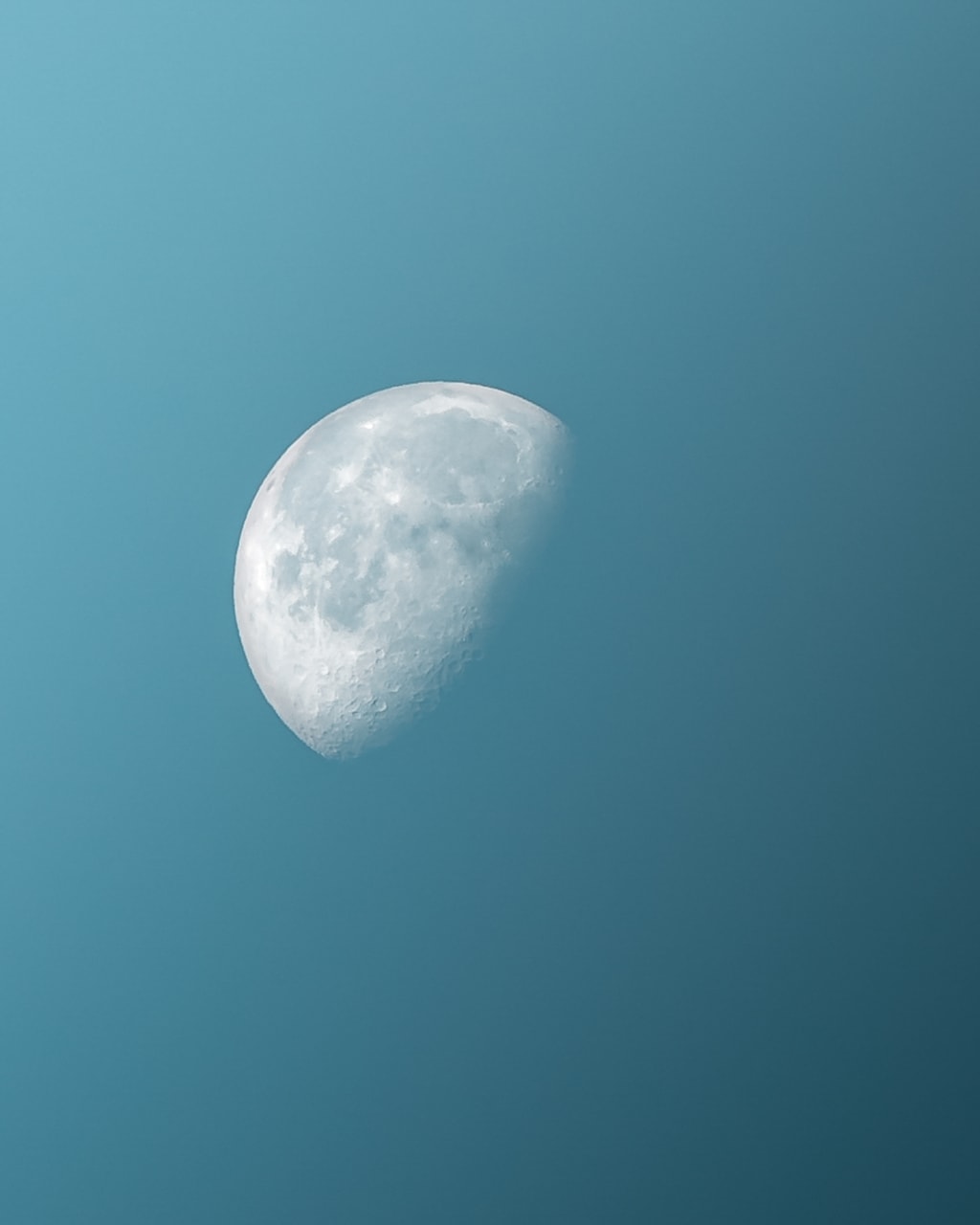
Certainly, let's dive deeper into the fascinating scenario of replacing the Moon with other planets in our solar system and explore the implications in greater detail.
Mercury: The Closer Neighbor
Imagine looking up at the night sky and instead of the familiar Moon, you see Mercury, the closest planet to the Sun. Mercury, being larger than the Moon, would exert a stronger gravitational pull on Earth. This would result in more pronounced tides, with higher high tides and lower low tides. The lunar cycle, the time it takes for Mercury to go through all phases, would be dramatically shorter, around 14 hours. This rapid cycle would bring significant changes to Earth's coastal ecosystems and navigation.
Venus: Earth's Hot Sister
Now, let's consider a scenario where Venus takes the Moon's place. Venus, often referred to as Earth's sister planet due to its similar size and mass, would be an awe-inspiring sight. Its brightness in the night sky would surpass even that of the Moon. Venus reflects six times more sunlight than the Moon and would occupy an area at least 16 times larger in our sky. Nights on Earth would be as bright as early twilight.
However, a critical issue arises in this scenario. Earth and Venus would likely begin to orbit around a common center of mass due to their comparable sizes. This eccentric orbit would eventually lead to a catastrophic collision between the two planets, with far-reaching consequences for both.
Mars: The Red Neighbor
Mars, the fourth planet from the Sun and often called the "Red Planet" due to its distinctive color, would create a significant disruption if it replaced the Moon. Mars is larger than the Moon, and its presence in Earth's sky would be unmistakable. The most noticeable effect would be massive ocean waves resembling tsunamis, as Mars's gravitational pull would induce higher tides.
Over time, Earth and Mars would likely gravitate toward each other and form a binary planet system. This would open up new possibilities for space exploration, with voyages to Mars becoming a reality. However, the close proximity of two massive celestial bodies could lead to gravitational disturbances and challenges for Earth's stability.
Jupiter: A Giant Takeover
Now, let's take a giant leap and envision Jupiter replacing the Moon. Jupiter, the largest planet in our solar system, is many times larger than Earth or the Moon. The immediate consequence of this replacement would be devastating. Earth would be drawn into Jupiter's orbit due to its immense gravitational pull.
This would lead to catastrophic earthquakes, volcanic eruptions, and tsunamis on an unprecedented scale. Earth's mantle and crust would be stretched and compressed with such force that the surface would bulge back and forth by more than 300 feet. Unfortunately, Earth's speed is only a fraction of what's required to maintain a stable orbit around Jupiter. Consequently, Earth would collide with Jupiter in less than a day, resulting in the end of our planet as an independent celestial body.
Saturn: Rings of Beauty and Chaos
Saturn, famous for its stunning rings, would present a breathtaking view if it replaced the Moon. This massive gas giant is more than 35 times larger than our Moon, and its rings would stretch across the sky from horizon to horizon.
In this scenario, Earth would become a satellite of Saturn, orbiting the gas giant at a slightly greater distance than Saturn's largest moon, Titan. Unfortunately, Earth's rotational speed would not be sufficient to maintain this orbit. Earth would eventually collide with Saturn, potentially passing through its magnificent rings made up of pieces of comets, asteroids, and shattered moons.
This journey through Saturn's rings, while spectacular, would be treacherous, as Earth would have to navigate through a vast expanse of space debris and avoid Saturn's numerous moons.
Uranus and Neptune: Ice Giants on the Horizon
Uranus and Neptune, the ice giants of our solar system, are both larger than Earth but smaller than Saturn and Jupiter. These distant planets share bluish-green hues and deep atmospheres, and if either of them were to replace the Moon, the consequences would be similar.
Let's say Neptune replaces the Moon. Neptune, 14 times larger than the Moon, would appear as a bright blue hot air balloon in the sky, dominating both day and night. A solar eclipse, with Earth positioned between Neptune and the Sun, would create prolonged darkness, lasting over an hour.
The significant increase in Neptune's gravitational force would lead to Earth becoming a satellite of Neptune, slightly farther out than Neptune's largest moon, Triton. This arrangement would introduce a high risk of collisions with Triton and other potential moons of Neptune.
Moreover, the tidal forces on Earth would be a thousand times more powerful than those caused by the Moon, leading to increased seismic activity, earthquakes, volcanic eruptions, and significant disruptions to the Earth's environment and climate.
In conclusion, the idea of replacing the Moon with other planets in our solar system is a fascinating thought experiment. Each scenario offers a unique set of consequences, from altered tides and celestial beauty to catastrophic collisions and gravitational turmoil. While these scenarios are intriguing to ponder, the Moon plays a crucial role in stabilizing Earth's environment, and any replacement would disrupt the delicate balance that sustains life on our planet.
About the Creator
ELGWP
Let's talk about everything that's comes up to our mind!
Keep reading
More stories from writers in Fiction and other communities.


Comments
There are no comments for this story
Be the first to respond and start the conversation.