
Welcome to Orbitronix
Where deadlines are imaginary, the coffee machine is sentient, and surviving the day is the only KPI that matters

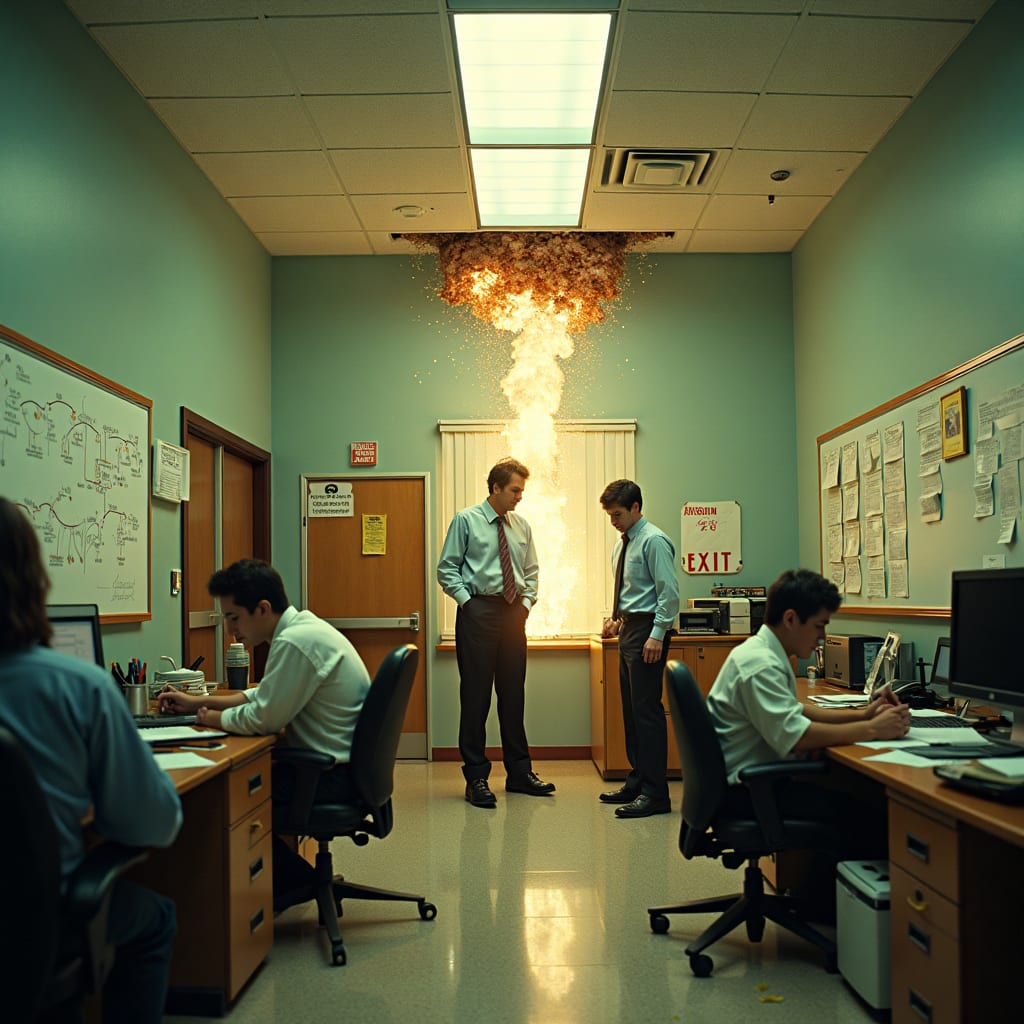
Orbitronix was the kind of tech startup that made you question reality—or at least your LinkedIn choices.
Housed in a peeling brick building sandwiched between a vape shop and a psychic, the company billed itself as a "cloud-based synergy optimizer." No one really knew what that meant. Least of all, its employees.
There was Darren, the self-appointed “Chief Vibes Officer” who spent more time adjusting the office playlist than doing anything resembling actual work. There was Priya, a burned-out coder who answered every request with a deadpan “Sure,” then rolled her chair under her desk to nap. Marcus, the anxious project manager, kept a spreadsheet of failed launches and nervous breakdowns (his own included). And then there was Ellie—new, hopeful, and still under the illusion that this place had a future.
Ellie’s onboarding process involved receiving a ten-page employee manual written in Comic Sans, a company mug that leaked, and a desk in the corner next to the perpetually sparking server room. Her boss, Lenora, was only reachable via Slack, though she hadn’t replied to a message since March. It was July.
Meetings were the company’s only consistent product. Daily stand-ups turned into sit-downs that morphed into full-on existential therapy sessions. Every Friday was supposed to be “Demo Day,” but more often than not, it was just Darren demoing a new office dance move or someone accidentally deleting the company website.
Orbitronix had been “pivoting” since its inception. From dating apps to drone rentals to an inexplicable phase involving artisanal peanut butter NFTs, nothing stuck. Investors stopped returning calls. The printer only worked when threatened. HR was just a man named Kyle who once studied psychology in college and now handed out stress balls shaped like flaming dumpsters.
But despite the absurdity, something oddly beautiful existed within the chaos. Ellie found herself laughing more than she expected—often at things that probably violated a labor law. Priya began mentoring her, mostly by explaining which tasks to ignore and which snacks disappeared fastest from the communal fridge. Even Marcus, twitchy as he was, offered her a whiteboard marker and the whispered advice: “Never schedule anything after 3 p.m. It’s when the Wi-Fi gets haunted.”
The real turning point came when Orbitronix accidentally went viral. A leaked internal meeting—where Darren pitched a productivity tool powered by moon phases—was turned into a meme. Suddenly, the company was internet-famous. Not for innovation, but for sheer incompetence.
Offers rolled in. Not from investors, but from satirical podcasts, parody merch sites, and one suspiciously enthusiastic escape room brand. Orbitronix was no closer to actual success, but its employees had become minor cult heroes in the bizarre subculture of startup comedy.
In the end, Ellie didn’t quit. Not because Orbitronix had a future—but because somehow, amidst the wreckage of corporate absurdity, she’d found her people. Misfits. Survivors. Co-conspirators in the great comedy of capitalism.
And as Darren liked to say during every team huddle: “We may be spiraling, but at least we’re spiraling together.”
Thank you for reading! If you’ve ever worked somewhere that felt one coffee spill away from collapse, this one’s for you. Keep laughing—it’s cheaper than therapy.
About the Creator
Lucian
I focus on creating stories for readers around the world
Flower Bloom 369
FLOWER Bloom 2/25/26 Wednesday By Mariann Carroll Karen had been with Tony for 7 years. Tony started acting strangely after her surgery. He would mow the lawn in the rain and be on his cellphone. He started pushing Karen away. Tony came clean about seeing someone. Karen moved out two months later. Karen moved in with a friend. She felt betrayed.
By Mariann Carroll6 days ago in Fiction




Comments
There are no comments for this story
Be the first to respond and start the conversation.