
Unreliable Witness (a serialized mystery novel - Part 2)
When the mummified remains of a Victorian woman are washed ashore on a beach in 21st century Cornwall, marine archaeologist Meghan Polglaze, sets aside her grief and loss to pursue the truth.

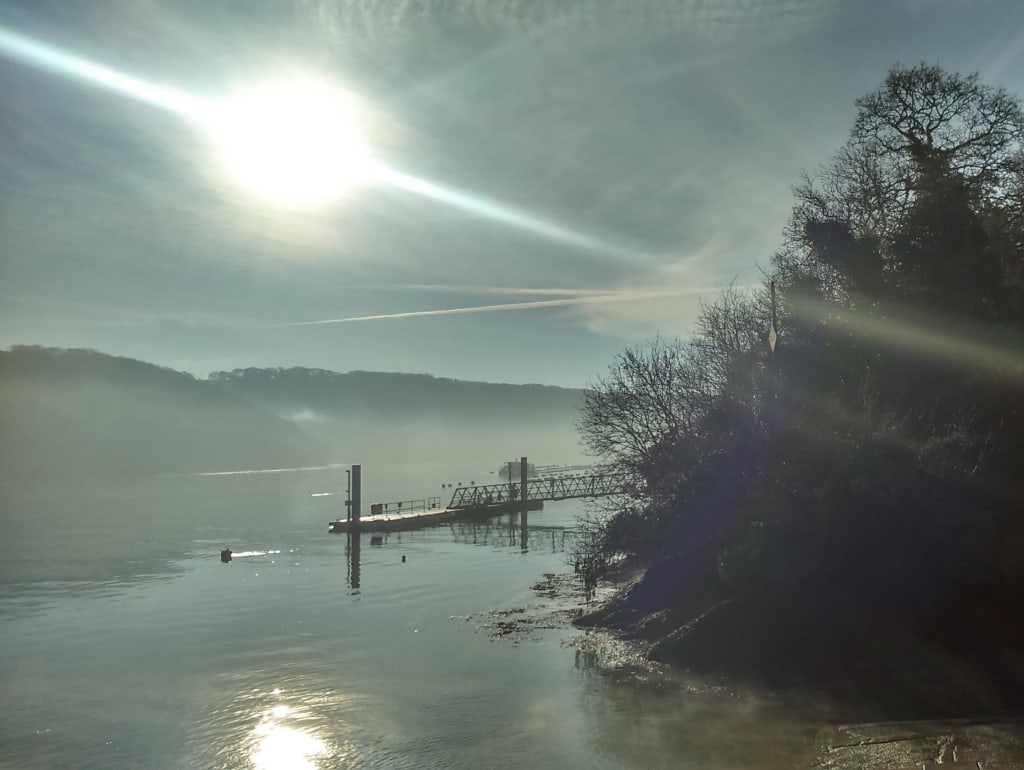
LOW WATER
1.
When confirmation arrived in Judith Glenn’s inbox at the Marine Accident Investigation Branch, based in Southampton, she restrained herself from punching the air and whooping out loud. Investigating marine accidents, her team leader pointed out during an early performance appraisal, particularly fatal ones, is not something to celebrate, so she settled for a po-faced stare at the computer screen while her heart rate doubled.
Judith loved the messy ones. She relished the out of the ordinary and the bizarre, the mysterious and the potentially criminal, and this one looked like it could tick all the boxes. A brand new, state-of-the-art luxury yacht had apparently sailed straight into a notorious reef on the Cornish coast within an hour of setting out on her maiden voyage. There had been no Mayday signal, and none of the seven crew or six passengers aboard had launched either of the two lifeboats. Reports estimated the yacht had sunk within 15 minutes of foundering with all hands lost. The MAIB team had unanimously agreed the case needed an immediate response.
After a year of relatively straightforward health and safety cases, Judith Glenn had been desperate for something to sink her teeth into. The more testing and challenging, the more tragic even, an investigation was, the more it set her spine tingling. Judith rationalised that what some might see as a predisposition to enjoy the macabre was no different to a skilled paramedic waiting to go out on a blue light call or a firefighter responding to a shout, knowing what they might witness would drive many to despair. She was also aware of the attrition rate for emergency services staff but, despite that, she envied them.
Judith’s dream of working for the blues and twos had turned out to be only that, a dream, thanks to her profound congenital deuteranopia, a condition rarely seen in females who were more likely to be carriers of the recessive gene. ‘Sodding typical’ had been her father’s response when the condition was diagnosed. Eleven-year-old Judith had argued it wasn’t something you ‘got’, like mumps, and quickly learnt was that adults disliked smart kids, as her father warned her to watch her lip, or else.
But Judith acknowledged colour blindness was not her only limitation. There was also something of a blind spot on the empathy side, which she believed put nursing out of the question, and she didn’t have the science grades to train as a doctor. The police service was considered, and even the military, but she knew she had no stomach for the discipline involved. There was also her lack of fitness due to a love of food and loathing of exercise, though her laid-back attitude seemed to ensure an enviably low blood pressure. After many lengthy conversations with friends, parents, and a weary soul of a careers adviser, she convinced herself she could settle for insurance investigation. Within a year of whiplash and worry mongers, the culture of blame and penalty grated, so she had moved over to environmental health, where the even worse culture of fear and naysaying weighed her down beyond belief. It was meeting Meghan that saved her from that soul-crushing career.
Meghan Polglaze was the older sister of Judith’s passion-of-the-moment when they had met seven years before. That passion quickly frayed into nothing, but her friendship with Meghan had gone from strength to strength. Right from the start they found they had more in common than not, including an unquenchable curiosity that served them both well. At that point in time Judith was still to find a useful outlet for hers, but Meghan was already forging a sound reputation in marine archaeology, a subject Judith had been barely aware existed. Meghan had been a freelance consultant on a case for the Marine Accident Investigation Branch. The MAIB had been set up in response to the Herald of Free Enterprise disaster in 1987, where the roll-on roll-off ferry had sunk out of Zeebrugge and 193 people had died.
The more Judith researched the MAIB the more she found the department’s sense of purpose inspiring and went all out to get a job with them. With a weak marine background, Judith compensated with enthusiastic descriptions of helping her dad with his boat out of the harbour at Chichester. The boat was a dinghy, and the sea ventures were more holidays than anything else, but Judith convinced them at interview she was an ideal investment as a trainee investigator. That was five years ago, and she loved the work.
Judith re-read the confirmation email. It had all the hallmarks of a corker and, to her delight, was firmly located in the part of Cornwall where Meghan lived. Meghan, the brightest star in Judith’s social firmament. Or at least, she had been.
Then shit happened.
Judith glowered at her office window, as if letting the world outside know it should keep its shit to itself.
It had been over three years since Meghan’s partner had been murdered and the case remained unsolved, and for a long while it seemed her friend had given up on life. Judith hoped she might move back to London after Sarah’s death, but Meghan gave up her consultancy work, preferring to hide away from the world, isolating herself on the Lizard peninsula. At one point, Judith feared Meghan might do something ‘stupid’, as she saw it, never being one to empathise with what she termed self-destructive behaviour, but Meghan had pulled through. To a point. But instead of returning to her career, to everything she had strived for, Meghan had stayed in the isolated cottage she’d shared with Sarah, cleaning holiday cottages to pay the bills.
Yes, Judith thought, tapping the screen that showed the confirmation email, it would be good to see Meghan.
***
‘It’s the leaves on the wallpaper’, said Frank, ‘they’re falling off and making a right mess on the floor. Look at ‘em. They’re all over the place.’
Meghan instinctively looked at the floor, knowing nothing would be there.
Frank was in his late seventies and had lived his entire life in a fisherman’s two up, two down just off the coast path near Porthoustock. The cottage had been in the family for three generations and was as close to its original state as when built sometime around 1900, unlike its twin next door, bought by a hedge-fund manager from Manchester at the beginning of the noughties. That was now an all-mod-cons, characterless bijou holiday cottage overlooking the bay and renting out for £1500 a week peak season. Since she’d started working for the holiday rental company, Meghan had seen more than her fill of these.
‘Has Davey been round today, Frank?’
Davey Trigg, Frank’s loyal and long-suffering son, had joined the force from school, quickly achieving Sergeant. Knowing he was unlikely to progress further without moving out of Cornwall, something he’d no inclination to do, he’d settled down to a career being his own kind of solid plod, part of a small team covering a large, rural and usually peaceful area. ‘This is not Edinburgh. I am not Rebus’, he liked to reassure. Davey believed it was his love for the land of his birth that explained why he had never fulfilled his initial career potential. A wise mind and a measure of empathy for most people made him, he argued, the copper he was. ‘You show me a person’s worst side, I’ll show you their best. And vice versa.’ It was how he managed the divide between being authority and part of the community which, he knew, often made investigating local crime a lot easier.
‘Haven’t seen him in months,’ Frank mumbled. ‘Doesn’t give a damn’.
Meghan knew this was not the case but didn’t argue. There would be no point. For Frank, at that moment in time, it may have felt like months since he had seen Davey, or it may have been the sourness old age can often bring. She guessed the hallucinations were an unwelcome side effect of the medication recently prescribed to control the symptoms of his Parkinson’s disease. The tremor in his hands was noticeably worse today. Meghan wondered if it was best to call Davey or to contact the local GP who would either pop out herself or send Abel, the district nurse.
Davey was closer than most to becoming a friend. She knew the demands on his time and that he would worry himself sick until he could get there. Taking her phone from her pocket, she was about to punch in the number for the local GP surgery in nearby St Keverne when the phone rang in her hand. Meghan recognised the number immediately and with a measure of guilt, rejected the call, meaning her voicemail would pick up Judith Glenn’s stream of enthusiastic updates on various loves and her life at the MAIB, all the time wanting to ask one burning question, How are you, Meghan?, in that tone of voice she dreaded. Judith had the best of hearts and had been a close and loyal friend, but often lacked the empathy and sensitivity necessary to deal with situations involving deep-rooted human pain.
‘I saw the captain of the Mohegan,’ Frank interrupted Meghan’s thoughts as he continued his sweeping. ‘Runnin’ away he was, runnin’ away from the lifeboat on the shore, runnin’ away from his responsibility. Thought he’d gotten away unnoticed, he did, but I sin ’im. Ran right past here, he did.’
Meghan focused her attention back on to Frank, who was now sweeping the invisible leaves out through the back door, letting in more debris than he was likely to let out.
‘Here, let me help you with that.’
Frank reluctantly relinquished the yard broom, but not his insistence at the recent sighting.
‘It was the captain of the Mohegan, as I live and breathe. I sin ’im, I tell you. Sin ’im as clear as I see you standing there right now.’ Frank stared out of the tiny kitchen window as if scouring the outside path for trespassers.
Meghan did not acknowledge Frank’s sighting. It seemed wiser not to encourage what she saw as a temporary confusion. Frank had grown up with stories of the wrecking of the SS Mohegan. His great-uncle had been a cousin of one of the lifeboat men who had gone out that night and saved as many lives as they could, though 106 of the 197 perished. The villagers had buried forty of the dead in St Keverne churchyard, the mass grave marked with a large, solitary granite Celtic cross. Though over a thousand wrecks lie around the Lizard Peninsula, it was the Mohegan that stayed foremost in people’s minds.
Meghan watched him for a moment as he continued his lookout. Frank was a hale man for his age, his grey, swept-back hair as thick as it had been as it had been in his teens. He had worked his fishing boat until a couple of years before the Parkinson’s showed itself, and he no longer had the same sureness of hand to manage the launching winch, let alone the nets. From time to time, he would take a rod and line down to the cliff top near Porthkerris and settle his rod, seating himself down on a tuft and meditating on how lucky he was to have had this place as a birthright.
‘Runnin’ away he was, runnin’ away from the lifeboat on the shore, runnin’ away from his responsibility. Thought he’d gotten away unnoticed, he did, but I sin ’im. Ran right past here, he did.’
Meghan capitulated.
‘That was a long time ago, Frank.’ Meghan said, wondering why Judith had called, the inevitable consequence of avoiding contact. Will it always be like this, she thought, with this constant desire to keep such a distance from the past?
‘Weren’t a long time ago at all,’ Frank insisted, ‘were last week.’
About the Creator
Elaine Ruth White
Hi. I'm a writer who believes that nothing is wasted! My words have become poems, plays, short stories and novels. My favourite themes are mental health, art and scuba diving. You can follow me on www.words-like-music, Goodreads and Amazon.
Keep reading
More stories from Elaine Ruth White and writers in Fiction and other communities.
The CEO’s Bitter Game
Avery Sinclair had spent the last three years rebuilding what her family had lost. Her father’s company, once a thriving enterprise, had been ruined in a single deal orchestrated by Damien Blackwood — the ruthless CEO whose name still made her blood boil. But Avery had a plan. She would rise, stronger and smarter, and one day, she would make him pay.
By Millicent Chisoma day ago in Fiction



Comments
There are no comments for this story
Be the first to respond and start the conversation.