
Under the Date Palm Moon
A lyrical story of the Nile, womanhood, and the courage to choose one’s own life


The first time the Nile spoke to Salma, she was thirteen and hiding from the sun.
She had slipped away from her grandmother’s house in the village of Al-Qasr, where the walls were the color of baked clay and the afternoons stretched like tired animals. The August heat pressed down on everything: the palm trees, the rooftops, and the unspoken expectations that followed her like shadows. Salma tucked herself beneath the oldest date palm near the riverbank. Its trunk was split and scarred from a hundred seasons, and its leaves whispered secrets older than memory.
The Nile moved slowly that day, thick with silt and history. Feluccas drifted by in quiet silence, their white sails catching what little mercy the sky offered. Salma dangled her feet just above the water and wondered, not for the first time, what it would be like to live a life that did not already feel written.
“Ya binti,” her grandmother would say, stirring lentils over a small gas flame, “a woman’s life is like the river. It flows where it must.”
Salma had nodded then, as she always did. But the river, listening, had laughed.
It was not a sound so much as a feeling—a ripple beneath her ribs, a sudden awareness that the water was watching her back. She froze, heart pounding, afraid she had imagined it. The Nile did not repeat itself. It never did. It only waited.
Years passed as the river does, quietly reshaping the banks.
By the time Salma turned twenty-three, the village had decided who she was. She was the obedient granddaughter, the good girl who had finished her studies in Minya and returned home without protest. She was engaged to Mahmoud, the son of a respected family, a man whose kindness was practical and whose dreams did not wander far from the fields he would inherit.
The women ululated when the engagement was announced. Her grandmother cried into her scarf and thanked God for His generosity. Salma smiled until her cheeks ached, until the mirror no longer reflected anything she recognized.
At night, she dreamed of water rising.
In her dreams, the Nile crept into the village, slipping beneath doors, curling around bedposts, carrying away the careful order of things. She never drowned. She always woke just as the water reached her chest, breathless and strangely calm.
The date palm still stood where it always had. Salma visited it in the evenings, when the heat loosened its grip and the sky blushed with apology. She pressed her palm against the tree’s rough skin and felt steadied, as if it anchored her to something truer than the life being arranged around her.
“You’re late,” said a voice one evening.
Salma spun around. A man stood a few steps away, barefoot, trousers rolled to his calves. He held a fishing net over one shoulder and regarded her with amused curiosity.
“I didn’t hear you,” she said, embarrassed.
“I walk softly,” he replied. “The river taught me.”
His name was Youssef. He lived downstream with his mother and fished like his father had before the river took him during a season of false calm. Youssef spoke little, but when he did, his words felt chosen rather than spent.
They did not plan to become friends. It happened the way things often do—through repetition. Salma came to the river to think. Youssef came to work. Over time, their silences learned each other.
He taught her the names of birds she had never noticed. She told him stories from her books—about women who crossed deserts and oceans, who defied what was expected of them and survived. Youssef listened as if these women might one day walk past them along the riverbank.
“You speak like someone who wants more,” he said once.
Salma laughed, sharp and surprised. “Everyone wants more.”
“Yes,” he agreed. “But not everyone believes it is possible.”
The date palm watched them both.
The night before her wedding, Salma could not sleep. The house buzzed with preparation and incense, with the low murmur of prayers and advice. Her dress hung from the wardrobe, white and heavy with promise. She touched the fabric and felt nothing.
She slipped out just before dawn, wrapping her scarf tight against the cool. The village slept, exhausted by celebration. The river, however, was awake.
Mist hovered above the water, pale and deliberate. The date palm loomed like a familiar sentinel. Salma leaned against it and closed her eyes.
“I don’t know what to do,” she whispered, feeling foolish and desperate.
The Nile answered by swelling against its banks.
Images rose unbidden: her grandmother as a young woman, eyes bright with plans that had narrowed over time; her mother, buried too early, hands always smelling of soap and sorrow; herself, years from now, teaching her daughter the same careful acceptance.
Then, another image: Salma alone on a train heading south, the land unfolding in endless possibility; Salma standing in a classroom, chalk dust on her fingers; Salma returning to the river not because she needed refuge but because she chose it.
Her breath shook.
“Ya rab,” she prayed, not asking for certainty but for courage.
Footsteps approached. She turned to see Youssef, his face drawn with concern.
“They’re looking for you,” he said softly.
“I know.”
They stood in the hush of becoming, the world balanced on the edge of a decision.
“You don’t have to disappear to leave,” Youssef said. “Sometimes staying is braver.”
She studied him, searching for expectation. There was none. Only truth.
Salma returned to the house with the sun.
The wedding did not happen.
It was not dramatic. There was no shouting, no fleeing into the unknown. Salma simply spoke. She told her grandmother she could not marry Mahmoud. She told Mahmoud she was sorry. She told her family that she would leave for Cairo to teach, and that she would return when she could stand on her own feet.
The fallout was quiet and devastating. Words like shame and ingratitude were sharpened and thrown. Her grandmother did not speak to her for three days. On the fourth, she pressed a small gold ring into Salma’s palm.
“This was mine,” she said. “I did not choose my life. You must choose yours.”
Cairo was loud and merciless and alive. Salma learned to navigate its chaos, to claim space on crowded buses and in crowded rooms. She taught literature to girls who reminded her of herself—bright, restless, hungry for permission.
At night, she dreamed less of water and more of roads.
Years later, she returned to Al-Qasr with calloused confidence and a suitcase full of books. The village greeted her with cautious pride. Children followed her through the streets. Women watched her with a mixture of curiosity and something like hope.
The date palm still stood. The river still flowed.
Youssef was there, older and steadier. They smiled, not as people who had waited, but as people who had lived.
Salma pressed her palm to the tree, then to the water.
The Nile did not speak.
It didn’t need to.
She had learned its language at last.
About the Creator
Mahmoud Ahmed
I write stories inspired by real lives—voices often unheard, moments often ignored.
My words explore humanity, injustice, love, and the quiet pain behind ordinary streets..
“Step into lives you’ve never seen, and moments you’ve never felt.”
Keep reading
More stories from Mahmoud Ahmed and writers in Fiction and other communities.
The Weight of Quiet Things
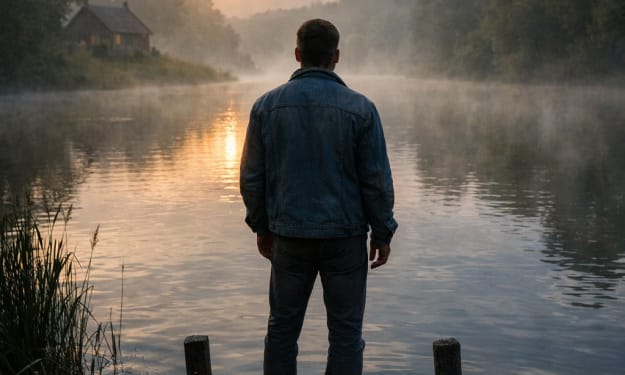
On the morning the river learned my name, the town was holding its breath. Mist wove through the willows along the banks, pale like unspun silk. The water moved slowly, as if it had nowhere else to be. I stood on the old footbridge, my hands in my pockets and the taste of pennies in my mouth, listening to the wood creak under my boots. Below me, the river flowed past, carrying leaves, secrets, and the faint ghosts of last night’s rain.
By Mahmoud Ahmed about 6 hours ago in Fiction
TUS NUA - ch 49
TUS NUA – ch 49 New Beginnings – Mia and Midnight (*)(*)(*) As Mia spoke on the phone to Ali’s sister, Ellen, Finola slipped quietly away and walked to the stream behind Tus Nua. Carefully, she put a block on her family so no one could know what she was about to do.
By Margaret Brennan3 days ago in Fiction
The Last Echo
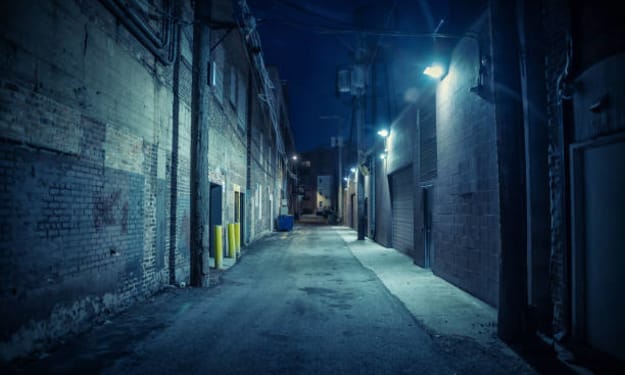
The rain had stopped, leaving the city streets slick and reflective, like broken mirrors catching neon light. I stood at the edge of the alley, heart hammering, breath fogging in the cold night air. The folder in my hands felt heavier than it should—its contents could ruin a life. Or end one.
By Imran Pisani4 days ago in Fiction
One Hard Thing
Stop me if you’ve heard this one before: You have the number, you know your schedule- you’ve even picked out the perfect day and time to make this appointment. Shoot, you’ve even picked out alternative days and times just in case their schedules can’t accommodate you!
By Taylor Rigsby3 days ago in Motivation


Comments (1)
Have you ever had to choose between following tradition and following your own path? How did it feel?