
The Weight of Quiet Things
A story about grief, memory, and the quiet places where we learn to stay

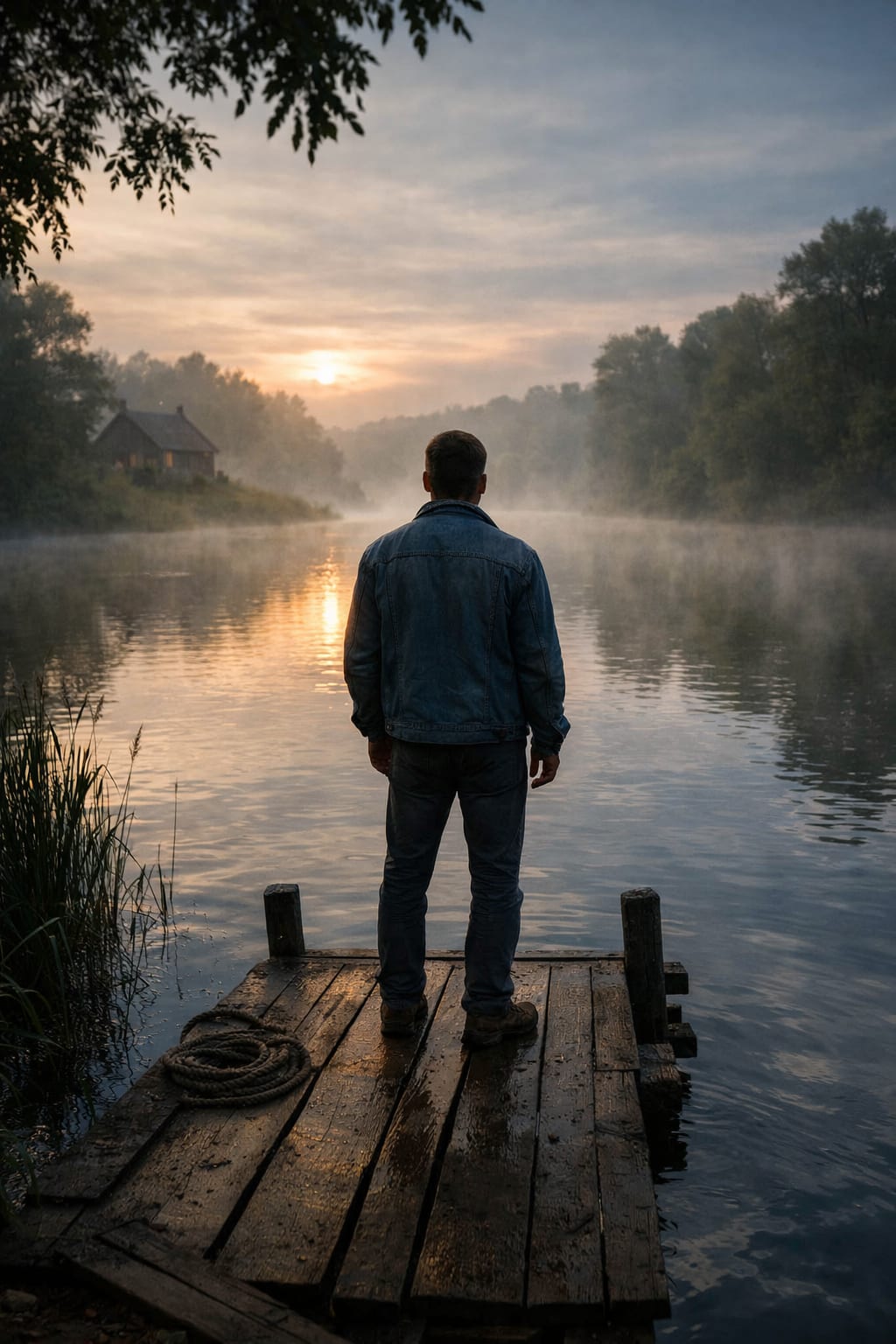
On the morning the river learned my name, the town was holding its breath. Mist wove through the willows along the banks, pale like unspun silk. The water moved slowly, as if it had nowhere else to be. I stood on the old footbridge, my hands in my pockets and the taste of pennies in my mouth, listening to the wood creak under my boots. Below me, the river flowed past, carrying leaves, secrets, and the faint ghosts of last night’s rain.
I hadn’t planned to return to Greenhaven. Plans are things we make when we believe the future will keep its promises. I came back because my mother had died in her sleep on a Tuesday, because the house felt empty of warmth, and because grief is a tide that knows where you were born.
The bridge had stood before me and would remain after. As a child, I leaned over the rail and tossed pebbles, counting the seconds between splash and silence, convinced the river paid attention. I whispered my name then, too, certain it would remember. Now I didn’t say anything. I had learned how easily names can be forgotten.
Greenhaven was a town of narrow streets and long pauses. People spoke softly, as if the air were listening. Storefronts had the same signs as always; the paint chipped into familiar shapes. The bakery still smelled like burnt sugar and hope. The clock above the post office was five minutes slow, stubborn in its devotion to the past.
My mother’s house lay at the edge of town, where the road turned to gravel and the fields began. The porch sagged with wear. I let myself in with a key that felt too light in my hand. The quiet rushed forward to greet me, filling my ears until I felt overwhelmed.
Her absence was loud. It showed in the way the kettle sat cold on the stove, in how the chair by the window faced empty space. I walked through the rooms, touching the backs of chairs, the spines of books, the dent in the wall where I had once thrown a ball indoors and learned the meaning of regret. Each object held a piece of her, like a space where love had been.
On the kitchen table lay an envelope addressed to me in her neat handwriting. Inside was a single page.
Elijah,
There are quiet things we carry so long they begin to carry us. When you come home, go to the river. Listen. It remembers more than we do.
No signature. She had never signed her notes, as if love were self-evident.
I didn’t go to the river that day. Grief makes cowards of us all. Instead, I cleaned. I folded her clothes and stacked them in boxes, each sweater a soft ache. I found a small scar on the countertop where she had dropped a pan years ago, laughed, and told me some things are better for being broken.
That night, I dreamed of water rising through the floors, gentle and insistent, until it reached my ankles. I stood still as it climbed, waiting for it to decide what to do with me.
In the morning, I walked back to the bridge.
The river was higher; rain upstream had kept its secrets. A fisherman stood downstream, his line a thin argument against the current. He nodded at me as if we were old acquaintances, as if he knew why I had come.
I rested my palms on the railing. The wood was damp and warm, like a heartbeat.
“I’m here,” I said, feeling foolish for using my voice.
The river answered by moving.
It’s strange to listen. We think it’s passive, but it asks something of us. You have to be still. You have to be willing to be changed.
I closed my eyes and let the river speak as it always had—without words. It spoke in the slow drag of water over stone, in the sound of pebbles shifting in their places. It spoke in the memory of my mother’s laugh, low and surprised, and in the sound of her footsteps coming down the hall at night when I was sick and scared.
I had been angry at her for dying, angry at the way she had gone without warning, as if late for an appointment. Standing there, I felt the anger loosen its grip, not because it was forgiven, but because it was acknowledged.
Days passed. I settled into the house like a guest who had overstayed and was then asked to stay forever. The town recognized me in pieces. Mrs. Calder at the bakery gave me an extra roll and a look that said she was sorry and proud all at once. The librarian asked about my work in the city, as if my leaving had been a brief inconvenience.
In the evenings, I returned to the river. I brought nothing but the envelope, folded and unfolded until the creases softened. I learned how the light fell at different hours, how the water darkened when clouds gathered. I learned the language of patience.
On the seventh night, the river gave me something back.
At first, it was subtle—a sense of being addressed. I felt my name, not as a sound but as a weight, a shaping of the air. The water slowed beneath the bridge and gathered itself like a thought.
I am not claiming magic. Only attention.
Memories surfaced—not in order, but like a tide. My mother at the sink, humming off-key. The night my father left and she stood in the doorway long after his car had vanished, as if the road might reconsider. The way she taught me to read the weather by the smell of the wind.
And then, something I hadn’t known I lost: a memory of her as a girl, standing by this same river, daring herself to step into it. The image came with the certainty of truth, and with it a feeling—not possession, but inheritance.
The river remembers us because we pour ourselves into it. Our days, our griefs, our small joys—all of it runs downhill eventually. What we lose here, we find elsewhere, reshaped.
I went home and slept without dreaming.
In the weeks that followed, I made a decision that surprised only me. I stayed. I took a job at the paper mill, the work honest and loud. I fixed the porch and sanded the banister smooth. I planted tomatoes where the soil had been waiting.
Sometimes, I stood at the window and felt the house listening, learning my footsteps the way it had learned hers.
On a morning like the first, when mist stitched the river to the sky, I carried a small box to the bridge. Inside were things I could not keep: my mother’s favorite spoon, worn thin; the watch my father had left behind; the envelope, now empty of instruction.
I didn’t throw them all at once. I gave them time, named each thing as I let it go. The river took them without ceremony or promise. That was its gift.
When I finished, I leaned on the railing and waited for the ache to bloom. It came, as it always would. But beneath it was something steadier—a sense of being held, not by water or wood, but by the fact of continuing.
The fisherman was there again, smiling as if he had been expecting me.
“Good day,” he said.
“It is,” I answered, meaning more than the weather.
The river flowed on, carrying my name, hers, and the weight of quiet things toward a place where they would be useful again.
About the Creator
Mahmoud Ahmed
I write stories inspired by real lives—voices often unheard, moments often ignored.
My words explore humanity, injustice, love, and the quiet pain behind ordinary streets..
“Step into lives you’ve never seen, and moments you’ve never felt.”
Keep reading
More stories from Mahmoud Ahmed and writers in Fiction and other communities.
The Sand Between Our Fingers
The first time Noura stepped onto the desert, the wind smelled like sand and the Nile River far in the distance, mixed with plants and salt. She was just ten, small enough to hide behind her father’s clothes, but big enough to feel the sand under her feet. Siwa woke slowly, its walls turning gold in the morning light. Women drew water, children chased goats, and Noura’s father, Amir, guided her toward palm trees that leaned over the dunes like old men.
By Mahmoud Ahmed 2 months ago in Fiction
Pandora’s Burden
“My brother warned me to not accept gifts from the one who commissioned you,” said Epimetheus to the woman clad in silvery raiments standing at the entrance to the temple. Her silver tiara and the silver rings on her fingers and toes glinted in the firelight cast by torches set on either side of the doorway. Lingering in the shadows, beyond the reach of the flames as she was, he could not tell what she held in her hands. At first what appeared to be a box was perhaps a funerary urn, or maybe merely an apple.
By J. Otis Haas2 days ago in Fiction
Ganon's Tale
Mokeeru had no idea how much time had passed when she opened her eyes; she could tell that she was back in the Gerudo village, presumably in the healer's hut, based on the smell of herbs. She sat up, wincing as pain bloomed fresh in the back of her head and her vision swam out of focus, blanketing the room in a watery film. She heard the unmistakable voice of Lyrassa, the healer, speaking up from somewhere across the room, likely cautioning her to lie back, but with the ringing in her head and the buzzing in her ears Mokeeru could not discern it clearly. Raising her hand up to the center of where the pain was radiating from in back of her head, she encountered a layer of gauze and could feel the enormous swollen knot beneath it. As the fog in her eyes began to recede and the room gradually swam into focus, Lyrassa's face resolved itself from the surrounding murk and her stern visage came into clear view. The dialogue that accompanied it was slower to attain clarity, but after a few moments Mokeeru was able to piece enough together to glean her meaning. She opened her mouth, intending to placate the healer, but nothing escaped beyond a strained croak. Irritated, Mokeeru gestured to her throat only to find that Lyrassa was already there with a dipper of water for her.
By Chris Walker6 days ago in Fiction


Comments (1)
Have you ever returned to a place that remembered you differently than you remembered it?