
Twenty Twenty Four
A love story

People rushed to help the woman who had collapsed to the floor. A tall youth gently cradled her head as she lay on the bare floor timbers of the ruined house. Although now close to middle age, she looked much as she had on the day she, a newly-minted graduate, married the man who had taught her to love literature. It was soon after she married that the troubles started.
Profoundly in love, she embraced married life. To have and to hold, she smiled at the thought. Caleb was not what she had dreamt of in a lover. Even though he was young, he had the doughy body of a desk-bound academic. His face was cherubic. And his eyes, mischievous. But he was serene and a natural leader who didn’t boss. He spoke little but listened a lot.
They didn’t pay much mind to the news and rarely discussed politics. But the pompous, polyester-haired, bunco artist, spouting lies and insults, was a ratings generator the TV people couldn’t ignore. His sweaty ignorance and disdain for language was a mephitic cloud that intoxicated a rabid crowd. He offered hate and anger and told the mob what they wanted to hear.
To everyone’s distress or glee, depending on where you stood, he was elected. This poltroon rode a legacy of crime and failure to the top job. Any hope he would was washed away by a riptide of dishonesty and grift. The carrot-colored buffoon talked of a cultural revolution and greatness. Education would once again revere the great patriots who had forged the country. Celebration of deviance and darkness would be excised from curriculums. And students would be surveyed to ensure the message was finding its target.
One bright cold day in April, Caleb left for the university where as a professor of 19th century literature he filled young minds with the existential darkness of the Russian philosophers, the reality of grinding poverty in Victorian London, and tales of time travellers glimpsing a cannibalistic future of Morlocks and Eloi.
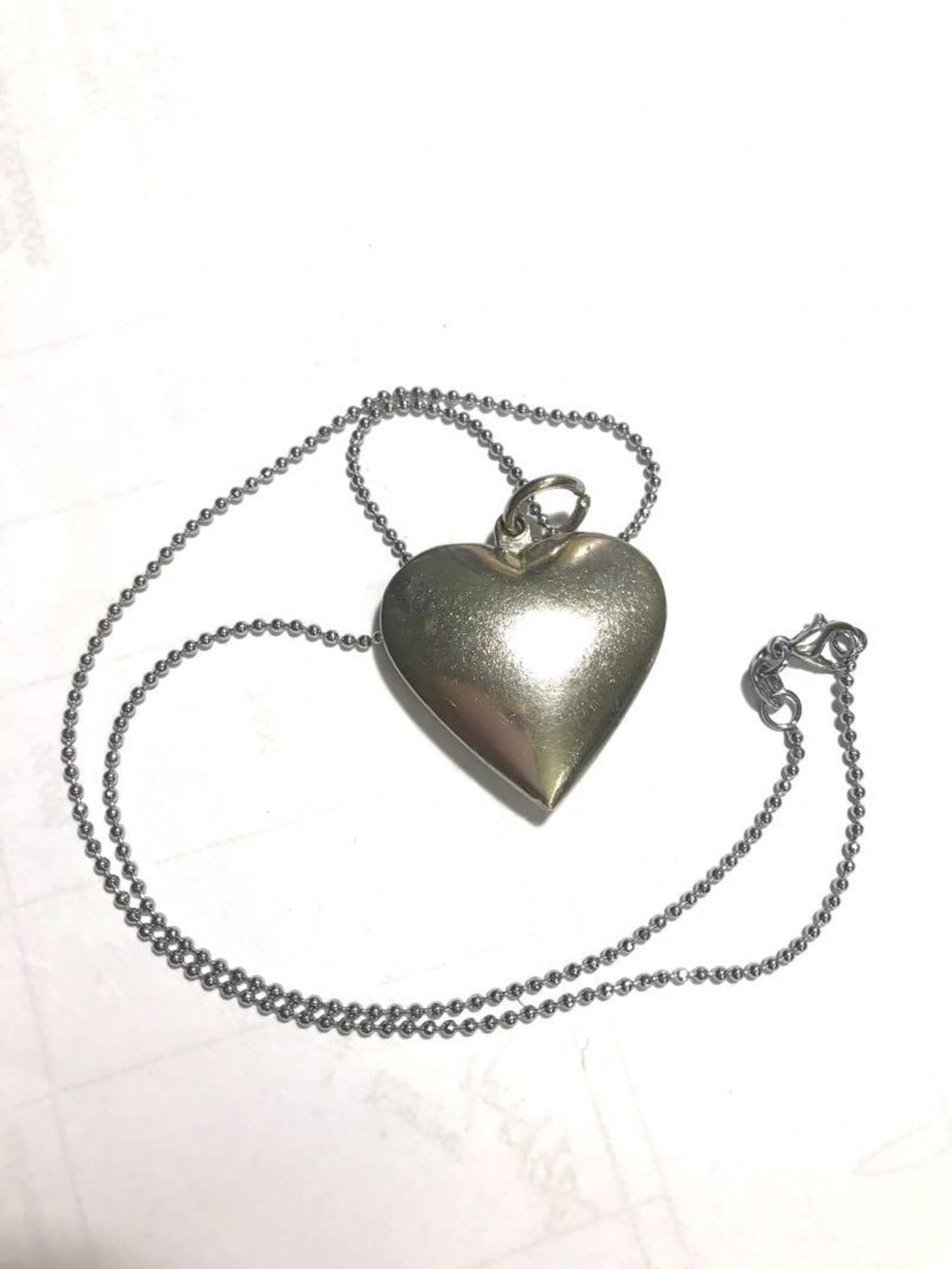
Cornelia spent hours in her workshop making the jewelry boxes of rare woods that had caught the attention of people who prized her art and craft. Sentimentally, she kept her first and in it stored the fine jewelry bequeathed to her by a mother who loved the radiance of gems. But her favorite piece was a modest silver heart-shaped locket Caleb had given her on their engagement.
She didn’t worry as the day darkened to night and he hadn’t returned. Caleb often spent extra hours with his students. But at eight she called him. The phone went straight to voicemail.
Restless, she drove to the University. Traffic was heavy. Heavier than normal. She turned on the news. It made no sense. It told of fires and bombings. The announcer pleaded for calm. She explained that the situation was under control and that the President would soon address the nation.
The campus was aflame, the fire lighting tar-dark, roiling smoke. The main building was destroyed. Other buildings were damaged. Bodies of students and teachers lay on the grass as if enjoying a spring sun. She ran shouting Caleb’s name. Nobody stirred, except the dead-eyed soldiers sitting in tank turrets.
They looked at her without curiosity as she was joined by others yelling names. They turned bodies over. People screamed and embraced lifeless bodies. Cornelia passed out.
She woke in her own bed and could hear the teapot whistling. Barefoot but still wearing yesterday’s clothes, she padded to the kitchen where OB O’Brien, her husband’s best friend and fellow professor, was pouring tea into big mugs.
“What happened, OB”
“We were attacked. The President said it was likely the Chinese, but it may have been the Europeans.”
“How did they attack us? What happened to our defenses? Why did they attack us. I don’t understand” She was babbling. “Have you seen Caleb?”
“He’s dead, Nellie.”
She had known he was. But the confirmation was a fist squeezing her heart.
“Did you see him?”
“I did. It was quick Nellie. He didn’t suffer.”
Cornelia sought refuge in her bed. For days she lay caressing the sheets where Caleb had lain, trying to find his smell and comfort herself with memories of the sniffs and sighs he expressed as he slept.
After four days she ran a bath and slid into the hot, soap-scented water as if the ritual would dull the pain. She dressed. Stripped the bed. And threw the linens into the laundry. She opened her jewelry box and dug around for the locket. It wasn’t there. It was as if she had died again.
The attacks continued. They were concentrated on colleges and retail distribution hubs. Soon the remaining universities were abandoned. Amazon was crippled. Facebook and Twitter, shuttered. Coca Cola’s headquarters were bombed. Delta’s airplanes were shot down. Target stores were destroyed.
Videos of unmarked planes dropping bombs ricocheted around the internet. People began to speculate it was aliens. Once in a while, some Asians were shown in handcuffs being transported somewhere in large army trucks. On another day the scene was repeated with European looking prisoners.
A mob attacked the Capitol while Congress was in emergency session. Graphic video of the Vice President being lynched got over two billion views. While others showing members of Congress being stabbed, shot or beaten to death with flag poles and fire extinguishers were almost as popular.
Within six month America was an armed fortress. The attacks slowed. Uniforms were everywhere. All citizens had to carry ID. Immigration was halted. And elections were postponed indefinitely “until our country's representatives can figure out what is going on”. The President was ubiquitous. His speeches ran for hours and were carried on the three cable networks that survived the media culling.
Broadcast TV was stopped. The internet was restricted to government programming. Sometimes there were celebrations of great success against the Chinese, the Europeans, or the Aliens - it was hard to keep track. Other times the screens blared warnings of imminent danger and the necessity to tighten belts and do one’s bit for the war effort.
Worker wages were capped - it was promoted as the “Great Patriotic Maximum”. Gas was rationed. Paid leave, vacations and sick days were banned. And children were pressed into labor. Total war was demanded. And the masses had no choice but to give it.
Life became a dirty grind. Inflation stripped away the wealth of the average citizen. And store shelves were filled with large quantities of the state brand Ersatz. It was the most important brand in the newly named ‘CSA’. Wags debated whether the C stood for ‘corporate’ or ‘Caucasian’
Years passed. O’Brien remained a constant comfort to her. It was an intimate friendship, but no more than that. Cornelia felt OB wanted more. He was fond of touching her shoulder and rubbing her neck. Once he drunkenly put an arm around her waist and pulled her to him. But she joked it off. He never went that far again.
She never forgot Caleb. And while the pain lost its edge, it remained heavy in her chest. At times she found it hard to breathe and sought solace in tears. She ran out of money and turned to her jewelry as payment for necessities. Life became a constant struggle to find food and fuel. The worker’s paradise became a dungeon. Joy was a rare and precious commodity.
After years of deprivation she changed her mind and married O’Brien - not for love, but for stability. It was enough.
As bad as it was, it got worse. Rumors tripped from lip to lip. Guerillas were said to be attacking isolated military units. The state dismissed this as nonsense, only to be expected, just a bunch of dead-enders determined to tear down the Great State the President had built. The three approved networks showed rebels in civilian clothes, chained together as they were force-marched away - explaining that this rag-tag mob wasn’t worth the worry.
These victories were cast as a celebration of the Dear Leader. Paeans commemorated his vision and great leadership. Adding to the legend, at each cabinet meeting while the President for Life beamed, the camera granted each of these political nobles a few minutes to extol the divine perfection of the CSA’s most glorious leader.
Every Sunday, pastors of the new state religion would play clips of these adulants topping each other in their fulsome praise. Later they would add their pound of flattery hoping it might be noticed by the man himself.
All was in harmony until one day the screen flickered and the daily announcements of war and triumph were interrupted. The screen filled with the image of a tough woman wearing a military uniform. She was sitting at a desk. On the desk was a compact machine gun. Behind her on the wall was pinned a map of the CSA.
She spoke in a hard-edged, urban twang. “My name is General Sherman. We are not your enemy. Our aim is liberation. We are your neighbors, your family, your friends. A steel curtain of cruelty has been drawn around this land. We will tear it down. The fascist forces that have robbed you of your rights and stolen your freedoms will not survive. We are thousands strong and our forces grow every day. Already we have retaken the North East and we advance in the West.
The enemy has been beaten back to their strongholds in the mountains, plains and the South. They weaken every day.
We will meet you soon. Be strong and be well. Good night.”
Immediately the screens returned to the familiar image of five overly made-up, bleached-toothed suits sitting comfortably explaining why everything was so much better today than it had ever been before. But today they sat slack-jawed looking at each other desperately for salvation. And then the screen went black. When it returned it was a recording.
One morning Cornelia and OB were woken by the rumble of guns. Outside people peered out of their front doors. The screens were blank. Cornelia and OB walked to Main Street. Lines of military vehicles were driving away from the din of the artillery. They ran home. In their street strangers milled around. Bullets flew close.
“Come on, get inside” Cornelia yelled
The strangers need no second invitation. Once in the house they slammed the door shut and locked it. Not that it made any difference. A shell landed nearby. It blew out all the glass and swung the locked door on its hinges.
Cornelia collapsed.
When she came to, she looked into the concerned eyes of the young man who cradled her head. Then she saw O’Brien, who was staring at a man in uniform with a mix of fear and wonderment. The man in uniform was grimy. He was chisel-chinned, hard in bone and sinew. Slim and well-balanced. And pinned to his chest was her locket.
“Where did you get that?”
“I took it out of your jewelry case. I wanted to have something to remember you by if I had to leave.”
Cornelia stared at the man. A man that she had last seen 15 years ago.
“Caleb?”
“Yes”
He held out his hand. She grasped it. He pulled her up. And she crushed him with her embrace. Except it was like trying to crush granite. Seconds passed. Her heart soared and raced. And then she turned to O’Brien.
“You said he was dead. You said you saw his body. You said he hadn’t suffered. Why?”
“Because I wanted you. I have always wanted you.”
Cornelia stared at him. On the floor lay a pistol lost in the explosion. She picked it up. And shot him.
O’Brien wasn’t the last to die in the War of Liberation. And he wasn't the only man Cornelia killed.
About the Creator
Pitt Griffin
Once upon a midnight dreary, while I pondered, weak and weary, it occurred to me I should write things down. It allows you to live wherever you want - at least for awhile.
Keep reading
More stories from Pitt Griffin and writers in Fiction and other communities.
Uncle Asomatous
In 1954, when I was nine, Henrik told Frank that I smelled like turned milk. It hurt me so hard. For the rest of the school day, I sat behind my heavy wooden desk, sniffing the sleeve of my dress and the skin of my arm, alert for any sourness. But I could smell nothing bad. We weren't rich. But we had a washing machine in the basement. My mother carried baskets of clothes up and down the wooden steps on wash day. I would help her fold, and my clothes always smelled nice to me.
By Pitt Griffin8 months ago in Fiction


Comments
There are no comments for this story
Be the first to respond and start the conversation.