
Trump's world of tariffs is shaking up time-tested investing strategies
History, business
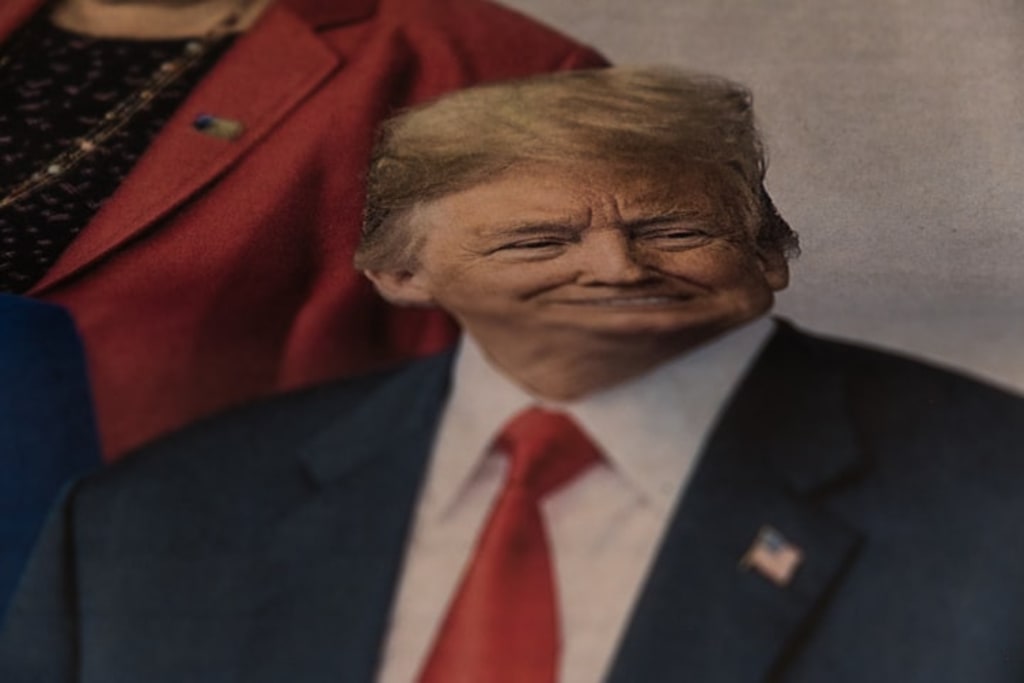
Time-tested investment strategies are being reshaped by Trump's world of tariffs. Traditional investing strategies have heavily relied on the concept of stable trade relationships and globalization over the past decade. But investors are being forced to reevaluate long-standing strategies that were once regarded as fundamental in the political and economic landscape following Trump, where tariffs have emerged as a preferred method of economic leverage. A shift in global competition During his time as president of the United States, Donald Trump introduced a more combative approach to international trade, particularly with members of the European Union, China, and Mexico. Trump transformed trade policy into a high-stakes game of economic brinkmanship by imposing tariffs on solar panels, washing machines, steel, and aluminum. Although many of these tariffs were initially presented as short-term bargaining chips to bring trading partners to the table, some have remained in place or been modified, still having an impact on the market. Investors are once again preparing for disruption as Trump runs again and proposes even more severe tariffs, including a universal import tax of 10% and a 60% tariff on Chinese goods. The Decline of Worldwide Supply Chains A direct blow has been dealt to global supply chains, which have long been praised for their effectiveness and cost savings. Costs have gone up and there has been more uncertainty for businesses like Apple, Ford, and Caterpillar that rely on manufacturing across borders. Investors, on the other hand, have been forced to reevaluate the risk-reward profiles of businesses that are deeply entwined with global trade networks. Multinational corporations and diversified international exposure are at odds with conventional investing strategies. Reshoring plays, domestic-focused companies, and "tariff-proof" industries are some of the new priorities of some portfolio managers. Winners and losers in the sector All industries are not affected equally by tariffs. Agriculture and manufacturing, which frequently rely on both imports and exports, are particularly vulnerable. For instance, U.S. farmers were disproportionately affected by China's retaliatory tariffs, which resulted in a realignment of agricultural exports and brought investor attention to the political volatility of food markets. On the other hand, some businesses have benefited. When competition was limited by tariffs on foreign steel, producers of American steel saw short-term gains. Investors looking for protection from global shocks have also shown increased interest in infrastructure, energy, and defense sectors. An Increase in the Cost of Geopolitical Risk Many investments now carry a geopolitical risk premium as a result of the unpredictability of tariff policy, especially when it is driven by executive action rather than long-term policy frameworks. Long-term wealth accumulation vehicles like index funds and exchange-traded funds (ETFs) that were once stable are now more susceptible to sudden trade-related swings. Markets plunged sharply within minutes, for instance, when Trump tweeted about escalating tariffs on Chinese goods in 2019. High-frequency strategies and algorithmic trading models have become more reactive, if not more cautious, as a result of this level of market sensitivity. The Playbook Reconsidered Numerous analysts and advisors have advocated for a shift in strategy as tariffs have grown to become a persistent economic lever. That could imply: focusing more on investments that are based in the United States rather than other countries. focusing on industries that are most likely to gain from protectionist policies. concentrating on businesses with adaptable supply chains or the capacity to pass on higher costs to customers. incorporating political analysis into financial modeling as an essential component. It's a turning point for investors who hold long-term positions. Global diversification and sector balance are being rewritten as old rules. Regardless of whether Trump retains his presidency, his influence on trade has altered investor behavior—possibly permanently. The Conclusion Investing now faces a new level of complexity thanks to Trump's tariffs. Geopolitical risk, supply chain uncertainty, and policy-driven volatility have replaced once-dependable strategies. Investors are being forced to adapt as protectionism becomes a more prevalent theme in global economics or risk being left behind in a world where disruption is the only constant. ---
Have a specific audience in mind, such as students, professionals, or retail investors, for this article?
About the Creator
Keep reading
More stories from Mahim khan and writers in Fiction and other communities.
At Least 10 Billion Stars in Our Milky Way Galaxy Can Support Habitable Planets
Habitable planets can be found in our Milky Way Galaxy with at least 10 billion stars. One of humanity's oldest and most intriguing questions has been pondered by astronomers for decades: Are we the only ones in the universe? An answer that piques the imagination has been found through recent research. Numerous surveys and studies using data from the Kepler Space Telescope and other instruments have found that at least 10 billion stars in our Milky Way galaxy could have planets that could be habitable. How to Define Habitability Understanding what scientists mean when they say "habitable" is essential before delving into the numbers. A planet that resides in the star's habitable zone, also known as the "Goldilocks zone," where temperatures are just right for liquid water to exist, is typically referred to as a "habitable planet." Water is regarded as an essential component of life as we know it. A planet's atmosphere, size, and geological activity all play a role in its habitability, but the fundamental requirement is the presence of liquid water. The Discovery Made by Kepler The 2009 launch of NASA's Kepler Space Telescope revolutionized our understanding of the galaxy. Over the course of its mission, Kepler saw more than 150,000 stars and discovered thousands of exoplanets, many of which were in habitable zones. Astronomers were able to extrapolate how common Earth-sized planets in habitable zones might be throughout the Milky Way by analyzing this data. According to these extrapolations, approximately one in five Sun-like stars may have a planet in the habitable zone that is comparable to Earth's size. The estimate of 10 billion potentially habitable planets becomes a conservative but astonishingly large number when one takes into account the Milky Way's approximately 100 to 400 billion stars and the 10% to 20% that are similar to our Sun. Consequences for Life The implications would be staggering if even a small fraction of those 10 billion planets support life. There may be an abundance of life not only where you are. Simple microbial life may exist on some of these worlds, while intelligent civilizations or even complex ecosystems may exist on others. Additionally, in cosmic terms, many of these potentially habitable planets could be located within a few dozen to hundreds of light-years of Earth. The search goes on. The James Webb Space Telescope (JWST) and upcoming missions like LUVOIR and HabEx are both aimed at directly studying the atmospheres of exoplanets. Biosignatures, which are chemical signs of life such as oxygen, methane, or water vapor, will be looked for by these instruments. Additionally, efforts like SETI (Search for Extraterrestrial Intelligence) and the Breakthrough Listen Initiative continue to look for signals in the sky that could point to technological civilizations. Conclusion
By Mahim khan9 months ago in History




Comments (1)
The greatest article of the world