
Top Dog
A story about finding your niche and occupying it.
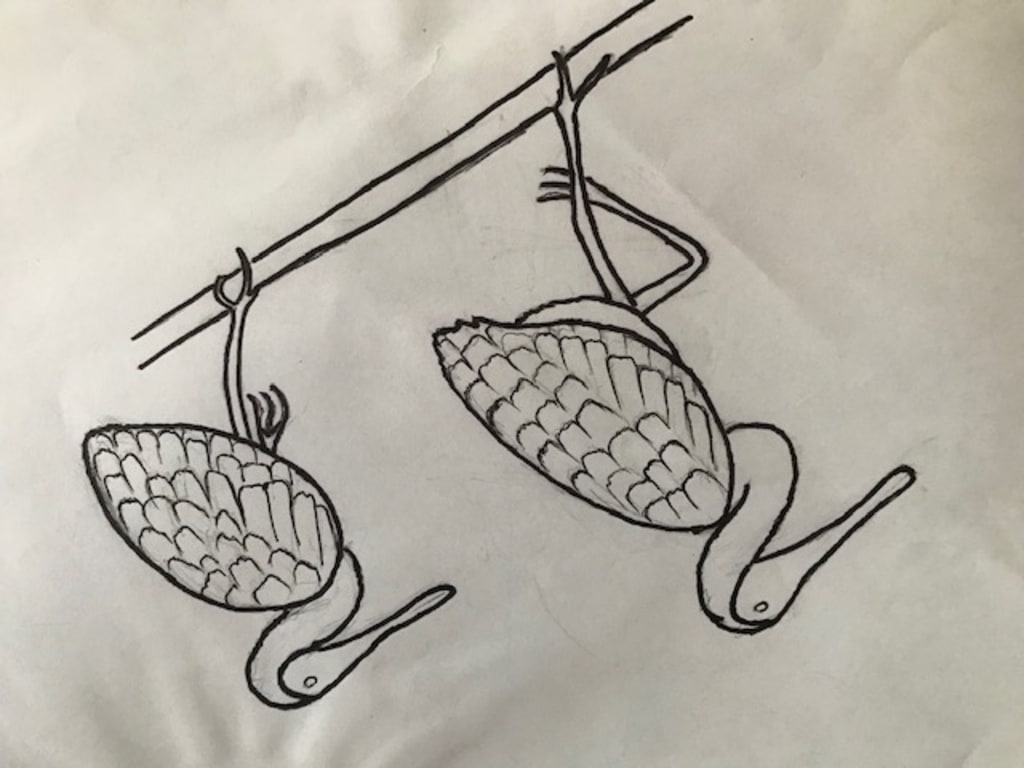
People had gotten it into their heads that they needed to take their teeth out of their heads. Not just the wisdom teeth, but their canines too. As when they had decided that molars were no longer necessary for chewing, the consensus now was that canines were obsolete in eating the tender, machine-processed morsels that stuffed every chamber of the food pyramid. Without canines overcrowding the mouth, the remaining teeth could be realigned to create a pleasing appearance. Even wisdom teeth could be hidden away in the back; the canines stood out in the front row as the unsightly vestiges of caveman days. They had no place in modern civilization.
Even as Sal scoffed at this trajectory of humanity, his upper left canine tooth missed a chunk of his sandwich and sunk into his own flesh. The sharp pain brought tears to his eyes, followed moments later by the salty taste of blood. He sighed, finished his sandwich, and went to the restroom of the sandwich shop. Pulling his lower lip down in front of the mirror to inspect the bloody puncture, he looked ruefully at the culprit canines. They were not particularly sharp or pointed, more like the jagged edges of leaves. Yet their continued existence was one of the reasons Sal felt unfit for society, along with his shambling gait and stubborn skin rashes. They were, perhaps, why he remained unemployed at almost thirty years old. But he could only have his canines removed under a health insurance plan, which he could only obtain by getting a job. Talk about chicken and the egg – at least the chicken had no teeth to worry about.
He was running late. He stood back, straightened his suit jacket, and walked briskly out the restaurant to the subway station across the street. If he aced this job interview, his problems might be over. Finding an empty window seat on the train to downtown, he hunched down and muttered superlatives about himself in preparation. The train sped through tunnels, over a forested canyon, and beside highways. Sal barely looked up other than to grimace at the giant faces smiling at him from billboards and platform walls with uniform, perfectly square teeth. The other passengers were equally oblivious, most of them focused their Headphones True: cell phone technology embedded in their heads, so that each person read blogs and watched kitten videos that no one else saw or heard. Sal checked the time on his own Headphone – two quick blinks of the eye did the trick – as the train pulled into the downtown station.
He arrived at the designated office with a few minutes to spare. Seated at the lobby, he wiped the beads of sweat running from his brow and was alarmed to feel stubble growing on the same cheeks he had scraped a razor across just hours ago. The receptionist, apparently sensing Sal’s nervousness, offered him a candy from a bowl on her desk. Why not. He put the small chocolate in his mouth while rehearsing his catchphrases, and there it was again. A sharp pang from his canine slamming down on his flesh. He let out a feral grunt before forcing his mouth shut, as blood and chocolate commingled inside. Just then, the door to the inner offices opened, and some well-groomed and manicured men and women poured out to surround him. Sal shook hands with everyone and smiled at them with closed lips, and followed them to a conference room. Yes, he had research experience. Yes, he had interned at another firm doing similar work. No, he had never spoken to that firm’s director, who was good friends with one of his current interviewers. Behind Sal’s façade of affable features, his tongue soothed his tattered gums, already licking his wounds in defeat.
On the train ride back, there was no window seat, or any seat, available. Sal stood jam-packed with other passengers, all facing different directions and holding on to the overhanging metal rod like monkeys waiting to flee from each other at the first chance. Sal looked out for his own exit. From what he could see past the passengers’ bowed heads and the failing sunlight, the train was currently gliding over the nature reserve canyon. In about twenty minutes, he would be back on his couch, starting from square one.
His hand suddenly felt a searing pain, as though the metal bar it grasped was conducting incendiary heat. He let go, only to realize that the corrugated metal floor had disappeared, and he was falling toward a murky darkness. He heard screams, perhaps his own, until he was abruptly submerged in water that clogged his senses and airways. He thrashed about until his face broke through the water’s surface. He squinted upward to where he must have lost his footing on the train. But there was no train there. Not even the bridge of railroad tracks. Instead, a burnt orange gas percolated about thirty feet above in all directions, like a sinister cloud lowered from the heavens.
It was not until Sal came to that he realized he had lost consciousness. He heard the lapping sound of a stream, and something was seeping into one ear. He instinctively blinked five times in rapid succession to turn his Headphone on. Nothing happened. When his eyes could focus, they saw a stretch of water and mud and the green bases of cattails. He was lying on his stomach at the edge of the stream. He raised his arm up from the mud and was immediately met with blinding pain along his hand, causing him to douse it back in the muck. That must be from the metal rod incident. His unclogged ear picked up a new sound: something was moving around nearby, disturbed by Sal’s splashing. Sal moved his head incrementially to see the source of the rustling. It was a large gray bird, possibly a heron, wading among the cattails. Sal suddenly knew two things: that he was starving, and that food was not going to be readily available to him.
With this newfound clarity, he lunged from his prone position at the bird. His unburnt hand found feathers to grasp. His damaged hand remained useless in the mud. Thus holding onto a shrieking, struggling bird, being buffeted by its broad wings and seeing nothing but a blur of feathers, Sal did the only thing that made sense to him and sunk his teeth into the nearest portion of the animal. He did not know how long his jaws remained clamped, or when his canines burrowed through the feathers to find blood and sinew. But the bird’s struggles became less violent, and its wingbeats less frequent. The water that had splashed around them became calm again, emanating blood. Sal climbed onto the shore before opening his jaws and releasing the bird, which dropped lifelessly on the grass.
“Hello.”
Startled, Sal stormed around. It was a woman, as bruised and bloody as he believed he was. He tried to speak, only to realize that his gums were lined with broken quills and barbs from the feathers. When he tried to spit them out, a fire seemed to spew up from inside his ribcage, and he bent over and vomited blood.
“It’s okay! Here.”
The woman came close to him and helped him sit down on the ground. His burnt hand touched the soft blades of grass, and the throbbing pain that his predatory adrenaline had suppressed came flooding back, sending him into convulsions. The woman hobbled to the stream’s edge to pluck some broad fern fronds and caked them with mud. She came back and wrapped his hand in them.
“It was some kind of bomb,” she said as she worked. “It vaporized the train and the tracks. Or melted them at least. And the people. The ones who were sitting near the windows. Were you standing in the aisle?”
None of it felt real to Sal. As though recalling a nightmare, he looked up at the sky. Indeed, the sky was covered by the burnt orange haze. He could see coils of the gas being formed and unraveled by winds. But they never seemed to descend into the canyon, floating just above the tops of the trees that rose behind him and on the opposite side of the stream.
“The explosion missed this forest,” the woman said. “Something about the low elevation. We don’t know how big the bomb was. Everyone’s Headpone is dead.” When she saw Sal starting blinking frantically to activate his Headphone again, she grabbed his head with both hands.
“Listen. There are other survivors here.” She jerked her head downstream. “There’s kids. They need to eat. But no one knows how to find food. Or to hunt. Other than you, apparently. Can you help them?”
Sal looked at the woman. She was beautiful, not the least because of her delicate teeth, which lacked any canines. He spoke: “The kids can have the bird.”
The woman smiled. “I’m Paula,” she said.
They walked down the stream, Sal carrying the bird by its feet. Around the bend, he spotted twelve, thirteen people huddled together. A few of them were children, but the adults, shivering in their formerly pristine suits, looked just as helpless. Paula raised her hand at them.
“Everyone, this is Sal,” she exclaimed. Sal stopped in his tracks. He started to say something, but it was caught in his throat. After another stop-and-start attempt to greet the people, he simply tossed the dead bird on the ground before them. They all leapt up, a few to inspect and pluck the bird, but the others to shake Sal’s hand and compliment him. For the second time that day, Sal found himself surrounded by people with expensive clothing and well-maintained teeth. This time, however, Sal lost his reticence and smiled openly back at them.
They set about cooking the bird. Someone had a lighter that she had managed to keep during her fall, and the pile of dry branches and leaves the group assembled eventually caught fire. Although the meat was insufficiently plucked and charred to the bone, everyone wolfed down what they could snatch from the bird’s frame. For a few moments, there was a tranquil silence, broken only by the satisfied chewing and the crackle of bones. Then Paula spoke:
“So what should we do about making tools to survive until we can get out of here? Sal can maybe catch a few more things for us, but we can’t rely on that long-term, right?”
There were grunts and nods of agreement. A middle-aged man spoke up:
“There’s no part of the train that survived. But if any of us have any metal objects, maybe we can pool those together to make some sort of weapon?”
“I have a silver necklace,” one woman said, removing a heart-shaped locket from her neck and showing the others. “It could be melted down for something.”
The woman with the lighter held up that very object and said, “So could this!”
Sal, who had been silently picking quills and barbs from his mouth thus far, spoke up: “No, we’ll need the lighter for fires.”
The woman nodded and lowered the lighter rather meekly.
With the orange haze, it was difficult to determine if it was day or night. Exhausted, the people fell asleep wherever they felt remotely comfortable. Eventually, Sal was the only one awake. He looked at the bony remains of the bird by the dwindling fire: the talons and beak. Their sharp edges could certainly be fashioned into some sort of weapon. He got up, picked up the remnants, and tossed them into the stream one by one. Something in the haze above caught his eye – a large, red, amorphous ball. Sal knew that evaporated metal could turn into plasma, the same substance making up the stars and the sun. He saluted the newborn sun and breathed in the dawn of a new era.
About the Creator
Keep reading
More stories from writers in Fiction and other communities.
The Rally Between Waking and Dream
The Court at Dusk The court appeared where evening usually hides its quiet miracles—behind the old park, past the trees that whispered to each other like elders. The young man arrived with a single tennis ball in his pocket, not even a racket, as if he already knew this would not be a game governed by rules. The sky was bruised purple and gold, and the net sagged like a tired smile. He had come to think, to escape the noise of days that asked too much and gave too little.
By LUNA EDITHabout 14 hours ago in Fiction
Autonomy Is The Real Privilege
Good morning, freedom-seekers! Today we’re gonna be looking at autonomy. A strange word, I know; one many would probably look at blankly and run away from on sight. We’re gonna figure out what it actually means, consider how it’s achieved, and decipher just how deeply most of us are tangled up in dependence without realising it.
By That ‘Freedom’ Guy7 days ago in Humans



Comments
There are no comments for this story
Be the first to respond and start the conversation.