
To the Third Floor
A short story about courage, hesitation, and the quiet surrender of everyday life.


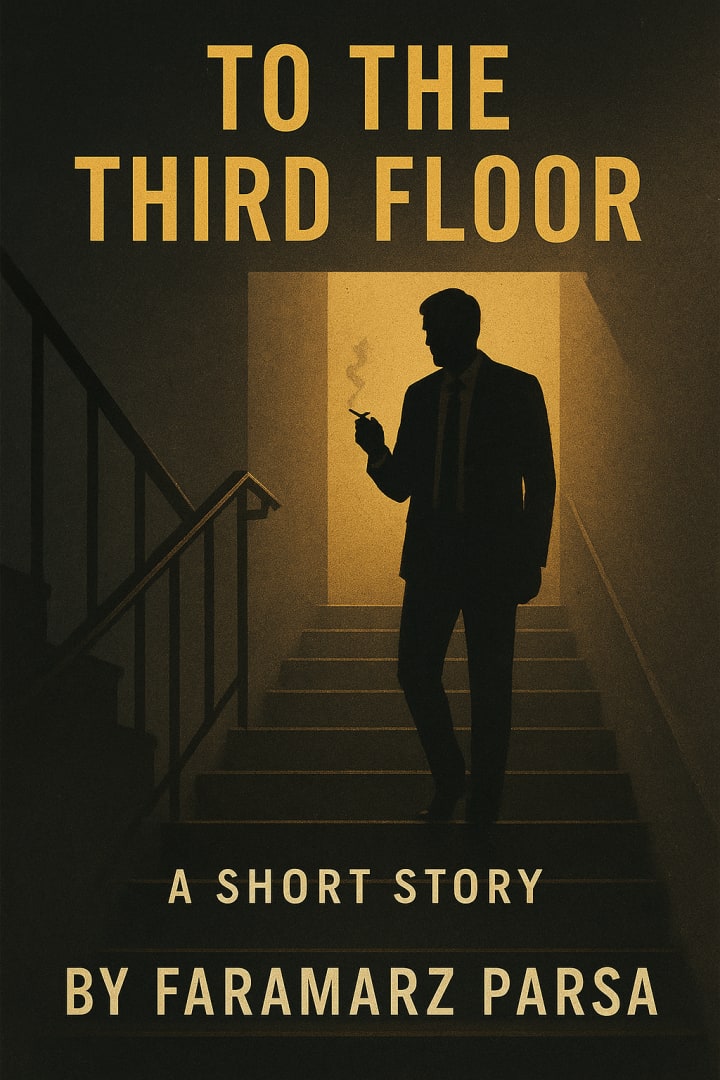
To the Third Floor
By Faramarz Parsa
Foreword
Every ordinary day hides a silent battle inside someone — a battle between pride and survival, between what one should say and what one dares to say.
This short story captures one of those small yet powerful moments — when courage builds step by step, only to falter before the invisible walls of fear and authority.
It is not about heroes or villains, but about the quiet surrender that happens in countless offices, factories, and homes every day — when words die on the lips, and another tomorrow is postponed.
Sometimes, climbing the stairs takes more strength than reaching the top.
To the Third Floor
Mahmoud had made up his mind. This time, he was going to take a stand — seriously. He was going to confront Mr. Heshmat Maqabli, the company’s boss, and demand his long-overdue salary.
He stood before the mirror, took a deep drag from his cigarette, and exhaled smoke through his nose. Looking at his reflection, he smirked.
“Not bad… good body, strong shoulders.”
But then his face hardened.
“Come on, man! What good is that? You want to fight him or talk to him? Just say what’s right and get your money.”
He straightened his jacket, checked his watch, and walked out of the restroom.
On the staircase, he practiced his lines.
“Mr. Maqabli… no, better — Sir, today we must settle things. I haven’t been paid for four months. My wife and kids are desperate. You need to pay me today. No excuses.”
He paused.
“It’s not my problem if the company is behind on payments. Don’t you have a family too? Wait — no, that’s not right. Never mind. I’ll just say: I don’t care. I’m not leaving without my pay.”
He reached the first floor, took a deep breath, and kept rehearsing.
“Mr. Maqabli, with all due respect, could you please pay the four months’ salary you owe me? Please… yes, I understand, but—”
He stopped again, shaking his head.
“No, too soft. He’ll walk all over me again.”
By the time he reached the second floor, his pulse was racing.
“One more floor. No backing down this time.”
He climbed the stairs, his voice louder now.
“You only care about yourself, sir — none of you think about your workers. Enough is enough. I’m getting my pay today!”
He reached the office door and knocked.
“Come in,” a voice answered.
Mr. Maqabli didn’t look up. He was buried in paperwork.
“Good you came, Nafisi,” he said without glancing up. “Give the fuse invoice to Sedighi today. Tell him the Jaberi Hospital order must be ready by tomorrow. Also, collect the Broumand receipts and hand them to accounting. Move quickly — everything must be done today.”
Mahmoud hesitated, shifting from one foot to the other.
“Why are you still here?” the boss asked, still not looking up.
“I just… had something to say, sir…” Mahmoud stammered.
“Later,” Mr. Maqabli interrupted. “I’m very busy. The Tisfon Construction team is coming in a few minutes for the contract. Oh, and tell Heydari to bring me light tea — one lump of sugar. Go on now, I don’t have time.”
Mahmoud closed the door quietly behind him.
“So much for all that courage,” he muttered to himself. “All that practice… and nothing came out.”
Then, almost to comfort himself, he smiled weakly.
“Not today. He was busy. Tomorrow, yes — tomorrow I’ll speak my mind.”
As he descended the stairs, he saw Heydari passing by and called out:
“Hey, Heydar, bring the boss some light tea — and one sugar cube beside it.”
About the Creator
Ebrahim Parsa
⸻
Faramarz (Ebrahim) Parsa writes stories for children and adults — tales born from silence, memory, and the light of imagination inspired by Persian roots.
Keep reading
More stories from Ebrahim Parsa and writers in Fiction and other communities.
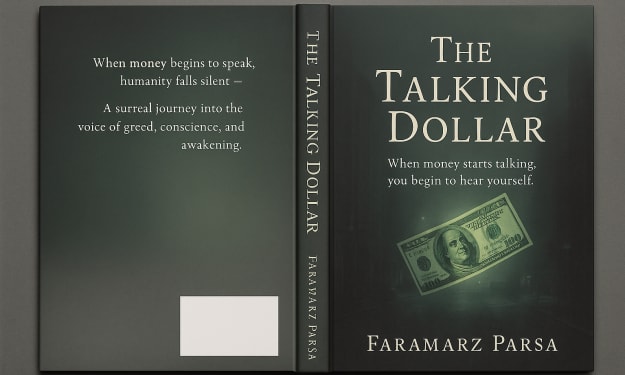
The Talking Dollar
A surreal and haunting reflection on greed, ownership, and awakening. A man discovers a hundred-dollar bill that can speak — and what begins as a simple temptation becomes a journey through the “Market of Souls,” where value, desire, and conscience are all for sale.
By Ebrahim Parsa2 months ago in Fiction



Comments (1)
We’ve all been Mahmoud at least once in our lives. There’s always a moment when courage stops one step before the door. ما همه روزی محمود بودهایم؛ لحظهای که شجاعت، درست پیش از آخرین پله، از پا میافتد.