
Title: Descent Into the Unknown
The Tense Moments Aboard the Artemis Mission

In the vast silence of deep space, where human instincts are dulled by vacuum and distance, a voice breaks through the tension—not a human one, but calm, calculated, and precise.
“Automatic guidance system engaged,” intones A.R.T.E.M.I.S, the AI navigator aboard the exploratory vessel Outer Reach. It's a line meant to reassure, to mark a transition from human hands to cold, flawless algorithms. But aboard the ship, the atmosphere is anything but calm.
This isn't just another mission. Commander Hargrave, a seasoned leader with the stoicism of experience and the scars to prove it, is navigating one of the most treacherous reentries the space program has faced. The crew is about to descend into an unexplored atmosphere where readings have been inconsistent, and visibility has already started to plummet.
“Entering upper atmosphere,” Hargrave announces, his voice tight with focus. The calm exterior masks a sharp tension running through the crew. "Visibility is low", he reports, blaming the phenomenon on strange cloud formation. It's a detail that seems innocuous at first, but later proves to be a critical warning sign.
The viewer, now gripping the edge of their seat, hears the whoosh of air and the rhythmic beeping of navigation controls. There’s an undeniable feeling that this landing won't be routine. As Hargrave delivers the line, “Our priority is to land safely,” it's not just protocol—it’s a prayer wrapped in military precision.
And then, the tension erupts.
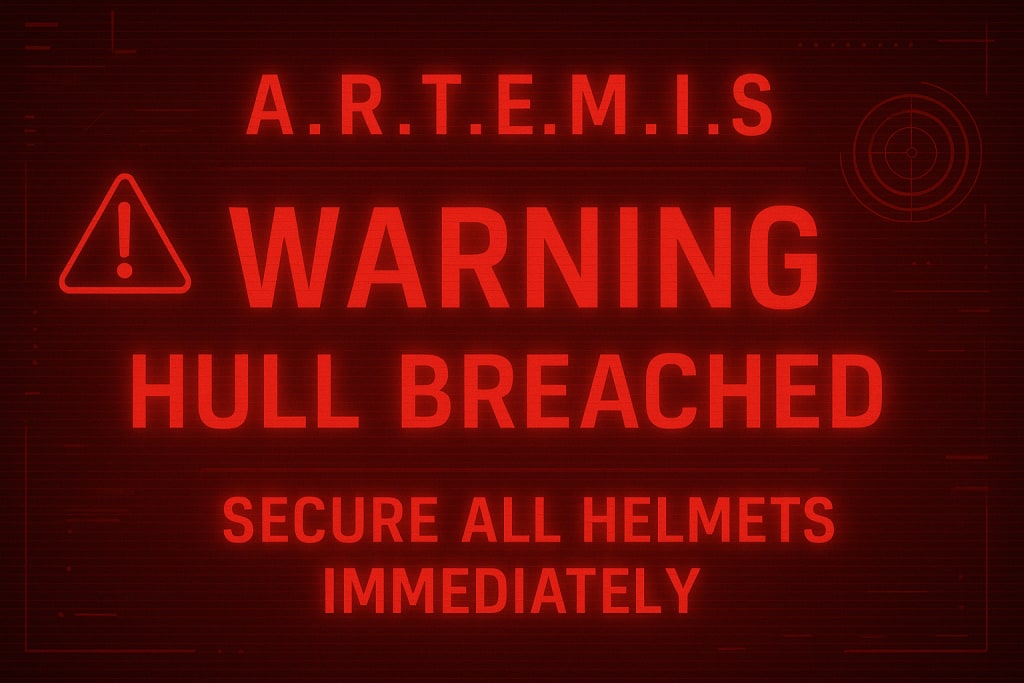
“Warning,” the AI chimes in, voice no longer serene but urgent. “Hull breached.”
The crew is given just a second to process the catastrophe before A.R.T.E.M.I.S follows with the command that could mean the difference between life and death: “Secure your helmets immediately.”
This moment is a stark shift from calculated descent to survival mode. There’s no room for debate. In space, milliseconds matter.
A Story of Human Fragility and AI Precision
What makes this scene particularly gripping isn’t just the dramatic pacing or the sudden turn of events. It’s the interplay between machine logic and human vulnerability. A.R.T.E.M.I.S, a voice without fear or hesitation, becomes the backbone of the scene. But it’s Hargrave who gives it heart.
The AI represents the best of human engineering, yet it’s still a system designed to follow parameters. It warns, it alerts, but it doesn’t feel the weight of survival. That responsibility falls on Hargrave and his crew, whose reactions—hands scrambling for helmet clasps, eyes wide beneath visors, breath catching in anticipation.
The balance of trust between artificial intelligence and human instinct. We build machines to extend our reach and ensure our safety, but in the end, it's our own decision-making that defines our fate.
Atmospheric Mystery and World building
The phrase “strange cloud formation” might seem like a throwaway observation, but in science fiction, nothing is arbitrary. It raises questions about the planet's ecosystem, hinting at something possibly more dangerous than the crew realizes.
Is this formation the result of natural phenomena, or is it a sign of something more sinister—an unknown entity, a hidden energy source, or even life? The danger is immediate, but the mystery lingers.
The ship, Outer Reach, itself seems symbolic. The name evokes a place just beyond what’s familiar—at the edge of exploration, where known science meets the frontier of possibility. This brief moment of the script doesn’t just set up a crisis; it sets the tone for a broader narrative, one that explores the boundaries of courage, technology, and the human condition.
Crafting Tension in Minimal Dialogue
From a screenwriting perspective, the dialogue is sparse but deliberate. Every word serves a purpose:
A high-stakes environment (space entry)
A technological aid with agency (A.R.T.E.M.I.S)
A human leader under pressure (Commander Hargrave)
An unforeseen complication (the hull breach)
A clear and immediate threat (helmet warning)
This economy of language is what distinguishes good science fiction from the rest. It trusts the audience to understand the implications, to fill in the emotional responses and consequences without exposition-heavy dialogue.
What Comes Next?
Though the story ends at a moment of crisis, its setup invites speculation. What caused the breach? Can the crew survive? Will the strange cloud formation prove to be more than a visual obstacle?
This excerpt from Outer Reach lays the groundwork for a classic science fiction survival arc. But perhaps more importantly, it reflects current real-world conversations about automation, AI, and the limits of human control in high-risk environments.
In the vast silence of deep space, where human instincts are dulled by vacuum and distance, a voice breaks through the tension—not a human one, but calm, calculated, and precise.
“Automatic guidance system engaged,” intones A.R.T.E.M.I.S, the AI navigator aboard the exploratory vessel Outer Reach. It's a line meant to reassure, to mark a transition from human hands to cold, flawless algorithms. But aboard the ship, the atmosphere is anything but calm.
This isn't just another mission. Commander Hargrave, a seasoned leader with the stoicism of experience and the scars to prove it, is navigating one of the most treacherous reentries the space program has faced. The crew is about to descend into an unexplored atmosphere where readings have been inconsistent, and visibility has already started to plummet.
“Entering upper atmosphere,” Hargrave announces, his voice tight with focus. The calm exterior masks a sharp tension running through the crew. "Visibility is low", he reports, blaming the phenomenon on strange cloud formation. It's a detail that seems innocuous at first, but later proves to be a critical warning sign.
The viewer, now gripping the edge of their seat, hears the whoosh of air and the rhythmic beeping of navigation controls. There’s an undeniable feeling that this landing won't be routine. As Hargrave delivers the line, “Our priority is to land safely,” it's not just protocol—it’s a prayer wrapped in military precision.
And then, the tension erupts.
“Warning,” the AI chimes in, voice no longer serene but urgent. “Hull breached.”
The crew is given just a second to process the catastrophe before A.R.T.E.M.I.S follows with the command that could mean the difference between life and death: “Secure your helmets immediately.”
This moment is a stark shift from calculated descent to survival mode. There’s no room for debate. In space, milliseconds matter.
A Story of Human Fragility and AI Precision
What makes this scene particularly gripping isn’t just the dramatic pacing or the sudden turn of events. It’s the interplay between machine logic and human vulnerability. A.R.T.E.M.I.S, a voice without fear or hesitation, becomes the backbone of the scene. But it’s Hargrave who gives it heart.
The AI represents the best of human engineering, yet it’s still a system designed to follow parameters. It warns, it alerts, but it doesn’t feel the weight of survival. That responsibility falls on Hargrave and his crew, whose reactions—hands scrambling for helmet clasps, eyes wide beneath visors, breath catching in anticipation.
The balance of trust between artificial intelligence and human instinct. We build machines to extend our reach and ensure our safety, but in the end, it's our own decision-making that defines our fate.
Atmospheric Mystery and Worldbuilding
The phrase “strange cloud formation” might seem like a throwaway observation, but in science fiction, nothing is arbitrary. It raises questions about the planet's ecosystem, hinting at something possibly more dangerous than the crew realizes.
Is this formation the result of natural phenomena, or is it a sign of something more sinister—an unknown entity, a hidden energy source, or even life? The danger is immediate, but the mystery lingers.
The ship, Outer Reach, itself seems symbolic. The name evokes a place just beyond what’s familiar—at the edge of exploration, where known science meets the frontier of possibility. This brief moment of the script doesn’t just set up a crisis; it sets the tone for a broader narrative, one that explores the boundaries of courage, technology, and the human condition.
Crafting Tension in Minimal Dialogue
From a screenwriting perspective, the dialogue is sparse but deliberate. Every word serves a purpose:
A high-stakes environment (space entry)
A technological aid with agency (A.R.T.E.M.I.S)
A human leader under pressure (Commander Hargrave)
An unforeseen complication (the hull breach)
A clear and immediate threat (helmet warning)
This economy of language is what distinguishes good science fiction from the rest. It trusts the audience to understand the implications, to fill in the emotional responses and consequences without exposition-heavy dialogue.
What Comes Next?
Though the story ends at a moment of crisis, its setup invites speculation. What caused the breach? Can the crew survive? Will the strange cloud formation prove to be more than a visual obstacle?
This excerpt from Outer Reach lays the groundwork for a classic science fiction survival arc. But perhaps more importantly, it reflects current real-world conversations about automation, AI, and the limits of human control in high-risk environments.
About the Creator
Keep reading
More stories from Austine Oduor and writers in Fiction and other communities.
Cancer myths vs. Medical Facts
ner is one of the most feared diagnoses, and it’s no surprise that people seek answers and alternative options in times of vulnerability. Unfortunately, this creates a perfect opportunity for misinformation to spread — especially online. Recently, videos and posts have gone viral promoting so-called “natural cures” that promise to kill cancer in as little as 17 hours by alkalizing the body, eliminating sugar, and boosting oxygen levels. Though they may sound compelling, these claims are not just misleading — they are scientifically incorrect and potentially danger
By Austine Oduor9 months ago in The Swamp
Miss Persephone's Manual to a Seemingly Ordinary Life
Miss Persephone was found at the dining table, her blue eyes swollen, her tears arriving and retreating like the tides of the ocean. Earlier that day, her family had visited her in the retirement home where she had lived for eight years. It was her eightieth birthday.
By Imola Tóth6 days ago in Fiction
My New Book is Finally Here
My poetry collection Beautiful and Brutal Things is done. It's actually done and finally published over 270 pages. Over a year of my life went into this book. More than a year, really. Long days at my computer, sometimes seven days a week because I couldn't stop even when I probably should have. Then two months of editing that felt harder than the writing itself. But it's finished, and I'm still standing, and the book is real.
By Tim Carmichael4 days ago in BookClub




Comments
There are no comments for this story
Be the first to respond and start the conversation.