
Thunderbolt: A Storm Worth Chasing
High-Octane Action Meets Unexpected Heart in This Electrifying Ride

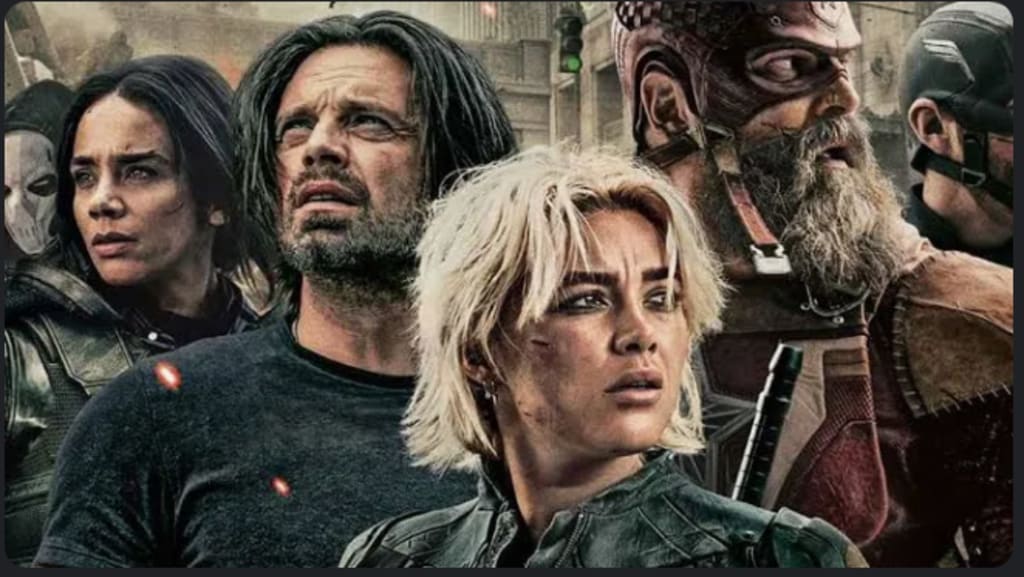
a moment in Thunderbolt—a moment that lasts barely five seconds—when Jax Morgan, the film’s rugged protagonist, stands on the edge of a collapsed bridge. He watches as a thunderstorm shaped like a monstrous spiral swallows the horizon. His clothes are soaked, the wind is howling, but for that fleeting second, he’s still. It’s not the action that grabs you—it’s the silence before the strike. That’s when you realize Thunderbolt is more than just another disaster movie. It’s an emotional tempest disguised as a blockbuster.
Directed by Lena Cross, known for her gritty approach to character-driven action, Thunderbolt tells the story of a former elite storm chaser who’s been hiding from his past. Jax Morgan (played by Idris Clay, delivering a grounded yet explosive performance) walked away from the chase after a catastrophic tornado claimed the life of his brother. But when a secret government experiment goes horribly wrong, generating man-made superstorms that threaten to decimate entire cities, Jax is pulled back into the whirlwind—both literally and figuratively.
The film wastes no time in building momentum. From the first scene, where an unmanned drone is swallowed whole by a “Category X” storm over the Pacific, the viewer is plunged into a world where climate manipulation isn’t just science fiction—it’s reality. The premise sounds fantastical, but the script, penned by Julia Raynor, blends hard science with speculative fiction in a way that feels uncomfortably plausible. The storms in Thunderbolt are characters in their own right—alive, unpredictable, merciless.
Jax’s journey is at the heart of the narrative, but the supporting cast adds layers to the emotional landscape. Mei Tanaka’s portrayal of Lila Reyes, a brilliant but underestimated meteorologist, is a standout. She’s the moral compass of the team, bringing both vulnerability and steel to the role. Her dynamic with Jax evolves naturally, never resorting to cheap romantic clichés. Their relationship is built on trust, shared trauma, and a mutual respect for the raw power of nature.
The action sequences are breathtaking. Cross uses practical effects wherever possible, and when CGI is employed, it’s seamlessly integrated. The centerpiece is a mid-air storm chase involving a retrofitted cargo plane, where Jax and his team attempt to deploy a counter-frequency device directly into the eye of the storm. The tension is palpable, the visuals are jaw-dropping, and the sound design—layered with crashing thunder, distorted radio chatter, and the ominous hum of wind—puts you right in the chaos. You don’t just watch Thunderbolt; you feel it.
But where the film truly surprises is in its quieter moments. In between the explosions and evacuation scenes, there’s room for introspection. We see Jax confronting his guilt, not just for his brother’s death but for the years he spent running from it. We see Lila grappling with being dismissed by her male colleagues despite her clear expertise. There’s a subtle commentary on climate denial, the ethics of weather manipulation, and the corporate greed that underpins much of the film’s conflict.
The antagonist, Dr. Silas Greaves (played with eerie calm by Malcolm Voss), is not your typical villain. He’s a former climate scientist turned defense contractor, whose belief that controlled storms could “reset” the planet’s climate trajectory gives him a messianic edge. His motivations are complex, even understandable, which makes his descent into hubris all the more chilling. The film doesn’t paint in black and white—it revels in the stormy grey areas.
Visually, the film is a marvel. Cinematographer Claire Yen captures the contrast between humanity’s smallness and nature’s fury with sweeping aerial shots and intimate close-ups. The color palette shifts from steely blues and greys to blood-orange sunsets, mirroring the storm’s evolution and the characters’ emotional arcs. The music, scored by Alan Ferrow, is both haunting and heroic, layering synth with orchestral swells in a way that echoes the duality of man versus nature.
Clocking in at just over two hours, Thunderbolt never feels bloated. Its pacing is sharp, moving briskly between scenes without losing emotional weight. The third act brings everything to a crescendo: a multi-city evacuation, a betrayal within Jax’s team, and a final confrontation atop a collapsing storm observatory. It’s spectacle with stakes—and it earns every beat.
If there’s a critique to be made, it’s that a few of the side characters—especially the comic-relief tech expert and a hardened general—veer a bit too close to archetype. But even then, their performances are committed enough to keep the immersion intact. The film knows what it is, but it refuses to settle for formula. It aims higher—and it mostly succeeds.
What elevates Thunderbolt above its genre peers is its refusal to rely solely on destruction. Yes, the effects are jaw-dropping. Yes, the action set pieces will leave you breathless. But at its core, this is a story about loss, redemption, and the human instinct to protect what we love—even when the odds are impossible. The storms may be artificially created, but the emotions they stir are deeply real.
As the credits roll, accompanied by a final shot of Jax and Lila standing beneath a calm, star-lit sky, the irony is clear: after two hours of chaos, the quiet feels like the loudest statement of all. Thunderbolt doesn’t just deliver thrills—it delivers meaning. It reminds us that sometimes, the most dangerous storms aren’t in the sky, but within ourselves. And facing them? That’s the true act of courage.
About the Creator
Yasin
Stati
The Blue Ridge Stalker
Tom had left the Ford down the way, its spark plugs finally exhausted and no mechanics for a dozen miles back through the foothills to Strossburg. No matter, he had worn his boots—almost as if he planned for this to happen. The puzzle he sought to solve emanated from the woods clinging to the slopes above; the valley behind held no mysteries.
By Stephen A. Roddewig4 days ago in Fiction



Comments
There are no comments for this story
Be the first to respond and start the conversation.