
Things You Learn From an Empty Chair
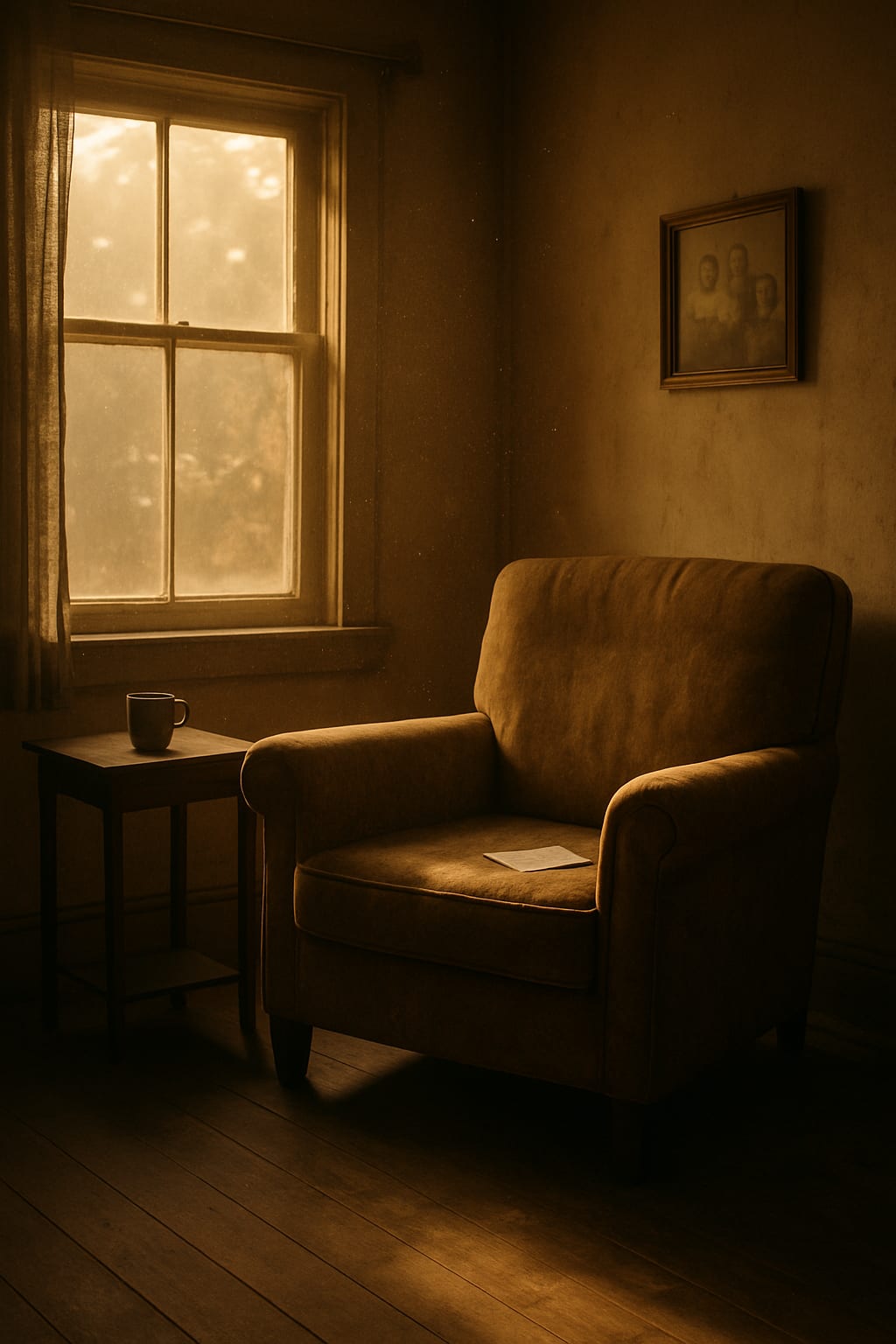
There’s an old chair in my mother’s living room.

Things You Learn From an Empty Chair
BY [ WAQAR ALI ]
There’s an old chair in my mother’s living room.
It doesn’t look like much. One leg wobbles. The fabric’s faded in patches where the sun touches it through the window. The cushion’s lost its shape from years of being sat on, stood on, slept on, ignored.
But I still can't throw it away.
It belonged to my father. Or, more accurately, it belonged to his absence.
He didn’t leave with ceremony. No suitcases at the door, no storming out mid-argument. He was the kind of man who left in pieces.
First, he stopped coming home on time.
Then he stopped asking how my day went.
Then he stopped smiling when Mom brought him tea.
Then one day, we just… stopped waiting for him to speak.
And then, he was gone. His toothbrush remained. His boots were still by the door. But the man himself? Gone. As if he’d evaporated in the night and left only the weight of what was missing.
And yet—his chair remained.
It sat in the same corner it always had, facing the window but angled slightly toward the TV. That chair had seen every birthday, every fight, every Sunday dinner where silence swallowed us whole.
I remember sitting on the floor next to it, drawing cartoons while my parents argued in the kitchen. I couldn’t hear all the words, but I could feel them.
Even at nine years old, you can tell when love becomes something with sharp edges.
When I turned eleven, I asked my mom why we didn’t just get rid of it.
She didn’t answer. Just shook her head, sighed, and walked away.
The thing about chairs—especially the ones with memory—is that they hold posture. Not just of the body, but of the spirit.
You can still see the ghost of how someone sat. The way they leaned back when they were tired, or perched on the edge during tense moments. You remember the rattle of a newspaper, the smell of aftershave, the way he cleared his throat before saying something that never mattered.
It’s a strange kind of grief—to miss a presence that was mostly absence.
To mourn someone who was already halfway gone long before they left.
I left home at seventeen.
I took a train with a duffel bag and a scholarship letter. My mother didn’t cry. She just hugged me tightly and told me not to become like him.
I promised I wouldn’t.
But that’s the thing about promises—you don't always know when you've broken them.
Years passed. Cities changed. I became a writer, not because I had something profound to say, but because it was the only way I knew how to listen to myself.
People think writing is about language.
It’s not. It’s about pattern recognition.
Learning to see the shape of pain before it speaks.
To hear the heartbeat under someone’s silence.
The first story I published was about a girl whose father disappears without leaving. I changed the names. I gave her a different house. But the chair? I kept the chair exactly the same.
Old. Sturdy. Heavy with what it remembers.
I returned home recently to visit my mother. She's older now. Softer. The lines on her face tell stories she never bothered writing down.
The house is smaller than I remember, though everything is technically the same.
It smells like lavender and laundry detergent.
The wallpaper is peeling.
And the chair—yes, the chair—is still there.
Same corner. Same faded fabric.
“Why haven’t you gotten rid of this yet?” I asked her.
She looked at it for a moment before replying.
“It reminds me that I stayed.”
That night, I sat in the chair for the first time since I was a child.
It groaned under my weight, like it was waking up from a long nap. I ran my hand along the armrest. There was a scratch on the wood where I once dropped a mug. It’s still there. A permanent reminder of a temporary mistake.
I sat there for hours.
And as I looked around the room, I realized something that caught in my throat.
Sometimes the things we refuse to throw away… are the things that helped us survive.
I didn’t sleep much that night.
Before I left the next morning, I scribbled a note and placed it under the cushion.
It read:
To the next person who finds this—this chair held more than just a man. It held the lessons we learned in his silence.
Take a seat. Stay awhile. You’ll hear them too.
Now back in my apartment, I sometimes write about chairs.
About fathers. About the strange furniture of grief.
Readers think it’s fiction.
And maybe it is.
But the truth is—some stories aren’t about the people who leave.
They’re about the people who stay.
The ones who learn to sit in the silence and make peace with what remains.
About the Creator
LONE WOLF
STORY
Miss Persephone's Manual to a Seemingly Ordinary Life
Miss Persephone was found at the dining table, her blue eyes swollen, her tears arriving and retreating like the tides of the ocean. Earlier that day, her family had visited her in the retirement home where she had lived for eight years. It was her eightieth birthday.
By Imola Tóth5 days ago in Fiction


Comments
There are no comments for this story
Be the first to respond and start the conversation.