
The World on the Brink: How Change Is Closer Than We Think
A look at the forces reshaping our future and why tomorrow may arrive sooner than we expect

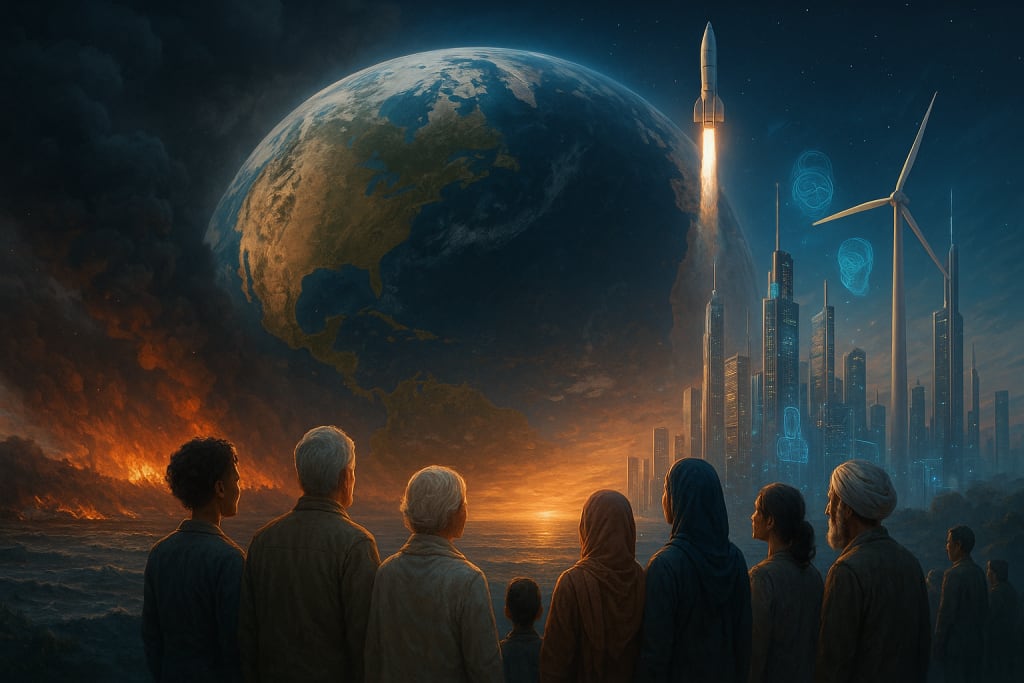
The World on the Brink: How Change Is Closer Than We Think
A look at the forces reshaping our future and why tomorrow may arrive sooner than we expect
Human history has always been defined by change. From the discovery of fire to the Industrial Revolution, from the invention of electricity to the digital age, humanity has consistently adapted and transformed the way it lives. Yet, as we step into the mid-21st century, it feels as if the pace of transformation is accelerating beyond anything our ancestors could have imagined. The world is not only changing—it is changing faster than most of us are prepared for.
We are entering a period where science, technology, climate, culture, and politics are colliding in ways that will reshape our daily lives. The question is not if the world will change soon, but rather how it will change, and whether we are ready to adapt to it.
Technology: The Invisible Hand Behind Change
Technology is the engine driving today’s rapid transformation. Artificial intelligence, once seen as a futuristic dream, is now embedded into our everyday lives. From chatbots that answer our questions to algorithms that recommend what we watch, eat, or buy, AI is quietly steering human decisions. Soon, AI could disrupt entire industries—from medicine to education—replacing jobs, creating new ones, and even redefining what it means to “work.”
Consider healthcare: AI-powered diagnostics are already outperforming doctors in spotting early signs of cancer. Robotics are being developed to assist surgeries with precision far beyond human hands. At the same time, telemedicine is connecting patients to doctors across continents. The result? A healthcare system that may soon be more efficient, more global, and more personalized than ever before.
And then there is space exploration. Private companies like SpaceX and Blue Origin are working toward a future where humans may live beyond Earth. A few decades ago, this sounded like science fiction. Today, it feels like an inevitable chapter of human history. The possibility of colonies on Mars or permanent bases on the Moon is no longer just the stuff of imagination.
In the next 20 years, our definition of “home” might expand beyond this planet. That would change not just technology but also culture, politics, and even spirituality.
Climate Change: The Global Alarm
While technology pushes humanity forward, climate change reminds us of our limits. Rising sea levels, extreme weather, and shrinking resources are no longer distant warnings—they are present realities. Coastal cities face threats of flooding, farmers struggle with unpredictable rains, and wildfires have become devastatingly common.
Scientists warn that unless immediate action is taken, parts of the world could become uninhabitable within our lifetimes. Millions may be displaced, creating climate refugees on an unprecedented scale. Such massive migration could alter the balance of nations, economies, and cultures.
But change is not only about danger—it is also about opportunity. Renewable energy is rapidly replacing fossil fuels. Solar and wind power are becoming cheaper and more accessible, offering hope for a greener, more sustainable world. If humanity embraces clean energy at full scale, we may not only save the planet but also unlock new industries and jobs that could drive global prosperity.
Cultural Shifts: A New World Identity
Globalization and digital connectivity have given birth to a new kind of culture—one that is borderless. A teenager in Nairobi can now share the same music playlist as someone in Tokyo or New York. Social media movements can unite people across continents within hours.
This hyper-connected world has also given rise to new debates about identity, values, and governance. Young generations are increasingly questioning the systems they inherit—whether it’s capitalism, democracy, or social norms. The push for equality, climate justice, and ethical leadership is stronger than ever before.
We are likely entering an era where nations may become less important than networks. Communities will no longer be defined by geography but by shared goals, values, and ideas. The internet has already shown us a glimpse of this, and the coming decades may transform it into reality.
Politics and Power in Transition
Geopolitics is also shifting in dramatic ways. The rise of artificial intelligence and digital infrastructure means that power is no longer measured only in terms of land, weapons, or resources. Instead, it is increasingly about who controls data, technology, and communication networks.
Traditional superpowers are being challenged by emerging economies, and global alliances are being redrawn. Wars may not only be fought with tanks and missiles but also with cyberattacks, misinformation campaigns, and economic influence.
At the same time, citizens are becoming more empowered. Technology has made it harder for governments to control information. Ordinary people now have platforms to raise their voices, question authority, and demand accountability. This shift in power from the few to the many could reshape governance itself.
Preparing for Tomorrow
The world is changing—quickly, unpredictably, and irreversibly. But change does not have to mean chaos. With every challenge comes the chance to build something better. The question is whether humanity will face these changes with fear and resistance, or with creativity and resilience.
We stand at the edge of history, where tomorrow is no longer a distant dream but an approaching reality. It is up to us to shape that reality in ways that protect our planet, uplift our societies, and honor our shared humanity.
The world will indeed change soon. But perhaps the more important truth is this: we are the ones changing it.
About the Creator
WAQAR ALI
tech and digital skill
Space and Time
Time I just wanted to explore the world. See its beauty, relish the experience of discovery; at least, a discovery new to me. But even that seemed to be a tall order. As soon as I received my apprenticeship honors from the village leader, my dear mother was bewitched as she ventured to the mountains. They told me not a single person has ever awakened from a bewitchment, that after twelve years, the souls of those bewitched will be snuffed as tribute to the gods. They told me this was divine retribution. That this was fate, and if not for her going up to the mountains to pray to her false deities, she would still be alive. But she was alive…
By bemnet zelalem4 days ago in Fiction


Comments
There are no comments for this story
Be the first to respond and start the conversation.