
Shadows of Power
Understanding the Illuminati and the Quest for Protection

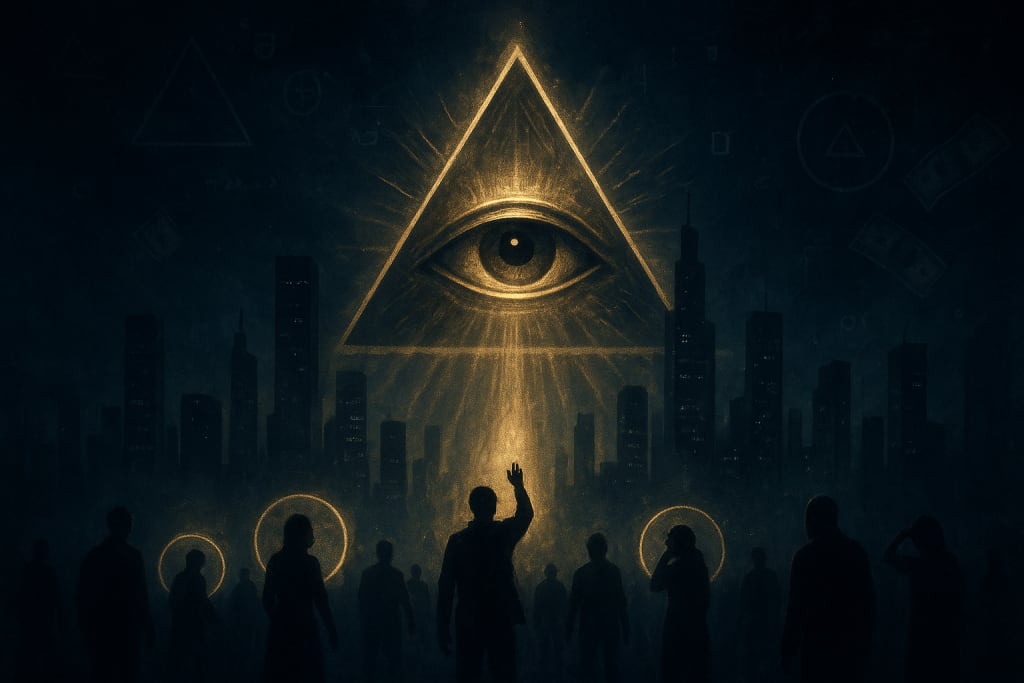
Shadows of Power
: Understanding the Illuminati and the Quest for Protection
Unraveling myths, truths, and how people seek safety in a world of secret societies
For centuries, whispers about the Illuminati have echoed across cultures, books, and late-night conversations. Some see it as a mere conspiracy theory, while others insist it is a hidden network of influence shaping governments, media, corporations, and even cultural trends. Whether truth or fiction, the idea of the Illuminati has gained such force that many people genuinely fear its reach—and equally, many look for ways to protect themselves from it.
But what is the Illuminati, really? Why does its image continue to loom so large in modern society, and how do people imagine safeguarding themselves from a group that may or may not exist?
The Origins of the Illuminati
The story begins in Bavaria, 1776, when Adam Weishaupt, a professor of canon law, founded a secret society with the aim of promoting reason, freedom, and knowledge in opposition to religious and political oppression. It was called the Order of the Illuminati. At first, its mission was not sinister—it sought enlightenment ideals, not world domination.
However, as time passed, the group was banned, and its existence faded from official records. This disappearance only fueled speculation. People began to imagine that the Illuminati had gone underground, evolving into a shadow government working behind the scenes to pull the strings of kings, presidents, and CEOs.
The Illuminati in Modern Culture
Fast forward to the twenty-first century, and the Illuminati has become a household term. It shows up in music videos, movies, and internet theories. A pop star flashing a triangle hand gesture sparks heated debates online about secret memberships. Financial collapses or global events are sometimes blamed on “Illuminati planning.”
Theories suggest that the group’s power lies in its invisibility: if they control media, politics, and corporations, then almost any unexplained event can be framed as their doing. Whether you believe in it or not, this creates a climate of fear and fascination.
The Fear of Control
At the heart of Illuminati theories is the fear that ordinary people are powerless. The idea of a small group with near-limitless control is unsettling. It makes citizens feel vulnerable to manipulation—through news, entertainment, even technology.
For some, this fear becomes so strong that they look for ways to protect themselves from Illuminati influence. Protection takes different forms: spiritual, psychological, and practical.
Paths of Protection
So how do people imagine protection from a group that supposedly thrives on secrecy and manipulation? Here are some common ways:
Knowledge as Defense
Many believe that the best protection is awareness. By educating themselves about media manipulation, political power structures, and financial systems, they feel less likely to be deceived. Knowledge acts as a shield.
Spiritual Practices
In many communities, people turn to faith, prayer, and meditation. They believe that divine guidance and spiritual purity can protect them from dark influences. This is especially strong in cultures where good versus evil is viewed as a cosmic struggle.
Community Support
Isolation breeds fear. By staying connected with like-minded people, individuals find comfort and strength. Whether through online forums, local groups, or even family conversations, community makes the Illuminati seem less intimidating.
Critical Thinking
Some argue that the real “protection” is learning to think critically. Instead of assuming every symbol or event is Illuminati-related, they look for logical explanations. This mental filter protects against paranoia and fear.
The Thin Line Between Myth and Reality
The biggest challenge when discussing the Illuminati is separating fact from fiction. Real history shows us that secret societies have existed—and still do. From Freemasons to modern think tanks, groups of powerful people meeting behind closed doors is nothing new. But the leap from real networking and influence to world domination conspiracies is where myths take root.
And yet, even myths have power. The belief in the Illuminati influences how people see the world, how they interpret events, and even how they trust—or distrust—leaders and celebrities. In that sense, the Illuminati is real, not as an organization, but as a psychological force.
Seeking Protection in the Unknown
So, how does one protect themselves? The answer may not lie in silver amulets, coded prayers, or secret knowledge, but in something simpler:
Stay informed but not consumed by fear.
Question sources without falling into paranoia.
Strengthen personal values, faith, and community.
Protection, then, is less about building walls against a shadowy elite and more about building resilience within ourselves.
Conclusion: Power in Awareness
Whether the Illuminati is a myth, a metaphor, or a hidden reality, one truth remains: people fear losing control. The idea of an all-powerful secret society is unsettling because it reflects our own insecurities about who holds power in the modern world.
But protection does not always come from fighting the shadows directly. Sometimes, it comes from living openly, thinking critically, and connecting deeply with others. In a way, the best defense against secret control is not secrecy, but awareness.
And perhaps, that’s the true lesson hidden in the legend of the Illuminati.
About the Creator
WAQAR ALI
tech and digital skill
TUS NUA - ch 53
TUS NUA – ch 53 New Beginnings – Mia and Midnight (*)(*)(*) Finola knew Ali’s brother-in-law needed to put his mind at rest. She fed her arm through his and led him outside. “We’ll sit here. If you like, I can put a block around us so our conversation will be private.”
By Margaret Brennana day ago in Fiction
What The Room Keeps
The beginning was so small that I almost missed it. After the bell rings, my classroom usually empties slowly, much in the way bars do at last call when everyone lingers a little longer than they should. It never fails—someone lingers to spill the day’s hottest tea, someone else gathers the Chromebooks and slides them into the cart while pretending not to listen, and at least one kid asks to borrow my pink, English teacher coded cardigan tomorrow because the air conditioning in this building seems personally offended by human comfort. I call them “my child”, when they say something so obvious or ridiculous, threaten to throw someone out the window in a voice that makes the good students laugh as I gather my patience together and ask them to start collecting bail money because “today is finally the day”. Eventually the hallway wins and carries them off, but the room never quite lets them go. The blue LED lights that line the ceiling are still glowing. The gold frames across the back wall—Bad Bunny, Tupac Shakur, Gabriel Garcia Marquez, Margaret Atwood, Octavia Butler, Sarah J. Maas, George Lucas, & Kubrick—my silent proof that language belongs to everyone.
By Jennifer Vasallo a day ago in Fiction



Comments
There are no comments for this story
Be the first to respond and start the conversation.