


Original Language: Koren
Director: Jo Kyu-Jang
IMDb: ⭐ 6.5/10
The murder of Catherine Genovese (a.k.a. "Kitty") on March 13, 1964, which took place over a period of about half an hour, is credited with starting this narrative tradition. The murder's core details are known to be genuine, but the media got involved and kept harping on the concept that many individuals were aware of what was happening but choose not to get involved, making the narrative partially fictitious. News reports that questioned whether there was any proof that there were 38 witnesses or that anyone actually saw the murder and decided to do nothing continued to appear as recently as 2004. In summary, while the murder itself is undeniable, the events leading up to it are seriously suspect.
The murder nevertheless produced at least two important outcomes, including the public's perception—whether it was true or not—that there was a general reluctance to provide assistance during an apparent criminal act. First off, the narrative made a significant contribution to the development of the 9-1-1 emergency phone system. Second, the beginning of the "urban legend" that suggests criminals may get away with their crimes since no one is doing anything. This general plot line has undoubtedly occurred in countless television programmes and films since it first debuted in a Perry Mason television episode.
THE WITNESS, whose name is used for other films of the same name, portrays the same basic tale from a South Korean social/psychological viewpoint. The main idea is the same as it always is: people are morally repugnant for not becoming "involved" and leaving an innocent, defenceless woman alone to suffer the awful consequences of an evil assailant. The combination of South Korean attitudes that significantly influence the story's content is what distinguishes THE WITNESS's version as being particularly fascinating.
Unconscious fear, the desire to shield one's family from the consequences of involvement, and other "usual" thematic barriers to witness involvement are undoubtedly present. A possibly altruistic witness would have to overcome several South Korean societal and even legal challenges, it's fascinating to note, in order to be willing to "get involved". Strangely, and even unbelievable to us in the West, engaging in any conduct that might be construed as defamatory is strictly forbidden and, wait for it, "South Korea is the only country in the world where an individual can be found criminally liable and imprisoned for damaging another's reputation by publicly revealing true facts."
To put it another way, in South Korea, even if what you say or write is TRUE, you may still be held accountable for your actions if it harms someone else's reputation or "face" because of what you have said or written. Therefore, saying things like, "I saw Bob kill Alice" or "Sam raped me" in public can result in witnesses (AND EVEN VICTIMS) having to pay tens of thousands of dollars in fines, serve time in prison, and risk having further civil responsibilities to the actual criminal.
As stated in the legal literature, merely informing the police about the crime is not sufficient to make a witness liable. However, if the accused is able to avoid conviction, the witness will once again be held accountable.
Unbelievably, in South Korea, the decision to intervene when someone is being victimised involves not only a moral/ethical assessment that the potentially altruistic witness must make, but also a practical assessment of the possible criminal and civil liabilities that you may likely face for merely acting in accordance with the law.
Some sequences from THE WITNESS serve as a superb illustration of the downstream practical effects of this type of legal system. The tenants of the apartment complex get together and draught a document for all the tenants to sign agreeing not to speak to the press or the police about the crime in order to prevent potential witnesses who reside in the owner-occupied apartment complex closest to the crime scene from providing any information to the media or the police, which could damage the complex's good name and result in a loss of property values.
If you commit such a crime in America, you will be imprisoned and also need to give a witness statement. That kind of conduct is accepted and common in South Korea. It's bizarre to watch the police become angry about it and NOTHING ELSE. You also get the impression that any potential moral or ethical repercussions are less bothersome to the police than the fact that it makes their work more difficult.
These anti-defamation laws serve as a stark reminder of how highly regarded reputation and face are in many Asian nations. Not that crimes like murder are trivial; rather, it seems that culturally, upholding reputation and face is more important than committing crimes like murder. In South Korea, reputation and face are valued so highly that both civil and criminal law have been legislated to reflect this. In the setting of cultural imperatives, philosophising about what is right and bad is pointless because right and wrong are cultural creations. It is undoubtedly a novel experience to watch such behaviour develop in a society where it would be viewed with utter disgust and then in one where it is accepted as completely appropriate.You can't sit in judgement on this kind of cultural value if you're one of those people who values multiculturalism obsessively. This kind of cultural perspective is also valued when multiculturalism is valued. You cannot morally justify your moral heuristics.
The moral lesson of THE WITNESS, which is that you should value a victim's life and accept any personal repercussions, may be the same as it is in South Korean "Genovese syndrome" depiction, but it is less clear than it would be in the West.
A quality film with high production qualities, THE WITNESS is well-written, well-acted, and well-made.
About the Creator
The Movie Suggest
Wc to The Movie Suggest, your ultimate destination for a cinematic odyssey across the globe.I curate the best, providing you with a passport to cinematic wonders worldwide.Join me in this thrilling celluloid journey;let's explore the world.
Keep reading
More stories from The Movie Suggest and writers in Fiction and other communities.
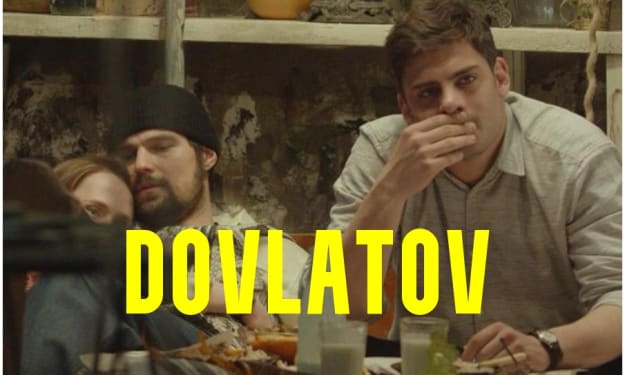
Dovlatov
Original Language: Russian Director: Aleksei Alekseivich IMDb: ⭐ 6.4/10 The 2018 film "Dovlatov," which was directed by Alexey German Jr., immerses spectators in the political tyranny and artistic conflicts of the Soviet Union in the 1970s. This movie provides a moving and personal look into the life of famed Russian author Sergei Dovlatov, who is beautifully portrayed by Milan Maric, as he negotiates the difficult and constricting Leningrad literary environment.
By The Movie Suggest 2 years ago in Humans
A Quiet Kind of Ache
The dorm room feels hollow. The grey Boston University lamp on my wooden brown desk is the only source of light in the room, casting long and uneven shadows over the empty twin XL bed across from mine. My roommate left to head home for the weekend. Her absence shouldn’t bother me this much, but somehow, it does. The silence has its own presence in the room. The atmosphere feels heavy and dense without her occasional remarks, rustling, and tapping on the keyboard. The quietness is the unspoken proof that I’m completely alone.
By Yamuni Kaijumi3 days ago in Fiction


Comments
There are no comments for this story
Be the first to respond and start the conversation.