
The Whispers of Tomorrow: A 10-Year-Old's Dream in Iran
Through the eyes of 10-year-old Sara, discover a poignant journey of daily life in Iran, where the struggle for freedom meets the unbreakable hope of a generation dreaming of a brighter tomorrow.

A Sky of Secrets
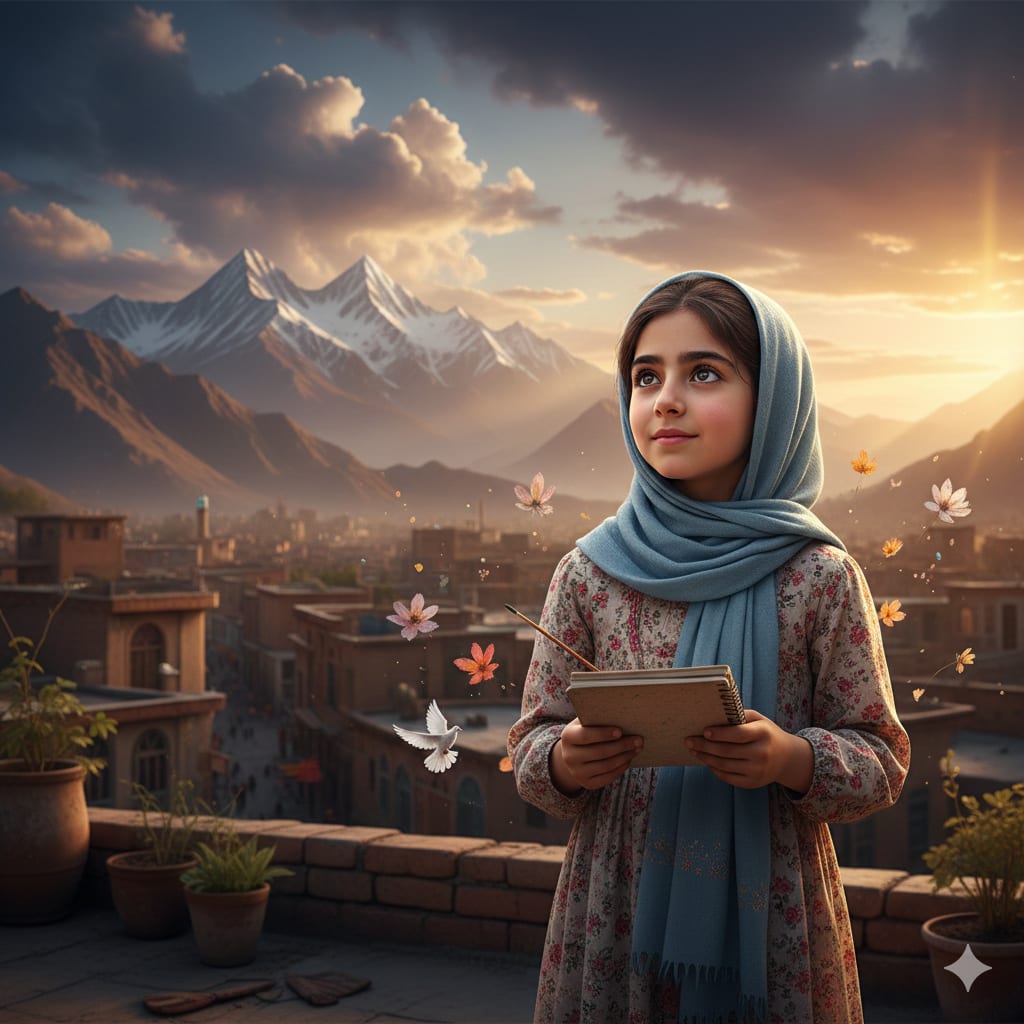
My name is Sara, and I am ten years old. My world is full of colors, even if sometimes they feel hidden behind the grey concrete of the tall buildings. I live in a city where the mountains stand tall and proud, capped with snow that glitters like diamonds under the Persian sun. My grandmother tells me the mountains are the guardians of our history. But unlike the mountains, we humans often have to whisper our dreams. My biggest dream is to be a painter, to paint all the colors I see inside me—the turquoise of the ancient tiles, the deep red of the pomegranates, and the bright, forbidden yellow of a sun that shines for everyone.
My Mother's Scarf and the Quiet Rules
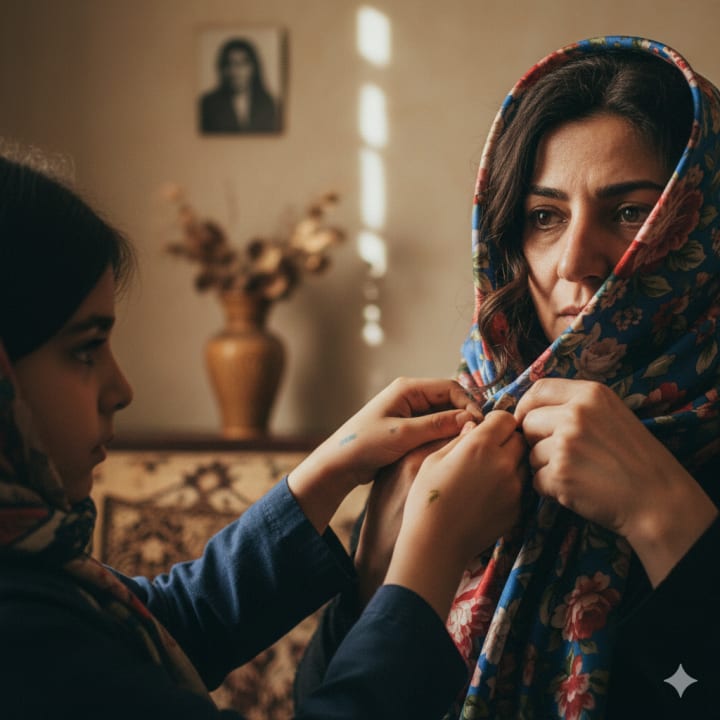
Every morning, I sit on the edge of the bed and watch my mother in front of the mirror. It is a ritual of precision. She adjusts her headscarf, pinning it carefully so not too many strands of her dark hair escape. It is a beautiful scarf, sometimes silk with tiny blue birds, sometimes plain cotton. But to me, it always feels like a curtain. She tells me it is "the rule," a law of the streets.
I see other women outside, some walking quickly with their heads down, others walking with their chins held high. Sometimes, when the wind blows through the narrow alleys, I see them pull the fabric back just a tiny bit, letting a breath of air touch their skin. In that moment, I see a flash of defiance in their eyes—a spark that says they are still there, underneath the layers. My grandmother whispers to me when we are alone: "Sara, our hair is like the leaves of a tree, meant to dance in the wind. Never forget the feeling of the breeze, even if you can only feel it in your heart for now."
The Hidden Melodies of the Living Room
In the evenings, when the heavy curtains are drawn and the world outside is dark, our home transforms. My father has an old record player, and sometimes he plays music that makes his eyes grow misty. It’s not the music you hear on the official channels; it’s the sound of voices that sang of love and wine and the stars long before I was born.
"Listen, Sara," he says, tapping his chest. "This rhythm is the heartbeat of our people. They can tell us what to wear and where to walk, but they cannot tell the heart how to beat." We dance in the living room, my mother’s hair finally free and flowing over her shoulders like a waterfall. In those moments, the oppression of the outside world feels like a bad dream that hasn't quite reached our doorstep. But I am ten, and I know that the silence outside the door is waiting.
The Silence of the Streets
Sometimes, the streets feel heavy, as if the air itself is tired. There are fewer laughs in the parks, and the playgrounds often feel like galleries of ghosts. I hear my parents speak in hushed tones when they think I am sleeping. They talk about "the ones who didn't come home" and "the prices rising like the tide."
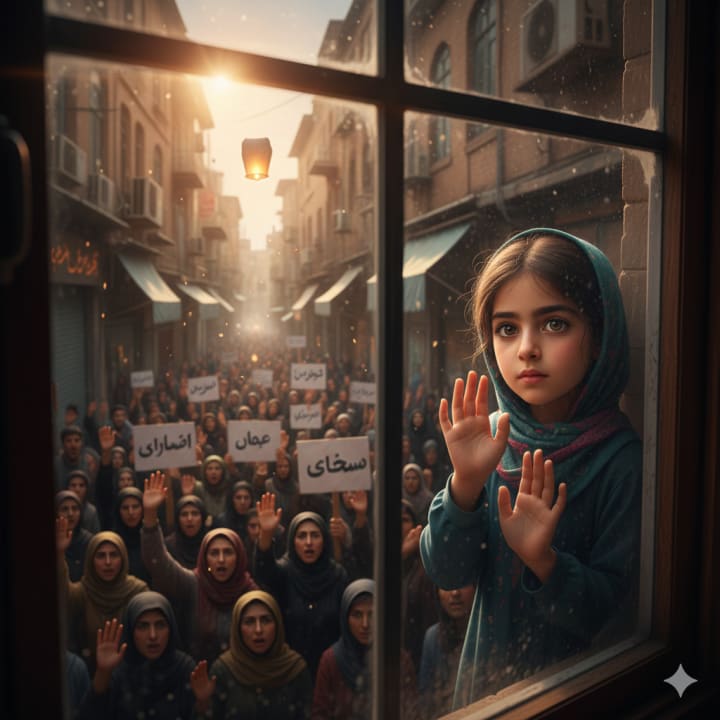
I have seen the protests from our balcony. I have seen brave people holding signs with words I am still learning to fully understand—words like Zan, Zendegi, Azadi (Woman, Life, Freedom). I have seen the smoke and heard the shouts, and then the terrifying, sudden silence that follows. It feels like a big, invisible hand is pressing down on the city, trying to snuff out the candles. But my father holds my hand tight and says, "Sara, remember this: a river can be dammed for a long time, but eventually, the water always finds its way to the sea."
Mrs. Azadi’s Classroom:
A Garden of Knowledge
At school, we wear uniforms that make us all look like little grey clouds. But inside our satchels, we carry worlds of light. My friends and I share secret drawings under our desks. Mine are usually of girls with flowing hair, running through fields of tulips without any scarves to hold them back.
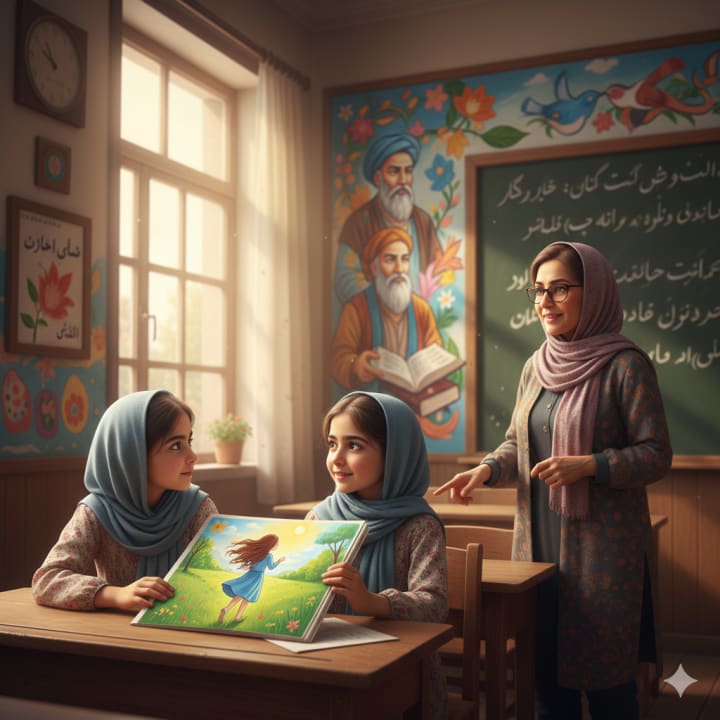
My teacher, Mrs. Azadi, is the bravest person I know. Her name means "Freedom," and she carries it like a shield. When she speaks of ancient Persia, of the poets Rumi and Hafez, her eyes sparkle like the stars over the desert. She tells us that our minds are gardens, and knowledge is the water that makes them bloom. "They can lock the gates of the park," she tells us softly, "but they can never lock the gates of a mind that knows how to think. You are the future, and a garden always grows back after the winter
The Poetry of Resistance
One afternoon, my grandmother took me to the market. Amidst the smell of saffron and roasted nuts, she stopped by an old man selling books. She bought a small, tattered volume of poetry and tucked it into my sleeve. "This is our real history," she whispered.
That night, she read to me about the courage of lions and the persistence of the nightingale. I realized then that our people have survived many winters. The injustice we see today is a dark cloud, but the sun is much older and much stronger than any cloud. I started to see the "small freedoms" everywhere: a girl sharing her headphones with a friend, a boy painting a mural on a hidden wall, the way people look at each other in the market—a look that says I see you, and I am with you.
Seeds of Hope: The Forest Within
Sometimes, when I am drawing, I imagine a different Iran. I see a country that is as colorful as the paintings I want to create. I see women laughing loudly in the streets, their hair flying free, not because they are making a statement, but simply because it is natural. I imagine boys and girls sitting together, learning science and art without fear or limits.
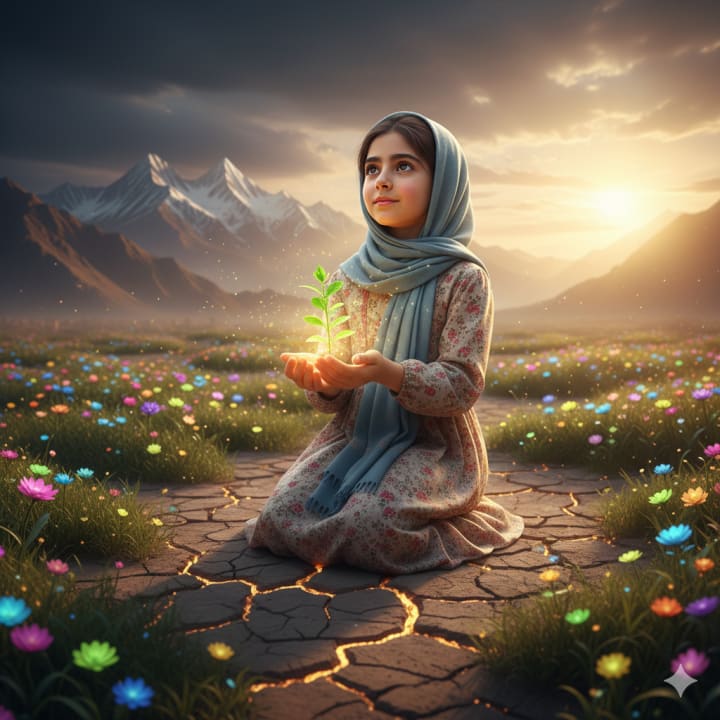
My grandfather used to say, "Every seed carries a forest within it." I look at my friends, at the girls in my class with their bright eyes and hidden drawings, and I see a vast, beautiful forest waiting to break through the soil. We are the seeds. The ground is hard and dry right now, and the sun is sometimes blocked by smoke, but our roots are growing deep. We are searching for the water of truth and the light of justice. And one day, sooner than the world thinks, we will bloom.
About the Creator
Gloria La China
Racconto storie di speranza, coraggio e libertà per grandi e piccoli. Emozioni, valori e fantasia per ispirare ogni lettore a sognare e guardare il mondo con occhi nuovi.”
Keep reading
More stories from writers in Fiction and other communities.
Prom Dresses
The sun fell in slanted beams across the wraparound porch, and Jim held court from his favorite rocker, twirling a lollipop between his fingers and occasionally popping it in his mouth. He’d been doing this since he stopped smoking, and the young’uns didn’t remember the cloud of Pall Mall that used to shroud his face as he told his tales. The kids were playing in the yard and under the porch, escaping the brutal shafts of September sun in the cool sand with stripes of light interrupted here and there where an adult’s frame blocked the sun from shining through the gaps between the slats of the porch floor. Presently, a grubby face appeared over Jim’s shoulder. The kids wanted to go down to the creek to play.
By Harper Lewis2 days ago in Fiction



Comments
There are no comments for this story
Be the first to respond and start the conversation.