
The Viking Age: Exploring the History and Culture of the Viking Era
The Vikings: Warriors, Traders, and Explorers Extraordinaire.
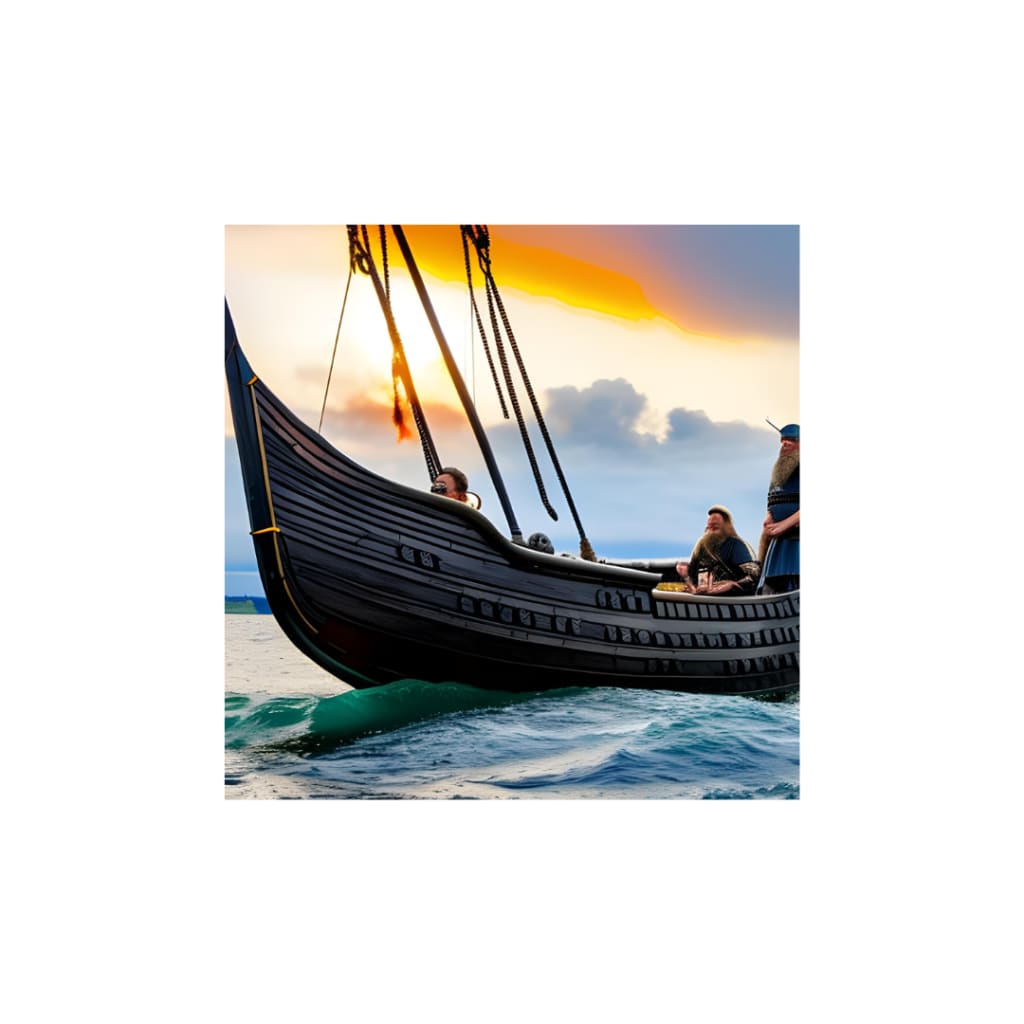
The Viking Age, which lasted from the late 8th century to the mid-11th century, is a period of history that has fascinated people for centuries. During this time, Vikings from what is now modern-day Norway, Sweden, and Denmark traveled as far as North America, the Middle East, and Russia, leaving a lasting impact on the world.
At the heart of Viking society was the concept of the "comitatus," a group of warriors who swore allegiance to a chieftain and fought together in battle. These warriors were known for their skill with weapons and their bravery in the face of danger. The comitatus was a central aspect of Viking culture, and it helped to cement the social hierarchy of the time.
Viking society was highly stratified, with a strict hierarchy of social classes that determined one's position in life. At the top of the social pyramid were the jarls, or nobles, who held considerable power and influence. Below them were the karls, or free farmers, who owned their land and were free to marry and raise families. At the bottom of the social pyramid were the thralls, or slaves, who had no rights and were owned by their masters.
The Vikings were skilled traders, and their longships were used to transport goods and people across vast distances. They sailed as far east as the Black Sea and as far west as North America. The Vikings established trade routes throughout Europe and the Mediterranean, and their trade networks helped to shape the economic landscape of the time.
One of the most significant events of the Viking Age was the establishment of the Danelaw in England, a region of the country that was ruled by the Danes for several decades. The Vikings also founded the city of Dublin, which became a center of trade and commerce in the Irish Sea.
The Vikings were famous for their mythology and religion, which included gods and goddesses such as Odin, Thor, and Freya. These gods played a central role in Viking life, and their stories were passed down through generations in the form of epic poetry and sagas. The sagas were often told around the fire on long winter nights, and they provided a glimpse into the complex beliefs and traditions of the Viking people.
The Vikings were also known for their incredible shipbuilding skills. Their longships were designed to be both fast and maneuverable, allowing them to navigate shallow waters and travel long distances. The Vikings used their ships not only for trade and transportation but also for raiding and warfare.
Perhaps the most famous Viking story is that of Leif Erikson, who is credited with discovering North America around the year 1000, nearly 500 years before Christopher Columbus. According to the sagas, Erikson landed on the coast of present-day Newfoundland and established a settlement there, which he called Vinland. While the exact location of Vinland is still a subject of debate, Erikson's journey marked a significant moment in Viking exploration and expansion.
Despite their reputation as fierce warriors, the Vikings were also skilled artisans and craftsmen. They produced intricate jewelry and metalwork, and their artistry is still admired today. The Vikings were also skilled farmers, and they developed new agricultural techniques that helped to increase crop yields and feed growing populations.
The Viking Age came to an end in the mid-11th century, when the Nordic countries were Christianized and the comitatus system began to break down. However, the legacy of the Vikings lives on in the countries of Scandinavia, where their traditions and customs continue to influence modern-day culture. From their seafaring prowess to their mythology and religion, the Vikings remain a fascinating and enduring part of our culture.
About the Creator
Zarar Ahmed
Zarar is a history enthusiast who loves learning about the past and its impact on the present. They are passionate about exploring different eras and regions of history, and they believe that understanding our collective past is essential.
Keep reading
More stories from writers in Fiction and other communities.
🅼🅸🅳🅽🅸🅶🅷🆃 🆂🅽🅰🅲🅺🆂
"It's 10 in Tuscon! We all know what that means... It's Time for Midnight Snacks with your man, Gerald Gee! Ready to spend the night together? Me too! I'm full of snacks and can't wait to regurgitate them all back into your hungry ears. Crack a brew! Pop some corn! Anything to get ready for one hell of a show where the talk maybe cheap but the words cut deep...
By Lamar Wiggins7 days ago in Fiction




Comments
There are no comments for this story
Be the first to respond and start the conversation.