
The Timestitch Paradox
When the past is no longer fixed, the future begins to unravel

Dr. Elias Voss had never set out to change the world. He only wanted to understand it.
For decades, the physicist had toiled in the quiet isolation of the Chronoscience Division, mocked by peers and shunned by grant committees. But on a storm-lit evening in Geneva, deep within the steel veins of the Arken Research Institute, his theories finally coalesced into something tangible. Something... extraordinary.
He called it the Timestitch.
Unlike crude notions of wormholes or faster-than-light travel, the Timestitch threaded consciousness itself through time, allowing the traveler to reinhabit their own body in a chosen moment from the past. It was elegant, seamless, and—he believed—harmless. After all, the traveler could not interact with anything outside their own life. What damage could memory do?
Voss tested it himself, leaping back to the morning of his wife’s fatal car crash. He didn’t interfere; he simply watched her smile one last time, bathed in sunlight as she waved goodbye. When he returned to the present, tears streaking his cheeks, he declared the machine a success.
The government moved fast. Within months, a classified program was born: selective retrocognition. Intelligence officers relived failed operations. Economists peered into the early signs of collapses. CEOs visited corporate forks in the road. And yet, anomalies began to arise.
Unexplained deaths. Shifting memories. Entire buildings appearing in places they had never existed before.
Voss noticed first. The Timestitch, while unable to affect the world physically, left impressions. Traces of thought, emotion, intent—echoes of decisions that never were. The fabric of time, once immutable, began to fray.
Soon, events from alternate paths bled into the present. Wars that had never been fought suddenly appeared in archived news footage. Strangers remembered entire childhoods with parents who had never existed. The laws of causality, once firm, now wavered like heat rising off pavement.
Worse still, someone—an entity or a person, it was impossible to tell—had begun using the machine beyond its designed scope. Voss discovered a pattern: repeated visits to the same temporal coordinates, always centered on global tipping points. The Berlin Wall. The Moon Landing. The first AI summit. Someone wasn’t observing history; they were rewriting it.
Frantic, he returned to the Timestitch, diving again and again through his own timeline in search of where it began to go wrong. Each trip splintered reality further. His lab disappeared, then reappeared as a cathedral. His reflection in the mirror changed—different eye color, different scars. His wife, once long dead, now lived a quiet life in Berlin… but didn’t recognize him.
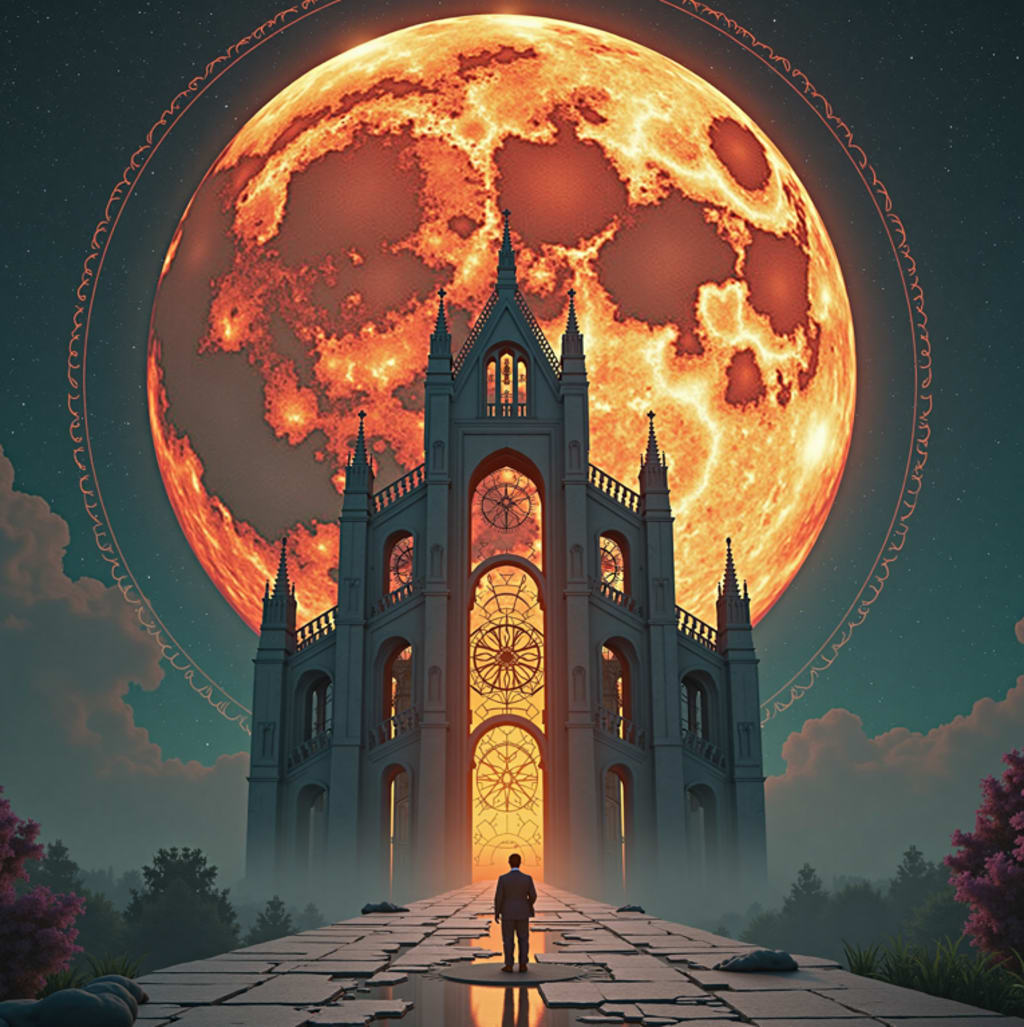
The final straw came when he awoke in a world where he had never built the machine at all. The institute was gone. He was a high school science teacher. But the sky was wrong—too red. The moon, cracked and haloed, hung low and trembling.
Voss understood then: the damage was done. Time, once a river, had become a sea of broken glass, infinite timelines crashing into each other with every conscious visit to the past.
He wrote a single warning on the blackboard of his classroom, unsure if anyone in this version of the world would even understand it:
“Do not thread the past. It remembers.”
Thank you for reading The Timestitch Paradox. If you enjoyed this dive into speculative time-travel, feel free to share your thoughts or support the story—your presence truly matters.
About the Creator
Lucian
I focus on creating stories for readers around the world
Tatt~Master
— Assembly Line Tatt Machine ~ Impressions to Impress — As I begin to understand more about the Tattoo Phenomenon. I've written silly, yet verbatim, dating site anecdotes in 'Frazzled.' So let me ask you: Would you be More attracted to someone slathered with tattoos, or Less?
By Jay Kantor6 days ago in Humor



Comments
There are no comments for this story
Be the first to respond and start the conversation.